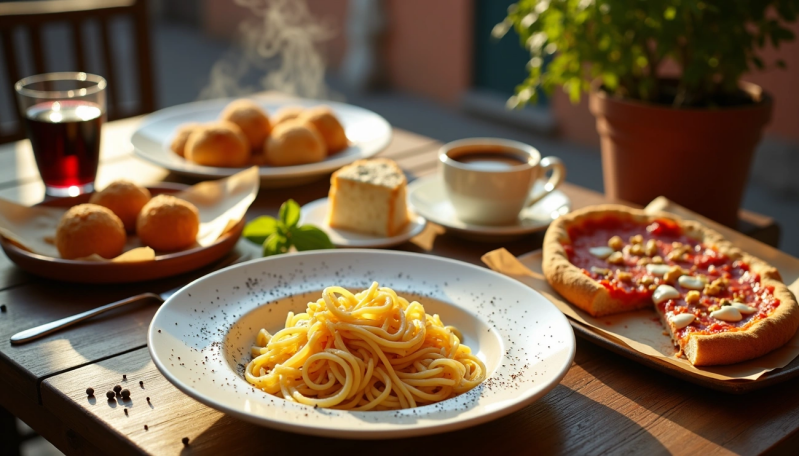
What to eat in Rome requires understanding that the city's cuisine has deep roots in its countryside and working-class heritage rather than cosmopolitan influences. Roman food is straightforward and full of flavors that are available to everyone.
I've created this piece to guide you through the food in Rome like a local. We'll explore essential pasta dishes and traditional Roman pizza styles. You'll discover must-visit markets such as the historic Testaccio (dating back to 1914) and the neighborhoods where authentic cuisine in Rome runs beyond the tourist spots.
Essential Roman Pasta Dishes You Must Try
Rome's pasta tradition revolves around four iconic dishes that share similar ingredients but deliver distinct flavors. Understanding these classics is fundamental to experiencing authentic food in Rome Italy.
Cacio e Pepe: The Three-Ingredient Classic
Cacio e pepe uses only three ingredients: pasta, pecorino romano, and black pepper. The creamy texture comes from emulsifying finely grated pecorino with hot, starchy pasta water, not from butter or cream. I toast freshly cracked peppercorns in a pan to release their oils before adding them to the sauce. Adding cheese to water that's too hot causes clumping, so the technique requires precision. Spaghetti and tonnarelli are traditional choices, though bucatini works just as well.
Carbonara: Rome's Creamy Signature
Carbonara requires four ingredients: guanciale (cured pork jowl), eggs, pecorino romano, and black pepper. Cream never appears in authentic carbonara. The silky sauce forms through an emulsion of egg yolks, cheese, rendered pork fat, and pasta water. Guanciale is different by a lot from pancetta with its funky, intense flavor that comes from cured pork cheek rather than belly. The egg ratio calls for one egg per person plus an extra, so making carbonara for four uses five eggs. Rigatoni is the second most popular pasta choice in Rome after spaghetti. Tempering the eggs by adding pasta water before combining with hot pasta avoids scrambling them.
Amatriciana: The Bold Tomato-Based Favorite
Amatriciana stands apart as the only tomato-based pasta among Rome's four classics. The dish originated in Amatrice but became Roman through the addition of tomato sauce to the popular gricia. The sauce combines tomato passata, guanciale, pecorino romano, and red pepper flakes for a spicy kick. Bucatini is the traditional pasta shape, though rigatoni and spaghetti work as substitutes. Bright, sweet-tart tomatoes contrast with rich, fatty pork to create the dish's signature appeal. The people of Amatrice remain strict about ingredients and famously ridiculed chef Carlo Cracco for adding garlic to his version.
Gricia: The White Carbonara
Gricia predates the other three Roman pastas and are the foundations of them. This dish features guanciale, pecorino romano, black pepper, and pasta without eggs or tomatoes. Food historians trace it to Roman shepherds before tomatoes arrived in Italy. Rigatoni pairs with gricia since its ridges catch the sauce and hide crispy guanciale pieces. The sauce is an emulsion of rendered pork fat and starchy pasta water, placing guanciale front and center.
Where to Find the Best Pasta in Rome
Flavio al Velavevodetto won an award for best carbonara in Rome and serves what I think is the finest cacio e pepe in the city. Emma near Campo de' Fiori excels at all Roman classics, with outstanding cacio e pepe and amatriciana. Armando al Pantheon deserves a visit for their gricia and saltimbocca alla romana. Grappolo d'Oro balances their carbonara well, avoiding the oversalting common elsewhere.
Roman Pizza: From Thin Crust to Trapizzino
Roman pizza breaks into distinct categories that locals guide with ease. The city hosts an estimated 5,300 pizza by the slice establishments. Pizza culture is as fundamental to Rome food as pasta.
Pizza al Taglio: Rome's Slice Culture
Pizza al taglio translates to "pizza by the slice" and represents Rome's answer to grab-and-go eating. Large rectangular trays hold this style, which is sold by weight. Rome saw its emergence during the 1960s. The dough features high hydration levels and can ferment for up to 72 hours. This creates a light base with an airy interior. Electric ovens produce a different flavor profile than wood-fired versions. This pizza remains available from lunch through midnight.
Classic toppings like margherita appear among creative seasonal combinations. Forno Campo de' Fiori became legendary for its pizza bianca, a fluffy focaccia topped only with sea salt and olive oil. Pizzarium near the Vatican uses organic ingredients and offers daily-changing menus. Volpetti Più in Testaccio provides actual tables for sitting down, and their margherita stands out as exceptional. Antico Forno Roscioli has been around since 1874. They let dough rest for 72 hours to achieve that perfect contrast between crunchy bottom and soft, airy middle.
Pizza Tonda: The Round Traditional Style
Pizza tonda means "round pizza" and delivers an entirely different experience. This style uses low-hydration dough rolled paper-thin and baked at 250-300°C (482-572°F). The result is uniformly crispy with an almost cracker-like texture. Pizzaiolos use only about 180 grams of dough for a 30cm diameter pizza due to the thinness. Each pizza serves one person and arrives on a dinner plate for eating with fork and knife.
The toppings spread nearly edge to edge. The ratio of toppings to crust hits an ideal balance. Romans order their own pizza tonda at dinner rather than sharing.
Supplì: Rome's Fried Rice Balls
Supplì are oblong fried rice balls. Tomato-based risotto wraps around mozzarella, then gets breaded and deep-fried. The name "Supplì al Telefono" refers to how the melted cheese stretches like old telephone wires when you pull them apart. These differ from Sicilian arancini. They are smaller and simpler, consistently tomato-based rather than featuring rich ragù or saffron.
Pizza al taglio bakeries and tavola calda cafeterias throughout Rome carry supplì. Modern versions incorporate flavors from classic Roman pastas including carbonara, cacio e pepe, and amatriciana.
Trapizzino: The Triangle Pocket Pizza
Stefano Callegari invented trapizzino a decade ago at his Testaccio pizzeria. The name combines "tramezzino" (triangular sandwich) with "pizza". He bakes puffy squares of pizza bianca, cuts them into triangles, slits them open, and fills them with traditional Roman dishes like braised oxtail and meatballs in sauce. The dough needs enough structure to hold saucy fillings without collapsing while staying light enough to avoid heaviness.
Trapizzino locations now span Rome, Milan, Florence, and Turin, with spots in Trieste and even New York.
Street Food and Market Finds
Street food culture in Rome centers around two iconic items that locals grab between meals or enjoy as quick lunches. Markets pulse with activity each morning, offering ready-to-eat specialties and fresh ingredients for home cooking.
Porchetta Sandwiches
Porchetta dates back over 3,000 years to Ancient Rome, when people prepared this crispy-skinned pork as a sacrifice to their gods. Rome's simplest sandwich features slow-roasted pork stuffed with garlic, sage and rosemary, served only with bread and nothing else. Each slice delivers tender, chewy and brittle textures packed with herbaceous flavor. Ariccia in the Castelli Romani, just southwest of Rome, produces the best porchetta.
La Vita è Un Mozzico near Piazza del Popolo serves exceptional porchetta sandwiches. I recommend sticking to the classic preparation rather than adding extra fillings that mask the aromatic pork. Er Buchetto near Piazza della Repubblica serves porchetta di Ariccia at room temperature with balanced slices of crunchy crackling and moist meat. A sandwich costs €3.50 to go. You can stay and pair it with beer or local wine by the quarter-liter.
Fiori di Zucca: Fried Zucchini Blossoms
Fiori di zucca are deep-fried zucchini flowers stuffed with mozzarella and anchovy, representing Rome's cucina povera tradition. Zucchine romanesche produce the best flowers—smaller light green zucchini with dark stripes that are most typical in the city. These blossoms must be picked early in the morning when petals are open and eaten within the day to prevent wilting. Late spring into August brings fresh blossoms, making them seasonal street food.
The delicate yellow-green flowers get stuffed with fiordilatte cheese and a whisper of anchovy before being deep-fried to a light, golden crisp. Market stalls and fried food shops sell them during their season.
Shopping at Testaccio Market
Testaccio Market serves as the only market in Rome where famous street food stalls stand side by side with fresh produce vendors. Mordi e Vai fills crusty panini with slow-cooked classics like trippa alla Romana and picchiapò. Casa Manco serves pizza al taglio with seasonal toppings sourced from nearby market stalls. Box 68 belongs to the Campagna Amica network, meaning all produce comes from family farms.
Weekday mornings offer lively stalls without the lunch crowd overwhelming them. Smaller vendors prefer cash, though many now accept cards.
Campo de' Fiori and Mercato Trionfale
Campo dei Fiori has operated since 1869 as one of Rome's oldest markets. Every morning except Sundays, colorful stalls sell fruit, vegetables, meat, poultry, fresh fish and spices. Roman artichokes stand out as the market's specialty.
Mercato Trionfale features more than 270 stalls, making it one of the largest markets in Italy and Europe. The market dates back to the late 19th century and moved into its current covered glass and concrete structure in 2009. Stalls use color-coded boxes: green for produce, blue for fish and red for meat. Hours run Monday through Saturday from 7 a.m. to 2 p.m., with extended hours on Tuesdays and Fridays.
What to Look for in Roman Markets
Weekday mornings offer the best selection and let you interact with vendors before crowds arrive. Look for seasonal specialties that reflect what's freshest. Many vendors offer samples of cheeses, olives and cured meats, so don't hesitate to ask. Plan to spend 1 to 2 hours browsing and tasting.
Roman Neighborhoods and Where Locals Eat
Each neighborhood in Rome tells a different story through its cuisine, shaped by centuries of social history and local traditions.
Testaccio: The Traditional Food Hub
Testaccio stands as the birthplace of cucina povera, Rome's "cuisine of the poor" that transformed humble ingredients into iconic dishes. The neighborhood developed around the Mattatoio slaughterhouse during the late 19th century. Workers received the "quinto quarto" (fifth quarter) as partial payment for their labor. Their families created dishes like coda alla vaccinara and trippa alla romana from these offal cuts, recipes that now define what to eat in Rome.
Flavio al Velavevodetto sits beside Monte Testaccio, the ancient hill made of broken Roman amphorae. Their tonnarelli cacio e pepe ranks among the city's best. Felice a Testaccio opened in the 1930s and finishes their cacio e pepe tableside, which made them famous. Piatto Romano offers exceptional vegetables and greens with classic pastas, and locals fill tables after 8:30 PM. Da Bucatino serves amazing pasta dishes and grilled artichokes that no other Rome food spot replicates quite the same way.
Trastevere: Charm and Authentic Trattorias
Trastevere mixes tourist traps with genuine trattorias where Romans have eaten for generations. Da Teo occupies a quiet piazza and serves straightforward Roman cooking without pretense. Checco er Carattiere has been a Trastevere tradition since the early 1900s, though portions come large and pasta prices run high. Pizzeria ai Marmi operates since 1931 under the Panattoni brothers. Poet Pier Paolo Pasolini nicknamed it "L'obitorio" (the morgue) for its marble table surfaces.
Jewish Ghetto: Historic Flavors
Rome's Jewish community dates back to the second century BC. Pope Paul IV confined Jews to the ghetto in 1555. Isolation for over 300 years promoted distinct culinary traditions. Carciofi alla giudia became the signature dish, with artichokes deep-fried in olive oil until golden and crispy. Nonna Betta earned Anthony Bourdain's approval, who declared "life is too short to get the wrong giudia artichoke". The community adapted Roman classics into kosher versions and substituted beef for guanciale in carbonara and amatriciana.
Prati: Near the Vatican Dining
Prati remains residential despite bordering the Vatican, so locals maintain high standards for food in Rome Italy. Il Matriciano has served four generations of the Colasanti family since 1912. Il Sorpasso offers creative Italian dishes beyond standard Roman fare and opens all day for those dining outside typical hours. Panificio Bonci earns recognition as possibly the best pizza al taglio in Rome.
Gelato, Desserts, and Coffee Culture
Sweet treats complete any food exploration in Rome Italy, from authentic gelato to morning rituals.
How to Spot Authentic Gelato
Pistachio gelato reveals quality. Authentic versions appear pale green or brown-green, never bright neon. Gelato piled high above container rims signals artificial additives and stabilizers. Metal cylindrical containers with lids indicate freshness. Open bins suggest lower quality. Banana should look gray, not cheerful yellow. Berry flavors appear dark purple-black rather than light pink.
Classic Roman Dessert: Tiramisu
Tiramisu contains no cream whatsoever. Mascarpone mixed with egg yolks beaten with sugar forms the custard, then folded with separately beaten egg whites. Ladyfingers get dipped in espresso, never instant coffee. The espresso's strength makes the dish. Galbani Mascarpone produces the creamiest texture. Refrigerate assembled tiramisu for at least 6 hours before serving.
Coffee and Cornetto: The Italian Breakfast
Cappuccino remains a breakfast drink, consumed only before 11 AM. Ordering one after lunch marks you as a tourist. Cornetti differ from French croissants with softer, sweeter dough prepared using sourdough. You pay half at the bar compared to sitting at tables.
Best Gelaterias in Rome
Giolitti has served Rome since 1900. Neve di Latte operates a visible laboratory where gelato maker Simone Romano explains his craft. Gelateria del Teatro displays fresh ingredients in their window and makes gelato on the spot.
Conclusion
Rome's food scene rewards those who venture beyond tourist traps and adopt local traditions. The four classic pastas, authentic pizza styles, bustling markets, and neighborhood trattorias I've shared here will guide you toward genuine Roman experiences. The best meals happen when you follow the rhythms locals know by heart: cappuccino before 11 AM and dinner after 8:30 PM. Take Testaccio or the Jewish Ghetto, where centuries of culinary history still shape what arrives on your plate today. Eat where Romans eat, and you'll find out why this city's cucina povera tradition continues inspiring food lovers worldwide.
FAQs
Q1. What are the four classic Roman pasta dishes I should try? The four essential Roman pastas are cacio e pepe (pasta with pecorino cheese and black pepper), carbonara (pasta with guanciale, eggs, and pecorino), amatriciana (pasta with tomato sauce, guanciale, and pecorino), and gricia (pasta with guanciale and pecorino). Each dish uses simple ingredients but requires precise technique to achieve authentic flavor.
Q2. How can I tell if gelato in Rome is authentic? Look for natural colors rather than bright, artificial ones—pistachio should be pale green or brownish, not neon green, and banana should appear gray. Authentic gelato is stored in covered metal containers rather than piled high in open bins. Berry flavors should be dark purple-black, not light pink.
Q3. What's the difference between pizza al taglio and pizza tonda? Pizza al taglio is rectangular pizza sold by weight, baked in electric ovens with high-hydration dough that creates an airy interior. Pizza tonda is a round, thin-crust pizza baked at very high temperatures, resulting in a crispy, cracker-like texture. Pizza al taglio is grab-and-go street food, while pizza tonda is served as a sit-down meal for one person.
Q4. Which neighborhoods in Rome offer the most authentic local dining experiences? Testaccio is the birthplace of traditional Roman working-class cuisine, while the Jewish Ghetto offers unique dishes like carciofi alla giudia. Trastevere has authentic trattorias mixed among tourist spots, and Prati near the Vatican maintains high standards with local favorites. These neighborhoods are where Romans actually eat.
Q5. When should I drink cappuccino in Rome to avoid looking like a tourist? Cappuccino is strictly a breakfast beverage in Rome and should only be ordered before 11 AM. Drinking it after lunch or dinner immediately identifies you as a tourist. Italians typically pair their morning cappuccino with a cornetto (Italian croissant) while standing at the bar.
Add comment
Comments