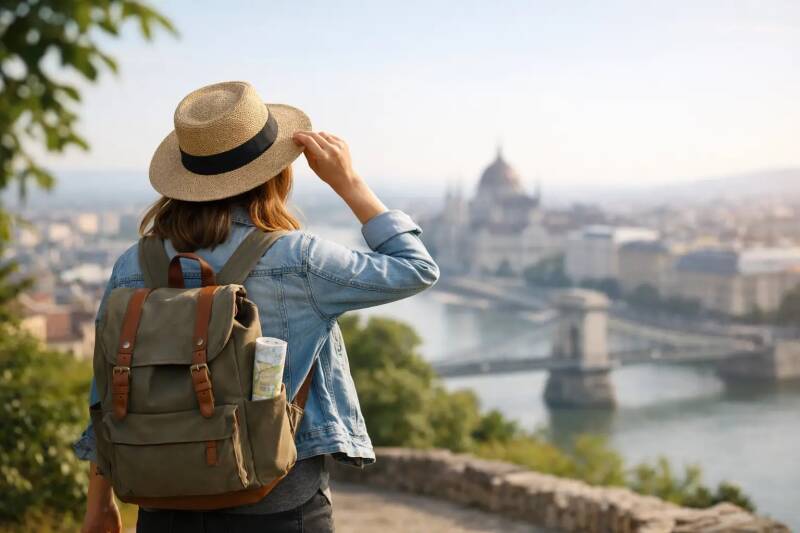
These first time solo travel tips help you stay safe, spend wisely, and build confidence so your first solo trip feels exciting, not overwhelming. The first morning of your first solo trip can feel strangely loud. Even in a quiet room, your brain starts asking questions: Did I book the right area? What if I get lonely? What if something goes wrong and there is no one to figure it out with me? That mix of freedom and fear is exactly why first time solo travel tips matter. Solo travel is not only about bravery. It is about making smart choices that give you enough structure to enjoy the adventure.
I have found that first-time solo travelers rarely need to become different people. They just need better systems. The goal is not to be fearless, spontaneous every second, or constantly making friends with strangers in picturesque cafes. The goal is to feel steady enough to move through a new place with confidence, curiosity, and room for surprise.
Start with a destination that makes life easier
Your first solo trip does not need to prove anything. This is the moment to choose ease over ego. A destination with reliable public transportation, clear tourist infrastructure, good reviews for hostels or hotels, and a generally safe reputation will give you far more confidence than a place that looks impressive on social media but leaves you stressed from day one.
That does not mean you have to choose somewhere bland. It means matching the trip to your current comfort level. If you have never traveled internationally alone, a city where English is widely spoken may be the right first step. If you are already comfortable navigating unfamiliar places, you might be fine somewhere more logistically complex. There is no prize for making your first trip harder than it needs to be.
The best first time solo travel tips begin before you leave
A good solo trip starts long before the airport. Book your first few nights of accommodation in advance, especially if you are arriving late. Save your booking confirmations offline. Screenshot your address in the local language if needed. Know how you will get from the airport or station to where you are staying before you land.
This kind of preparation is not boring. It is what creates freedom later. When the basics are handled, you have far more mental space to notice the smell of street food drifting through a market, the sound of church bells in a side street, or the relief of realizing you can actually do this on your own.
A loose plan works better than an overpacked itinerary. I like to book the essentials, mark a few places I care about, and leave open stretches of time. Too much structure can make solo travel feel like a project. Too little can make it feel untethered. The sweet spot is having a backbone for the trip, not a minute-by-minute script.
Book accommodation for the kind of trip you want
Where you stay shapes how solo travel feels. If you want to meet people easily, a well-reviewed hostel with common spaces, group dinners, or walking tours can help. If you know you recharge best in private, a small guesthouse or hotel may be the better choice.
There is a trade-off here. Social hostels can make connection easier, but they can also be noisy and draining. Private rooms offer calm and better sleep, but they can feel isolating if you are already nervous. Be honest about your energy. Confidence grows faster when you are not forcing yourself into someone elses version of solo travel.
Location matters just as much as price. Saving a little money on a room far from the center can cost you in time, transit, and stress, especially at night. For a first solo trip, paying slightly more for a well-connected, walkable area is often worth it.
Arrive with a safety routine, not a fear mindset
Some of the most useful first time solo travel tips are simple habits. Share your itinerary with someone you trust. Keep digital and paper copies of important documents. Carry a backup bank card separate from your main wallet. Charge your phone before leaving for the day, and bring a small power bank if you can.
Once you arrive, pay attention to the rhythm of the place. Which streets feel lively after dark? Which neighborhoods are best during the day only? Ask your host, hotel staff, or a local guide where to be cautious. Practical awareness is far more useful than generalized anxiety.
I also think solo travelers do well when they practice looking purposeful, even when they are unsure. Step into a cafe if you need to check directions. Do not stand on a sidewalk with your bag open and your full attention on your phone. Move with intention. If something feels off, you do not owe anyone politeness at the expense of your comfort.
Pack lighter than you think you should
Nothing makes a first solo trip harder faster than hauling too much stuff up staircases, across train platforms, or through cobbled streets. When you are alone, you are the luggage handler, the navigator, and the person making quick decisions. Pack for mobility.
Bring versatile clothes, comfortable shoes, and fewer just-in-case items. You can repeat outfits. You can do laundry. You do not need a different version of yourself for every evening. What you do need is a bag you can carry without resentment.
This is one of those lessons that sounds small until you are sweaty, tired, and trying to find your guesthouse after a delayed bus. Traveling light is not just about convenience. It gives you flexibility, which is one of the best parts of going alone.
Budget for peace of mind
Solo travel can be more expensive in sneaky ways. You cannot split taxis, private rooms, or certain tours. That means your budget needs a little breathing room. Build in a buffer for arrival transport, an occasional nicer meal, laundry, or the decision to take the easier option when energy runs low.
I always tell new solo travelers to stop thinking only in terms of the cheapest possible trip. Think in terms of value. Sometimes the smarter spend is the one that reduces stress. A direct train may be worth more than a complicated route that saves a few dollars. A central place to stay may be worth more than a bargain far away.
A simple daily budget helps, but leave room for the kind of experiences that make a trip memorable. Maybe that is a long lunch in a family-run spot, a cooking class, or a museum you linger in longer than expected. Meaningful travel is not always the absolute cheapest travel.
Plan for loneliness before it hits
This is the part people skip. Yes, solo travel can be thrilling. It can also be oddly emotional. You may feel proud at breakfast and lonely by dinner. Both can happen on the same day.
The trick is not to treat loneliness as proof you made the wrong choice. It is often just part of being out of context. Build in easy ways to connect. Join a walking tour. Stay somewhere with communal spaces. Take a class. Start conversations with simple questions rather than waiting for a magical travel moment to appear.
It also helps to create anchors that make you feel like yourself. A morning coffee ritual, a journal, a call home, a run, a familiar playlist - small routines can steady you in a new environment. Independence does not mean never needing comfort.
Leave room for people, but keep your boundaries
One of the best things about traveling alone is how much more open the world becomes. You notice more. People talk to you more. You are more likely to say yes to an invitation, a food recommendation, or a change of plans that turns into your favorite memory.
But openness works best with boundaries. You do not have to share where you are staying, what your plans are, or why you are alone with every person who asks. Trust can be built gradually. Most travel interactions are harmless and kind, but solo travel gets easier when you remember that you are allowed to be warm and cautious at the same time.
At PackLight Journeys, that balance matters. Meaningful travel is often about human connection, but the best connections happen when you feel safe enough to enjoy them.
Let your first solo trip be small if it needs to be
Not every solo journey needs to be a month-long odyssey across multiple countries. A long weekend in a nearby city can teach you a lot. So can a one-week trip where you stay in one place and get to know it well.
There is real value in starting with a trip that lets you practice decision-making on your own without constant logistical churn. You learn how you handle evenings alone, how much structure you like, how you manage transit, and what kind of pace feels good. That knowledge is gold for future trips.
Trust the version of confidence that grows quietly
Confidence on a solo trip rarely arrives as a dramatic transformation. More often, it shows up in smaller moments. You navigate the subway without panic. You ask for help. You recover from a wrong turn. You sit down for dinner alone and realize the world did not collapse.
Those moments matter because they change how you move through both travel and home life. The point of solo travel is not to collect proof that you are fearless. It is to discover that you can handle more than you thought, and that the unknown becomes friendlier once you begin.
If you are waiting to feel completely ready, you may wait a long time. Start prepared, start thoughtfully, and start with enough kindness toward yourself that the trip has room to become what it wants to be.
Add comment
Comments