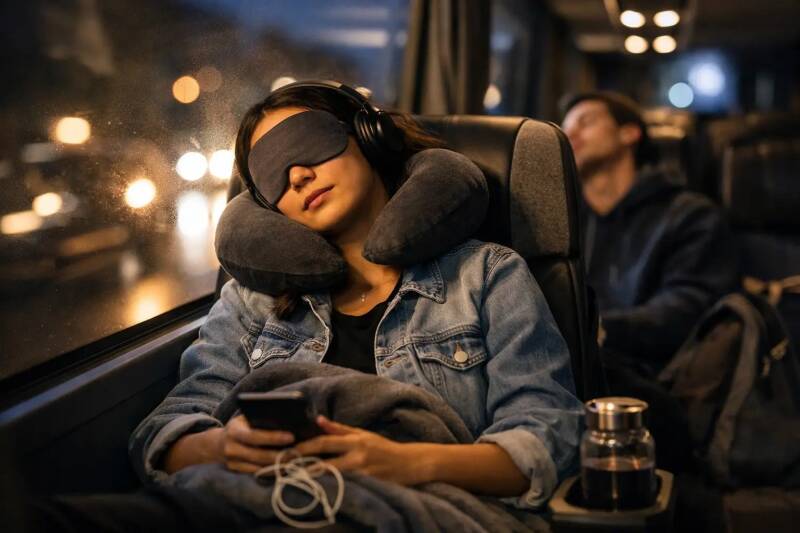
These overnight bus travel tips help you sleep better, stay safe, pack smart, and arrive ready to explore without wasting money or energy. You usually know how an overnight bus ride is going to feel within the first ten minutes. The air conditioning is either heroic or hostile, someone is already watching videos without headphones, and you are suddenly very aware that seven hours is a long time to sit upright. That is why good overnight bus travel tips matter so much. They do not just make the journey more comfortable. They can save your sleep, your mood, and sometimes your first full day in a new place.
I have had overnight bus rides that felt oddly peaceful - highway lights flickering past, a sleepy border crossing, a dawn arrival into a city that still smelled like fresh bread and diesel. I have also had rides where I made every avoidable mistake: too much water before boarding, no extra layer, phone battery at 12 percent, and a seat directly under a speaker. A little preparation changes everything.
Overnight bus travel tips that matter before you board
The best overnight bus rides start long before the station. If you can choose your seat, do it early. Window seats are usually better for sleeping because you have something to lean against and you are not climbing over strangers at 2 a.m. An aisle seat gives you easier bathroom access, but it also means getting bumped by people moving through the bus. It depends on whether your priority is sleep or mobility.
It is also worth looking closely at the arrival time. A bus that gets in at 4:30 a.m. may look efficient on paper, but it can leave you stranded, exhausted, and spending money on bad coffee while you wait for your hostel, hotel, or train connection to wake up. Sometimes paying a little more for a route that arrives after sunrise is the smarter budget move.
Before any overnight ride, I treat my small bag like a survival kit rather than a random dump of things I might need. Keep the essentials with you, not in the luggage hold. That means your passport or ID, wallet, phone, charger, power bank, a layer you can put on quickly, and any medication. If your main bag disappears into the undercarriage, you should still be able to get through the night without stress.
What to pack for an overnight bus
This is one of those places where packing light helps more than people realize. You do not need much, but what you bring should earn its place.
A hoodie or light sweater is nearly always useful, even in warm countries. Overnight buses love extremes, and cold air blasting through the cabin can turn a manageable ride into a miserable one. I also never board without earplugs and an eye mask. They are small, cheap, and much more effective than hoping everyone around you will behave like considerate sleepers.
Bring water, but do not overdo it. A small bottle is enough for most rides. Drinking too little leaves you dry and groggy, but drinking too much can make the night feel longer for obvious reasons. Snacks matter too, especially if you are leaving after dinner or arriving after breakfast. Think simple and quiet: a banana, crackers, a granola bar, nuts. Avoid anything smelly, sticky, or wrapped in packaging that sounds like a bonfire.
If you are prone to motion sickness, do not gamble on feeling fine. Pack whatever usually works for you and take it before the bus winds into mountain roads at midnight. The same goes for neck support. A good travel pillow can be the difference between a broken sleep and no sleep at all.
How to sleep on an overnight bus without hating your life
No article about overnight bus travel tips is complete without the hard truth: you are probably not going to sleep well. The goal is not perfect rest. The goal is enough rest to function the next day.
Start with what you wear. Choose soft, loose layers and shoes you can slip on and off easily. Jeans that feel fine at dinner can feel punitive by 1 a.m. If you are taking a long ride, comfort beats style every time.
Set up your seat area early. Once the lights dim and people settle in, you want your essentials within reach so you are not rummaging around. Put your phone on low power mode, queue up a playlist or white noise, and keep your valuables physically attached to you or tucked somewhere difficult to grab.
Then lower your expectations. This sounds simple, but it helps. If you spend the whole night thinking, I need eight solid hours or tomorrow is ruined, every small interruption feels bigger. Resting with your eyes closed still helps. A few half-sleeps across the night can be enough to get you into the next city with some energy left.
Safety on overnight buses
Overnight travel can feel vulnerable because your senses are dulled and your routine is off. The safest approach is calm, not paranoid.
Keep your most important items on your body or under your leg while you sleep. I usually use a small crossbody bag or money belt for passport, bank cards, and phone, even if I look slightly overprepared. On a long ride, peace of mind is worth it.
If your backpack stays with you in the cabin, wrap a strap around your arm or leg, or wedge it where movement would wake you. If it goes underneath, remove anything valuable first. Do not assume a locked luggage compartment means zero risk.
It is also smart to screenshot your booking details, accommodation address, and onward plans in case your signal disappears or your battery drops. Overnight arrivals can be disorienting, especially in places where stations are hectic or poorly marked. Knowing exactly where you are going keeps you from making tired decisions.
The small habits that make the ride easier
The best bus travelers are not always the most experienced. They are often just the most considerate. Use headphones, keep your light low, and do your big bag rearranging before departure. If you recline your seat, do it gently. On some buses, reclining fully is normal. On others, it starts a silent feud. Read the room.
Bathroom timing matters more than it should. Use the restroom before boarding, even if you think you do not need to. Bus bathroom access varies wildly. Some coaches have one, some do not, and some technically have one that nobody wants to visit after midnight.
I also recommend brushing your teeth or at least freshening up before you settle in. It sounds minor, but it helps mentally separate the day from the journey. You feel less like a crumpled traveler and more like someone intentionally moving through the night.
When overnight bus travel tips save you money - and when they do not
Taking a night bus can look like a financial win because it combines transport and a night of accommodation. Sometimes that is true. Sometimes it is false economy.
If the ride leaves you exhausted, forces you into pricey early check-in fees, or costs you a full day of enjoyment, the savings shrink fast. This is especially true if you are heading somewhere you care about deeply and want to experience fully. I have taken overnight buses that felt like a clever travel move and others that made me wish I had booked a daytime train and one extra hostel night.
The key is being honest about your travel style. If you are resilient, sleep anywhere, and want to stretch your budget across a long trip, overnight buses can be fantastic. If you are a light sleeper, have a packed schedule, or struggle when you are tired, the cheapest ticket may not be the best choice.
Arriving well is part of the trip
A good overnight bus strategy does not end when the wheels stop. Give yourself a soft landing. If you can, know where to get coffee, breakfast, or a safe place to sit near your arrival point. Have offline directions ready. If you are checking into a hostel, send a message ahead if your arrival time is awkward.
I like to keep the first few hours after an overnight ride as light as possible. No ambitious museum circuits, no complicated transfers if I can help it. Just a shower, food, daylight, and a slow re-entry into the place I came to see. That rhythm makes budget travel feel sustainable rather than punishing.
At PackLight Journeys, we talk a lot about traveling smarter, but this is one of the clearest examples of what that really means. Comfort is not a luxury when it protects your energy, your safety, and your ability to stay open to the place you have arrived in.
The overnight bus itself is rarely the most glamorous part of a trip. Still, done well, it becomes its own quiet chapter - a lesson in traveling lighter, expecting less perfection, and making room for the small decisions that shape how a journey feels when morning comes.
Add comment
Comments