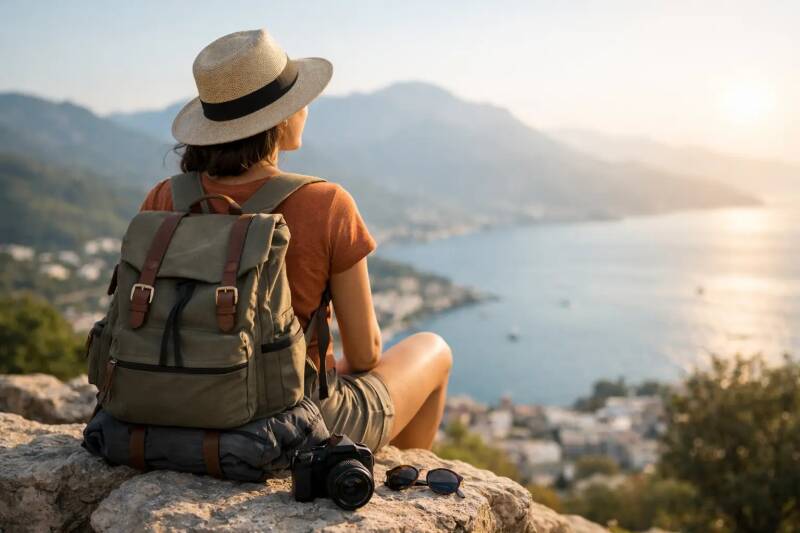
Why do people travel solo? From freedom and confidence to deeper local connection, here are 9 honest reasons people choose to go alone. A friend backs out. A partner cannot get the time off. The group chat goes quiet. You can either stay home and wait for everyone else's schedule to align, or you can book the flight anyway. For many travelers, that is the first real answer to why do people travel solo: because life gets bigger when you stop waiting for permission.
But that is only part of it. People do not travel alone for one neat, inspirational reason. They do it for freedom, yes, but also for rest, reinvention, curiosity, heartbreak, budget control, confidence, and the simple pleasure of moving through the world on their own terms. Solo travel is practical and emotional at the same time. That is what makes it so powerful.
Why do people travel solo in the first place?
Some people imagine solo travel as a grand personal transformation. Sometimes it is. Sometimes it is just a cheap flight to Lisbon because nobody else could make the dates work. Both versions count.
The deeper truth is that traveling alone strips a trip back to its essentials. You notice what you actually want to eat, see, spend, and feel when no one else is shaping the day. That can be exciting. It can also be uncomfortable. Solo travel tends to reveal you to yourself a little faster than everyday life does.
That is why it appeals to so many different kinds of travelers. First-time backpackers use it to build confidence. Burned-out professionals use it to get breathing room. Long-term travelers use it because coordinating every leg with another person is exhausting. Even highly social people choose solo trips because being alone does not mean being lonely. In many places, it can make connection easier.
1. Freedom is the most obvious reason, and still the biggest
When you travel solo, your day belongs to you in a way that is hard to replicate with other people. You can wake up early for a market, skip the museum everyone says you should visit, spend three hours in a cafe, or change cities because you heard about a better food scene two seats over on the train.
That freedom is not just romantic. It is practical. Group travel often means compromise over budget, pace, priorities, and energy. One person wants nightlife, another wants hiking, another wants to sleep in and take photos of brunch. None of those preferences are wrong, but mixing them can leave everyone slightly dissatisfied.
Solo travel removes that friction. The trade-off, of course, is that every decision lands on you. Some travelers love that. Others discover decision fatigue by day five. Freedom feels amazing, but it is not effortless.
2. Solo travel builds confidence in a very real way
There is a specific kind of confidence that comes from landing in an unfamiliar place, figuring out the train system, finding your guesthouse after dark, ordering dinner in a language you barely speak, and realizing you handled it.
That is one reason solo travel keeps calling people back. It creates proof. You stop seeing yourself as someone who might be capable and start seeing yourself as someone who has already done hard things.
This matters especially for first-time solo travelers, women traveling alone, and people who have spent years doubting whether they are adventurous enough. Confidence on the road often spills into life at home. You become more comfortable making decisions, speaking up, and trusting your instincts.
Not every moment feels empowering, though. Some days you get lost, feel awkward, or eat dinner while pretending to read your phone. Confidence grows through those moments, not around them.
3. People travel solo to hear their own thoughts again
Modern life is noisy. Work messages, social obligations, family pressure, endless notifications - it becomes hard to tell what you actually think when your attention is constantly being pulled elsewhere.
A solo trip can feel like stepping out of that static. You notice the sound of your shoes on a side street in Rome, the clatter of plates in a tiny noodle shop, the silence of an early bus station before sunrise. Those moments create space. And in that space, people often hear themselves more clearly.
That is a big reason solo travel can feel restorative even when the itinerary is busy. You are not just seeing a new place. You are recovering your own attention.
For some travelers, this turns into reflection and journaling. For others, it simply means realizing they are happier with slower mornings, less stuff, and fewer plans. Either way, the trip becomes more than sightseeing.
4. It often leads to deeper local connection
This surprises people, but traveling alone can make you more approachable. When you are not enclosed in a couple or group bubble, locals and other travelers are more likely to talk to you. You ask more questions. You linger longer. You notice more.
A solo traveler at a market often ends up in conversation with the vendor. A solo diner at the bar gets restaurant tips from the server. A solo guest on a walking tour actually chats with the people beside them instead of staying within their own circle.
This does not mean solo travel is automatically more authentic. That word gets overused. But it can create more openings for human connection, especially if you are curious and respectful.
At PackLight Journeys, this is part of what makes solo travel so meaningful. It pushes you gently toward the world instead of letting you hide inside your familiar one.
5. Why people travel solo after a life change
Breakups, graduations, job changes, grief, burnout, birthdays that feel heavier than expected - solo trips often appear during transition.
There is a reason for that. Travel creates movement when life feels stuck. It gives shape to a period that might otherwise feel uncertain. You do not need to have a dramatic Eat, Pray, Love storyline to benefit from that. Sometimes a week away is simply a way to reset your nervous system and remember that your life is still yours.
Traveling alone after a major change can be healing because it removes the pressure to perform. You do not have to be fun for anyone else. You do not have to explain your mood. You can be quiet when you need to be quiet.
That said, solo travel is not therapy and it will not magically solve deeper problems. If anything, it can make emotions louder. But for many people, that honesty is part of the point.
6. It can be easier to travel on your actual budget
Money shapes almost every trip, and solo travel gives you more control over it. You choose the cheap guesthouse or the boutique hotel. You decide whether lunch is street food or a long meal. You set the pace, which often means fewer expensive compromises.
Traveling with others can save money in some cases, especially on shared rooms, taxis, and rental cars. But it can also push spending up fast if your priorities do not match. Maybe your friends want a nicer hotel than you do. Maybe they want three cocktails before dinner and a day trip every morning. It adds up.
When you travel solo, the math is cleaner. You know what matters to you and where you are happy to cut back. For budget-conscious travelers, that sense of control is a major reason to go alone.
7. Some people simply enjoy their own company
This reason does not get enough credit because people tend to look for a bigger explanation. But sometimes the answer to why do people travel solo is wonderfully simple: they like it.
They like wandering without conversation. They like eating exactly when they are hungry. They like museums at their own speed and train rides with headphones on. They like making a temporary little life in a new place and answering only to themselves.
Enjoying solitude is not the same as rejecting other people. Many solo travelers are deeply social. They just do not need constant company to feel comfortable. In fact, people who are content alone often travel with more openness because they are not grasping for distraction.
8. It teaches self-reliance without turning you hard
Solo travel asks more of you. You have to plan, adapt, problem-solve, and stay aware. Missed bus? Your problem. Wrong address? Your problem. Feeling off and needing a rest day? Also your call.
That responsibility can be tiring, but it also makes you more capable. You learn how to recover when things go wrong. You get better at reading situations, asking for help, and staying calm.
The best version of self-reliance is not pretending you need nobody. It is knowing you can take care of yourself and still accept kindness from strangers. That balance is one of the quiet gifts of solo travel.
9. Because the world feels different when you meet it alone
Places land differently when nobody is narrating them beside you. A sunrise feels quieter. A wrong turn becomes a real memory instead of a shared complaint. The meal you discover by accident becomes yours in a more intimate way.
This is hard to explain until you have done it. Solo travel can make experiences feel sharper, not because they are objectively better, but because your attention is less split. You are fully inside the moment.
That is why many people keep returning to solo trips even after they have partners, families, or friend groups to travel with. Going alone offers a different kind of presence. Not superior, just different.
If you have been wondering whether solo travel is for you, the honest answer is that you probably do not need a perfect reason. You only need enough curiosity to take the first trip and enough trust in yourself to see what happens when the itinerary becomes entirely your own.
Add comment
Comments