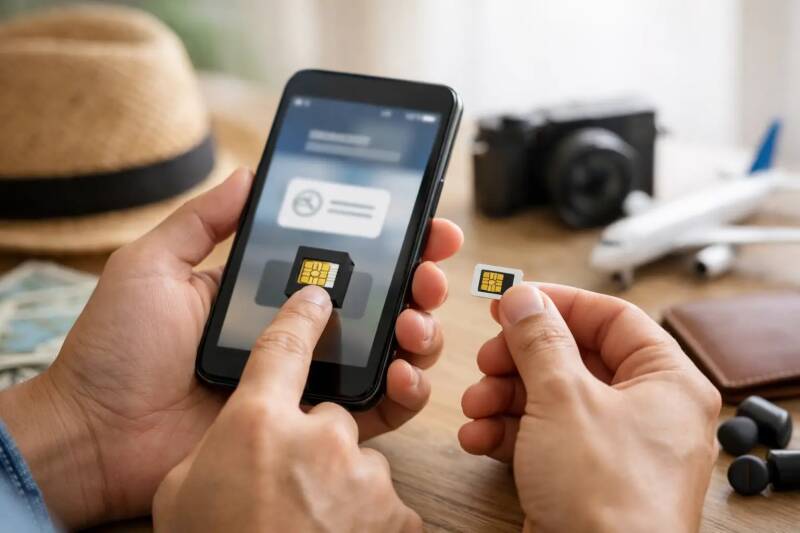
A budget eSIM review for travellers who want cheap data, fewer airport hassles, and smarter trip planning without paying for features they won't use. You feel the value of a good eSIM about ten minutes after landing. You are tired, the airport Wi-Fi barely works, and you need to message your host, check a train schedule, or order a rideshare before the taxi line swallows your budget. That is where a budget eSIM review for travellers becomes less of a tech comparison and more of a travel sanity check.
I have come to think of eSIMs the same way I think about packing cubes or a decent day bag. The best one is not the flashiest. It is the one that quietly solves a problem, saves money, and lets you get on with the actual trip. If you are trying to travel lighter, spend less, and avoid the usual arrival-day chaos, a budget eSIM can be one of the smartest small upgrades you make.
What budget eSIMs actually do well
A budget eSIM is a digital SIM plan you install on your phone before or during a trip. Instead of swapping tiny plastic cards at an airport kiosk, you buy a plan online, scan a QR code or install through an app, and connect when you arrive. That is the simple version.
The more useful version is this: a good budget eSIM removes friction. It helps you navigate an unfamiliar city, book last-minute buses, translate menus, and stay in touch without chasing coffee shop Wi-Fi. For solo travelers especially, that peace of mind matters more than the marketing copy about lightning-fast speeds.
Budget plans tend to work best for data-focused travel. If your main goal is maps, messaging apps, email, and occasional browsing, they are often excellent value. If you need a local phone number for calls and texts, or if you work remotely and rely on heavy hotspot use all day, the cheapest option may stop looking cheap quite so quickly.
Budget eSIM review for travelers: what matters most
There is no single best provider for every trip. The right choice depends on where you are going, how long you are staying, and how you use your phone when you travel.
Price is the obvious starting point, but it should not be the only one. A plan that costs a few dollars less can still be poor value if setup is clunky, coverage drops outside capital cities, or customer support disappears the moment something goes wrong. On the other hand, some slightly pricier budget eSIMs are still far cheaper than international roaming and save you time at exactly the moments when time feels most fragile.
In practical terms, I would judge a budget eSIM on five things: total cost, network coverage, setup speed, data limits, and whether the app is understandable when you are jet-lagged and standing on a curb with 12 percent battery.
That last point sounds small, but it matters. Travelers do not test these products under calm laboratory conditions. We test them while crossing borders, changing time zones, and trying not to miss trains.
The strengths of cheap eSIM plans
The biggest advantage is obvious: lower cost than roaming with your home carrier. For many travelers, especially those from the US facing painful international roaming fees, a budget eSIM can cut connectivity costs down to something reasonable.
The second strength is convenience. You can install a plan before departure and land with data ready to go. That means no airport SIM line, no language barrier at a phone shop, and no fiddling with a SIM tray using a paperclip at a bus station.
The third is flexibility. Many providers offer country-specific, regional, or global plans. If you are spending two weeks in Italy, one local plan may be enough. If you are hopping between Portugal, Spain, and France, a regional Europe plan can be easier. If you are on a longer, more fluid route, the ability to top up from an app is genuinely useful.
For budget-conscious travelers, this flexibility is where eSIMs shine. You are not forced into overbuying data just because a local shop only sells one type of tourist SIM.
Where budget eSIMs can disappoint
Cheap plans nearly always come with trade-offs. The most common one is speed prioritization. Many budget eSIM providers rely on partner networks, and your connection may not get the same priority as a local customer on a premium plan. In a city center, that may be fine. In a crowded train station or at a festival, you may notice the difference.
Another weak point is data generosity. Some plans look cheap until you realize they include very little data for the trip length. If you stream music all day, upload video, or tether your laptop, you can burn through a budget package faster than expected.
Customer support is another mixed bag. Some providers make setup wonderfully simple. Others feel smooth until something fails, then leave you digging through help articles with no real human assistance. If you are a first-time international traveler, that risk is worth taking seriously.
There is also the compatibility issue. Not every phone supports eSIM, and not every unlocked phone supports it equally well in every region. Before buying anything, check that your device is unlocked and eSIM-compatible. It sounds basic, but it is one of the most common avoidable mistakes.
How to choose the right budget eSIM for your trip
Start with your itinerary, not the brand name. A cheap plan for one country can be a bad fit if you are crossing a border halfway through the week. Likewise, a regional plan can seem efficient but cost more than two separate country plans if your route is simple.
Then think honestly about your data habits. If you mostly use offline maps, send messages, and check bookings, a small plan may be enough. If you are a creator, remote worker, or someone who instinctively uploads every market lunch and sunset walk, buy more than you think you need.
Trip length matters too. For a long weekend, convenience often matters more than squeezing out every last dollar of savings. For a month-long trip, small price differences add up, and it becomes worth comparing expiration periods, top-up pricing, and fair use limits.
This is also where your travel style comes in. If your trip is highly structured with hotel Wi-Fi each night, a smaller eSIM plan works well. If you are moving often, taking overnight buses, or relying on public transit in unfamiliar places, dependable mobile data becomes part of your safety net.
A realistic budget eSIM review for travelers on different trips
If you are taking a short city break, budget eSIMs are usually a clear win. You need enough data for maps, restaurant searches, museum bookings, and messaging. Most low-cost plans handle that easily, and the convenience is worth it.
If you are backpacking across several countries, budget eSIMs still make sense, but the details matter more. Regional coverage becomes more valuable, and topping up without hassle matters. This is where the cheapest option may not be the best one.
If you are working while traveling, you need to be more careful. Budget eSIMs can absolutely work, but only if the data allowance and hotspot terms are realistic. For remote workers, one unstable afternoon can cost more than the money saved on a bargain plan.
If you are heading somewhere rural, do not assume an eSIM solves everything. The issue may be the local network itself, not the delivery format. In those cases, researching the strongest network in that specific region matters more than chasing the cheapest digital plan.
My honest verdict on budget eSIMs
For most travelers, I think budget eSIMs are worth it. They remove friction at one of the most vulnerable moments of a trip and usually cost far less than roaming. For city travel, short trips, and budget-conscious itineraries, they are one of the easiest ways to travel smarter without adding weight to your bag or stress to your day.
That said, cheap does not automatically mean best. The strongest budget eSIM is the one that fits your route, your phone, and your habits. A slightly more expensive plan with reliable coverage is often the better bargain. I would rather spend a few extra dollars than lose an hour trying to connect outside an airport after a long-haul flight.
At PackLight Journeys, we tend to think the best travel gear is the kind you stop noticing because it simply works. A good eSIM belongs in that category. Quietly useful, easy to carry, and most appreciated when plans change.
Before your next trip, think about the first hour after landing. Think about the map you will need, the person you will message, the booking you may need to pull up fast. If a budget eSIM helps that hour feel calmer, safer, and less expensive, it has already earned its place in your travel setup.
Add comment
Comments