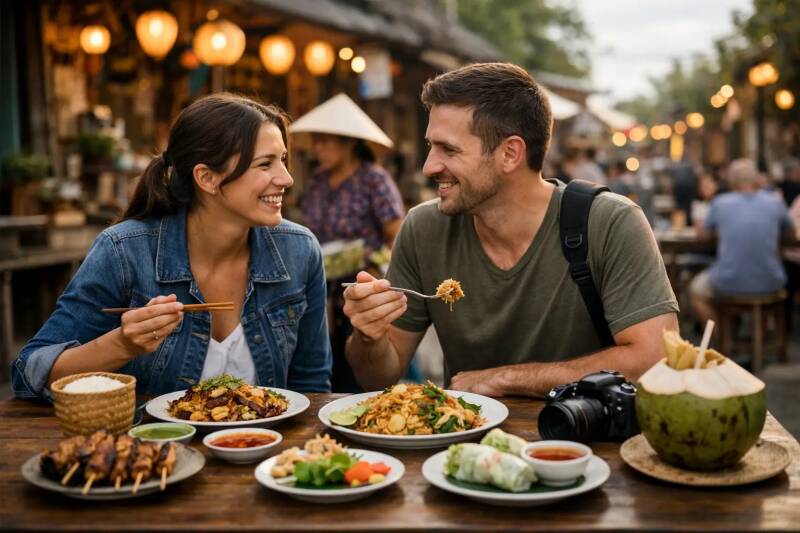
Use these eat like a local travel tips to find better food, spend less, avoid tourist traps, and connect more deeply with every trip. You can learn a lot about a place from its museums and landmarks, but the fastest way I’ve ever understood a city is by sitting on a plastic stool, pointing at a pot I can’t name, and trusting dinner to a stranger. That is why eat like a local travel tips matter so much. They are not just about finding cheaper meals or better photos. They are about stepping out of the tourist script and into the everyday rhythm of a place.
If you have ever landed somewhere new and frozen at the sight of a menu full of unfamiliar words, you are not alone. Most travelers want authentic food experiences, but many still end up eating beside souvenir shops, paying too much for average dishes, and leaving without tasting what locals actually crave on a Tuesday night. The good news is that eating like a local is rarely about luck. It is usually about timing, observation, curiosity, and a little courage.
Why eat like a local travel tips actually change your trip
Food is one of the easiest ways to move beyond surface-level travel. A local breakfast spot shows you who is starting work early. A neighborhood bakery tells you what comfort tastes like. A crowded lunchtime counter can reveal more about a city’s class, pace, and personality than an expensive tasting menu ever will.
There is also a practical upside. Local food is often better value. You are less likely to pay inflated prices for watered-down versions of regional dishes, and more likely to support small businesses that feed the community every day. That said, local does not always mean tiny, hidden, or family-run. In some places, the most loved meal might come from a loud food hall, a market stall, or a chain that locals genuinely use. Authenticity is not always rustic.
Start with neighborhoods, not famous restaurants
When I want to eat well in a new destination, I stop searching for the “best restaurant” and start asking a different question: where do people who live here actually eat when they are hungry, tired, or celebrating something small?
That shift matters. Famous restaurants can be excellent, but they often become detached from everyday local life. Instead, spend time in residential neighborhoods, business districts, university areas, and markets. Places with routine foot traffic tend to reveal more honest food habits than postcard-friendly streets built around visitors.
A simple trick is to go for a walk around noon or early evening and watch where people queue. Look for places with a focused menu, steady turnover, and groups of local diners rather than tables full of rolling suitcases. If workers in office clothes, students, and older residents all eat there, that is a strong sign.
Learn the meal pattern before you arrive
One of the most useful eat like a local travel tips is to understand when people eat, not just what they eat. Travelers often miss great food simply because they show up at the wrong hour.
In Spain, an empty restaurant at 6 p.m. does not mean it is bad. In Vietnam, some of the best noodle shops sell out before midday. In Mexico City, a market might be perfect for a long lunch, while in Japan a tiny ramen shop may have its strongest crowd late after work.
Do a little homework on local eating rhythms before your trip. Look up typical breakfast hours, whether lunch is the main meal, if dinner starts late, and which days markets are busiest. This helps you avoid judging a place by tourist expectations.
Use markets, food halls, and bakeries as your entry point
If you feel nervous about ordering unfamiliar dishes, start somewhere flexible. Markets and food halls are ideal because you can see what people are eating before you commit. You can point, ask questions, order small portions, and try several things without the pressure of a long formal meal.
Bakeries are another easy win. They often give you a quick read on local taste, daily life, and price levels. In one city, breakfast might mean sweet bread and coffee. In another, it is savory pastry, yogurt, or rice porridge. None of this requires a perfect grasp of the language. Appetite and observation do a lot of the work.
Ask better questions than “Where should I eat?”
The answers you get depend on how you ask. “Where should I eat?” often leads to the most famous spot nearby. Instead, ask questions tied to habits and favorites.
Try asking a hotel receptionist, barista, host, or shop owner where they eat on their day off, where they take visiting friends for one classic dish, or what inexpensive lunch spot they actually use. If you eat meat or avoid it, mention that. If you love spicy food, say so. Specific questions usually get better, more personal recommendations.
And when someone gives you advice, take it seriously. Some of my best meals have come from scribbled directions, not polished lists.
Don’t chase “hidden gems” so hard that you miss real life
Travel culture loves the idea of the secret local spot. Sometimes those places are wonderful. Sometimes they are just ordinary restaurants made famous by social media. Chasing hidden gems can turn eating into a scavenger hunt when it should be a way of settling into a place.
A better goal is not secrecy. It is relevance. Ask what matters in this neighborhood, on this street, at this hour. The right meal might be a crowded dumpling shop everyone knows about, not a mysterious alleyway cafe with three followers online.
Watch for the small signs that locals trust a place
You do not need to be a food critic to spot a solid restaurant. I look for menu focus, healthy turnover, and people who seem to know what they are ordering. A laminated menu with 120 dishes in six cuisines is usually not a great sign. A short menu built around a specialty often is.
Other clues help too. Is the staff efficient even when it is busy? Do people come in alone as well as in groups? Are there signs of repeat customers, like casual greetings or diners not needing to read the menu? Local trust often looks quiet and unglamorous.
Be respectful when trying unfamiliar food
Eating like a local is not about proving how adventurous you are. You do not need to force yourself into every challenge dish or act fearless if you are genuinely uncomfortable. Curiosity works best when paired with respect.
Learn a few useful phrases, such as asking what something is, whether it contains certain ingredients, or how it is typically eaten. If you have dietary restrictions, be clear and polite. In some destinations, vegetarian food is easy to find. In others, dishes that seem meat-free may include broth, paste, or garnish made with animal products. “Local” is not always simple if you have allergies, a sensitive stomach, or ethical food choices. That does not mean you are doing travel wrong. It just means you may need a different strategy.
Let one meal lead to the next
The smartest food days often build on each other. If you loved a particular soup, ask where locals go for the best version. If a snack vendor serves something great, ask what drink pairs with it or what people eat afterward. Follow conversations and cravings rather than trying to check off a list.
This is where travel gets personal. You stop collecting “must-eat” items and start building your own map of a place through taste, memory, and human interaction. That bowl of noodles becomes the reason you return to a side street. That bakery becomes your morning ritual. A city starts to feel less like a set and more like a temporary home.
Spend wisely, not cheaply
Eating local can save money, but the cheapest option is not always the best one. Sometimes paying a little more gets you cleaner ingredients, a calmer setting, or a dish made with real care. Budget travel works best when it is intentional, not punishing.
I usually mix quick low-cost meals with one or two places I am genuinely excited about. That balance keeps the trip affordable without making food feel like a constant compromise. For readers of PackLight Journeys, this is the sweet spot - practical choices that still leave room for meaning.
How to eat like a local without pretending to be one
There is a difference between participating in local food culture and performing it. You are a visitor, and that is fine. You do not need to mimic residents or act like you discovered their city better than they did. Good travel is usually more humble than that.
Show up curious. Learn basic etiquette. Tip where appropriate. Be patient if service moves differently than you expect. Return to places you enjoy. If you can, talk to people. Even brief exchanges can turn a meal into a memory.
The best local food experiences rarely feel staged. They feel ordinary in the most beautiful way. A lunch counter packed with regulars. A grandmother choosing fruit at the market. The same vendor setting out the same dish every morning because that is what the neighborhood wants. If you can slow down enough to notice that, you are already getting closer to the place itself.
The next time you travel, let one meal be less planned than the rest. Follow the lunchtime crowd, ask one real question, order the house specialty, and stay long enough to look around. Sometimes that is all it takes for a destination to stop feeling visited and start feeling known.
Add comment
Comments