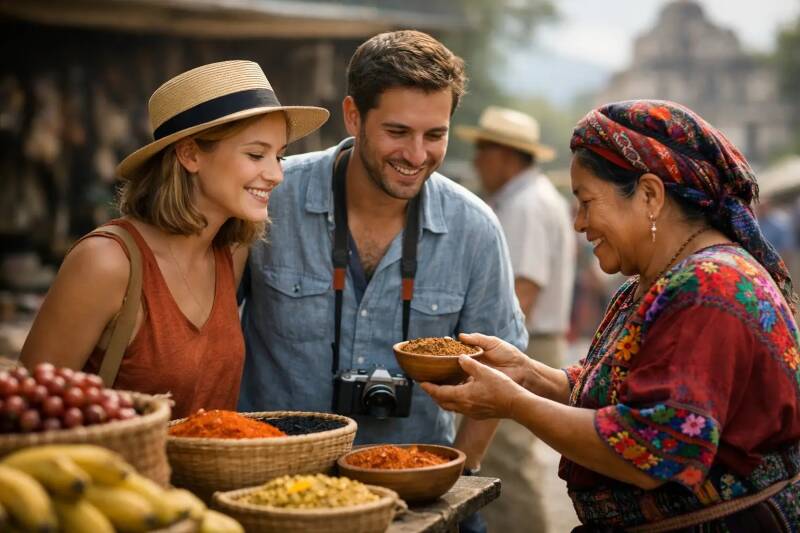
Learn how to immerse in local culture with simple, affordable habits that help you connect more deeply, travel smarter, and avoid tourist traps. You can tell within an hour what kind of trip you’re having. If your first stop is the hotel rooftop, the airport transfer, and the same brunch everyone posts, you’ll probably leave with nice photos and a strangely thin memory of the place. If your first stop is a corner bakery, a neighborhood market, or a conversation that wasn’t on your itinerary, the trip starts to feel different. That’s usually where how to immerse in local culture begins - not with a grand gesture, but with small choices that pull you closer to daily life.
For me, the biggest shift happened when I stopped treating culture like a performance to watch and started treating it like a rhythm to step into. You do not need to become a local in four days. You do not need to speak perfectly, know every custom, or reject every tourist site on principle. You just need to travel in a way that makes room for real contact, real observation, and a little humility.
What how to immerse in local culture really means
A lot of travelers imagine cultural immersion as something dramatic - living with a host family for a month, volunteering abroad, or disappearing into a village no one has heard of. Those experiences can be meaningful, but they are not the only way in.
Most of the time, local culture reveals itself through ordinary things. It’s in when people eat dinner, how loudly they talk on the train, what they do on Sundays, which foods are considered cheap comfort food rather than special-occasion dishes. It’s in the way a cashier greets you, the pace of a morning street, the social rules you only notice after you’ve gotten them slightly wrong.
That matters because culture is not a product you consume. It’s a living pattern. If you approach it like a checklist, you’ll stay on the surface. If you approach it with patience, you begin to notice the logic behind what people do.
Start where daily life happens
If you want a trip to feel more grounded, spend less time chasing landmarks and more time around ordinary routines. Markets, public parks, commuter ferries, laundromats, neighborhood cafes, and small grocery stores tell you more about a place than many top-ten lists ever will.
One of the easiest ways to shift your experience is to build your day around local habits instead of tourist convenience. Wake up when the city wakes up. Buy breakfast where people are on their way to work. Sit somewhere for twenty minutes without checking your phone. Watch what people order, how long they stay, whether they linger or rush.
This is also often cheaper. The places built for residents usually offer better value than the places built for visitors. That doesn’t mean every local spot is automatically better, and it doesn’t mean tourist areas are always bad. It means if every meal, coffee, and errand happens in a polished visitor bubble, your sense of the destination will be filtered from the start.
Stay in a neighborhood, not just near attractions
Where you sleep shapes how you travel. If you stay in the busiest sightseeing district, things may be easier, especially on a short first trip. But ease has a trade-off. You may be surrounded by other travelers, higher prices, and businesses designed to feel familiar rather than specific.
If it’s practical and safe, staying in a residential neighborhood can change the tone of your whole trip. You notice school runs, evening walks, corner stores, the smell of dinner drifting from apartment windows. You start seeing the destination as a place where people live, not just a place where people arrive.
The sweet spot is usually a neighborhood that still has good transit but enough local life to give you context. You do not need to stay somewhere remote to feel immersed. In fact, being too far out can create stress and make you retreat back into convenience. Close enough to move easily, local enough to observe real life - that balance works well.
Learn a little language, even if you’re bad at it
Few things open doors faster than trying. Not performing, not showing off, just trying. Learn how to say hello, thank you, excuse me, please, I’m sorry, and a few food-related basics. Add one useful question, like “What do you recommend?” or “How does this work?” and suddenly everyday moments become conversations.
Perfect pronunciation is not the goal. Respect is. People can usually tell the difference between someone making an honest effort and someone expecting the world to adapt to them. Even if the reply comes back in English, your attempt changes the exchange.
There are limits, of course. In some places, people are busy and interactions stay brief. In others, language gaps can be tiring for everyone involved. Don’t force it. A smile, good manners, and a willingness to be gently corrected go a long way.
Eat for context, not just for ratings
Food is one of the most direct ways into local culture, but only if you let it teach you something. Instead of hunting only for the highest-rated “must-try” places, ask simpler questions. What do people eat on a workday? What is considered affordable, festive, comforting, or nostalgic? What changes by region, season, or time of day?
A city’s famous dish matters, but so does the everyday lunch special. So does the snack people buy at 4 p.m., the bread they pick up before dinner, the cheap soup that appears in every neighborhood. These foods tell you how people actually live.
If you’re on a budget, this approach helps too. Local diners, market stalls, bakeries, and family-run lunch spots often cost less than trend-driven restaurants aimed at visitors. You might not always get the most photogenic meal, but you’ll often get a more honest one.
Choose conversations over performances
Cultural experiences sold to travelers are not always bad. A cooking class, walking tour, or music performance can give valuable context, especially when run by local guides who care about sharing their world well. But if every encounter is packaged, timed, and translated for you, you miss the rough edges that make a place feel real.
Whenever possible, leave room for unscripted moments. Chat with the bookstore owner. Ask the market vendor what fruit is in season. Sit at the bar instead of taking the hidden corner table. Book the small group tour where questions are welcome, not the giant one where you follow a flag and hear a microphone.
Some of my most memorable travel moments have been tiny: being shown how to eat something properly, getting caught in the rain under a shop awning with strangers, being told that the “traditional” restaurant I was heading to was overpriced and that I should walk two blocks farther. None of those moments could be planned, but all of them came from being available to the place.
Respect the rules you don’t fully understand yet
This is the part many articles skip, but it matters. If you want to know how to immerse in local culture without becoming an annoying traveler, pay attention to social cues before asserting your own preferences.
Dress codes, volume, line etiquette, temple behavior, tipping norms, photography boundaries, and public affection vary for reasons that may not be obvious to you. You do not have to agree with everything to respect it while you are a guest. Observing first is often smarter than assuming your way is the neutral one.
There’s nuance here. Not every “local custom” is harmless, and not every visitor should feel obliged to participate in things that conflict with their safety or values. Immersion does not mean self-erasure. It means moving with awareness, asking questions, and recognizing that your comfort is not the only measure of what is normal.
Slow down enough to notice what’s actually happening
Fast travel can be fun, but it rarely creates depth. If you change cities every two days, spend hours in transit, and plan every hour, there’s very little room for the place to surprise you.
Slowing down does not mean doing less of value. It means creating enough space to return to the same cafe twice, walk the same street at different times of day, and recognize faces instead of constantly decoding new ones. Repetition is underrated. Familiarity is where observation gets sharper.
Even on a short trip, try anchoring yourself with a few repeated habits. Buy your morning coffee from the same spot. Take an evening walk in the same square. Visit one market more than once. The second visit is often where things begin to feel less transactional.
Spend your money in ways that reflect your values
Where your money goes shapes the kind of travel you’re supporting. If meaningful travel matters to you, choose small businesses when you can, eat at independently run places, buy from makers instead of mass-produced souvenir shops, and be cautious about experiences that turn communities into backdrops.
This is not about moral perfection. Budget, accessibility, timing, and convenience all matter. Sometimes the chain hotel makes sense. Sometimes the cheapest option is the only realistic one. But when you do have a choice, spending in ways that keep more value local usually creates a better travel experience anyway. The interaction is often warmer, the story clearer, and the memory stronger.
Let yourself be a beginner
A lot of people stay on the surface because they are afraid of getting things wrong. That fear is understandable. No one wants to be disrespectful, confused, or visibly out of place. But awkwardness is part of learning, and travel gets better when you stop expecting yourself to perform competence at every moment.
Ask simple questions. Accept correction. Laugh at your mistakes without turning them into someone else’s burden. Curiosity with humility is far more effective than confidence without awareness.
At PackLight Journeys, we talk a lot about traveling smarter, but smarter travel is not just better booking strategy or lighter luggage. It’s knowing that the richest parts of a trip are often the least polished ones - the conversations, routines, flavors, and small acts of attention that make a place feel inhabited rather than staged.
If you want your next trip to stay with you, don’t aim to see everything. Aim to notice more, ask better questions, and leave room for the place to meet you halfway.
Add comment
Comments