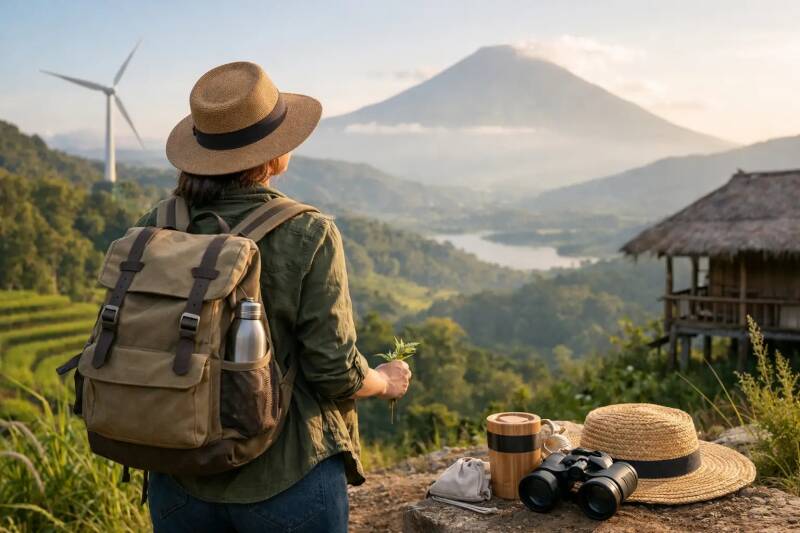
These sustainable travel tips for beginners help you cut waste, spend wisely, support locals, and travel with more care from your first trip. The first time I tried to travel more responsibly, I made it weirdly complicated. I obsessed over eco labels, felt guilty about every flight, and packed a metal straw like it was going to save the planet on its own. If you are looking for sustainable travel tips for beginners, the good news is this: you do not need to be perfect to travel better. You just need to make a few smarter choices, more often than not.
That is a relief, because most first-time travelers already have enough on their minds. You are figuring out budgets, transport, what to pack, and how not to look completely lost at the train station. Sustainable travel should make your trip feel more intentional, not more stressful. At its best, it helps you waste less, spend your money more thoughtfully, and leave a place with more respect than impact.
What sustainable travel actually means
For beginners, sustainable travel is less about chasing some flawless standard and more about understanding consequences. Every trip affects a place. Your hotel uses water and energy. Your meals shape where your money goes. The way you move around can either add pressure to a destination or spread benefits more fairly.
That sounds heavy, but in practice it is pretty simple. Sustainable travel usually comes down to three things: reducing unnecessary harm, supporting local communities, and traveling at a pace that lets you engage rather than just consume. You will not get every decision right. I certainly do not. But even small shifts can change the shape of a trip.
Sustainable travel tips for beginners that matter most
1. Start by taking fewer, better trips
This is not the flashiest advice, but it might be the most useful. If you are trying to travel more sustainably, one thoughtful trip often has less impact than several quick, cheap, high-movement breaks stitched together for the sake of ticking boxes.
Staying longer in one place reduces transport churn and usually leads to a richer experience. You stop treating a destination like a backdrop and start noticing the bakery owner who remembers your order, the park where locals gather after work, the neighborhood market that does not appear on every listicle. Slower travel is not always possible if you have limited vacation time, but even adding one extra night and cutting one extra stop can make a difference.
2. Be realistic about transport, then choose better within your limits
Flights are often the biggest part of a trip's footprint, especially for long-haul travel. If you can take a train or bus instead of a short flight, that is usually the better option. It also tends to be more grounded and memorable. You actually see the landscape change. You arrive in the middle of a city instead of somewhere miles away, under fluorescent lights, waiting for a shuttle.
That said, not everyone can skip flying. Cost, time, geography, and accessibility matter. If you do fly, try to take nonstop routes when possible, avoid bouncing between multiple cities in a short period, and make the trip count by staying longer. Sustainable choices are rarely all-or-nothing. They are often about reducing excess.
3. Pack lighter than you think you need to
I say this as someone who has carried too much through cobbled streets and up staircases with no elevator. Packing light is not just easier on your back and cheaper if you are dodging baggage fees. It can also reduce fuel use and keep you from buying unnecessary extras on the road.
A lighter bag usually means a more thoughtful trip. You bring versatile clothes, refill what you already own, and stop packing for imaginary scenarios that never happen. Reusables help too, but keep them practical. A refillable water bottle, a tote bag, and a small food container can genuinely cut waste. Ten niche gadgets that make you feel virtuous but never leave your bag are another story.
4. Choose accommodations with a local footprint, not just a green slogan
A towel reuse sign does not automatically make a place sustainable. Some hotels are making meaningful efforts with water systems, renewable energy, and waste reduction. Others are just very good at printing leaves on their website.
As a beginner, it helps to look beyond marketing. Smaller guesthouses, family-run stays, and locally owned apartments can keep more money in the community, though that is not guaranteed. A big hotel may have stronger environmental systems than a tiny property. It depends. The useful question is this: where is your money going, and how does this place operate?
Look for signs of substance. Do they reduce single-use plastics? Hire local staff? Offer refill stations? Serve regional food? Encourage respectful behavior instead of selling a fantasy version of the destination? A place does not need to be perfect to be a better choice.
5. Spend your money where it actually helps
One of the most practical sustainable travel tips for beginners is to think about the path your money takes. A cheap chain meal may save a few dollars, but a family-run cafe, neighborhood market, or local guide often circulates money more directly in the place you are visiting.
This does not mean every purchase needs to become a moral test. Sometimes you are tired, hungry, and the familiar option wins. Fair enough. But across a trip, your spending patterns matter. Book local experiences with people who know the place deeply. Buy food that is grown or made nearby. Choose souvenirs you can trace back to a real maker rather than an anonymous import pile by the register.
You usually get something better in return too. Better stories. Better conversations. Better meals.
6. Learn the basic etiquette before you arrive
Respect is part of sustainability, and it is often ignored in favor of the more visible eco habits. But a reusable bottle means very little if you treat a destination like it exists for your entertainment.
Before a trip, spend half an hour learning a few things: local dress expectations, tipping norms, greetings, dining customs, and any pressure points caused by tourism. In some places, that might mean understanding water scarcity. In others, it could mean avoiding behavior that disrupts neighborhoods, religious spaces, or small businesses.
This kind of preparation changes how you move through a place. You ask better questions. You avoid careless mistakes. You are less likely to confuse convenience with entitlement.
7. Waste less, especially in small daily moments
Most travel waste does not come from one dramatic mistake. It comes from tiny repeated habits: grabbing bottled water at every stop, taking disposable cutlery with takeaway meals, over-ordering food, printing papers you will never use, buying cheap items because you forgot to pack basic essentials.
The fix is not glamorous. It is mostly about paying attention. Refill your bottle where it is safe to do so. Carry a few snacks so you are not constantly buying overpackaged convenience food. Say no to extras you do not need. Finish what you order, or order less and add more later.
This also saves money, which is one reason sustainable travel works so well for beginners. Responsible choices are often the practical ones too.
8. Avoid attractions that treat animals or people as props
If an activity depends on stress, confinement, staged poverty, or humiliation, skip it. That includes obvious red flags like wildlife selfies with sedated animals, but also some experiences marketed as cultural immersion when they are really just spectacle.
A good rule: if the whole setup feels designed for your photo rather than for the dignity of the people, animals, or traditions involved, take a step back. The more meaningful alternatives are usually quieter. A walking food tour led by a local. A cooking class in someone's home. A conservation-focused wildlife experience with clear boundaries. These may feel less flashy online, but they tend to stay with you longer.
9. Let the place set the pace
Beginners often travel with an invisible pressure to maximize every day. See more. Eat more. Post more. Move faster. But constant consumption is exhausting for both travelers and destinations.
Some of the most sustainable travel habits are really habits of attention. Walk when you can. Return to the same cafe. Spend an afternoon in a public park instead of booking another attraction. Take local recommendations seriously, especially when they lead you away from crowded hotspots and toward places that can actually welcome you.
This is where travel starts to feel less extractive. You are not there to strip a place for content and leave. You are there to experience it with some humility.
A beginner mindset that makes sustainable travel easier
If this all feels like a lot, start with three decisions: how you get there, where you stay, and where your money goes once you arrive. Those choices carry more weight than whether you remembered bamboo cutlery.
It also helps to drop the idea that sustainable travelers all have expensive gear, endless time, or spotless ethics. Many do not. A budget traveler taking trains, eating local food, and staying longer in one place may be traveling more responsibly than someone spending heavily on a supposedly eco trip built around constant movement and curated optics.
Travel better where you can. Be honest about your limits. Pay attention to what a place is telling you. That is enough to begin, and honestly, beginning well matters more than looking perfect ever will.
Add comment
Comments