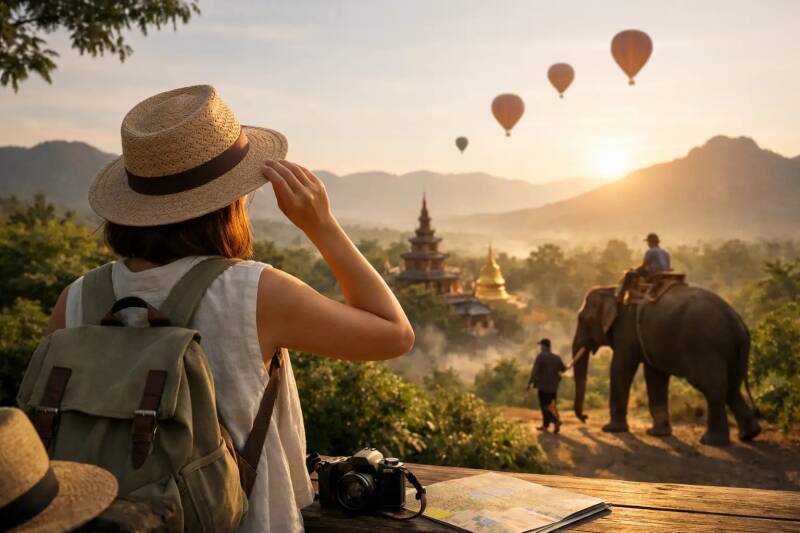
Learn how to create meaningful travel experiences through local connection, slower planning, smart budgeting, and choices that stay with you. You can visit five cities in ten days, fill your camera roll, and still come home feeling like you barely touched the place. Most travelers know that feeling. The trip looked good on paper, but it moved too fast, stayed too close to tourist routines, and left little room for the kind of moments that make meaningful travel experiences stick.
I’ve learned that the trips I remember most are rarely the most expensive or the most ambitious. They’re the ones where I slowed down long enough to notice the morning bakery line, accepted the awkwardness of a language barrier, got invited into a real conversation, or changed plans because a local recommended somewhere better. Meaningful travel experiences usually begin when you stop trying to collect places and start paying attention to what a place actually feels like.
What meaningful travel experiences really look like
A meaningful trip does not have to be remote, spiritual, or dramatic. It can happen on a weekend in a nearby city, on a budget backpacking route, or during your first solo trip abroad. What makes it meaningful is not distance or prestige. It’s the level of connection.
That connection can take a few forms. Sometimes it’s connection to people - a host, a guide, a market vendor, a fellow train passenger, a family running a small guesthouse. Sometimes it’s connection to place - understanding why a neighborhood looks the way it does, why a dish matters, why a local tradition still holds weight. And sometimes it’s connection to yourself - realizing what unsettles you, what energizes you, and how capable you become once you’re outside your usual routines.
This is also where a lot of travelers get tripped up. They assume meaning has to arrive as a life-changing revelation. Usually it doesn’t. More often, it builds quietly through small choices: staying longer, asking one more question, leaving an hour unplanned, saying yes to the community food spot instead of the polished restaurant made for visitors.
Why some trips feel flat
If a trip feels thin, it’s often because the schedule is doing too much. When every day is packed from breakfast to bedtime, there’s no room to wander, notice, or respond. You’re operating a checklist, not having an experience.
Another common issue is over-researching the obvious and under-researching the human side. You might know the top ten attractions and the best photo viewpoints, but not where locals actually spend time, what neighborhood to walk in at dusk, or which market is worth visiting when you’re not in a rush.
Budget can matter too, but not in the way people think. Spending less does not automatically make a trip more authentic, and spending more does not automatically make it shallow. Still, smart budget choices often help. Public transit, local guesthouses, neighborhood cafes, and longer stays tend to put you closer to real daily life than expensive, insulated travel setups.
How to plan for meaningful travel experiences
Meaningful travel experiences start before the flight. The planning stage is where you decide whether your trip will be all consumption or actual engagement.
Start by building your trip around a few anchors instead of an endless list. Pick one or two places you genuinely want to understand, not just pass through. If you have seven days, two bases are often enough. If you’re heading somewhere for only three or four days, one base is usually better. Fewer moves mean more energy and more chances to notice the rhythm of a place.
Then, research beyond landmarks. Look into local food traditions, public spaces, neighborhood markets, small museums, community events, and regional history. Read personal accounts if you can. The goal is not to arrive as an expert. It’s to arrive with context.
I also recommend choosing one experience that requires participation rather than observation. That could be a cooking class, a walking tour led by a local, a farm visit, a language exchange, a craft workshop, or a food tour in a residential area. Passive sightseeing has its place, but participation gives you entry into stories you would not reach on your own.
Leave room for unscripted time
This is where many good trips become memorable ones. Keep part of each day open. Not the least important part - a real part. An unplanned afternoon can lead to a neighborhood festival, a conversation in a bookstore, or a meal you never would have booked in advance.
There’s a trade-off here. Some travelers feel safer with tight structure, especially on a first solo trip or in a destination that feels unfamiliar. That’s understandable. You do not need to throw out planning to travel meaningfully. A better approach is to plan your essentials, then protect space around them.
Spend money where it creates connection
If you’re traveling on a budget, this matters a lot. Meaning does not come from spending more. It comes from spending with intention.
I’d rather save money on flights, fancy hotel upgrades, and overpriced transport options, then put that money toward experiences that create context. A meal in a family-run restaurant, a locally guided tour, a market tasting, or a longer stay in a modest guesthouse often gives you more than a polished, expensive experience that could be anywhere.
This is one reason PackLight Journeys leans so strongly into practical travel advice. The smartest budget isn’t the cheapest one. It’s the one that protects the parts of travel that actually matter.
There’s also a difference between cheap and false economy. Booking accommodation far outside the area you want to explore might save a little money, but it can cost you time, spontaneity, and immersion. Sometimes paying slightly more to stay in a walkable neighborhood changes the whole feel of your trip.
Talk to people, even when it feels awkward
If you want deeper travel, conversation matters. Not forced, performative interaction, but simple openness. Ask your host where they eat on their day off. Ask the bakery staff what people order in the morning. Ask a shop owner what product is local. Ask a guide what visitors usually miss.
You do not need to become instantly outgoing. A lot of meaningful travel experiences begin with very ordinary exchanges. A short conversation can reshape your day, point you toward a better place, or give you a more grounded sense of where you are.
Of course, this depends on context. Respect cultural norms, read the room, and don’t treat local people as part of the attraction. Curiosity should come with humility. The goal is not to extract a story. It’s to be present enough to receive one if it’s offered.
Let food do some of the work
Food is one of the fastest ways into a place because it carries history, geography, migration, class, and memory all at once. If you want your trip to feel richer, eat with attention.
That doesn’t mean chasing only famous dishes. Sometimes the most revealing meal is the inexpensive lunch special full of office workers, the regional snack sold at a bus station, or the corner spot where nobody is photographing their plate. Notice what people eat quickly, what they eat slowly, what shows up at breakfast, and what ingredients keep reappearing.
A good food market can teach you more in an hour than a polished tourist district can in a day. You’ll learn what’s seasonal, what’s valued, and what daily life tastes like when nobody is trying to package it for visitors.
Travel slower than you think you need to
Slower travel is not only for long-term backpackers or people with flexible jobs. It works on shorter trips too. Even slowing down by 20 percent changes things.
Walk more. Return to the same coffee shop twice. Sit in a square without doing anything productive. Learn the route back to your accommodation without your phone. Notice which sounds belong to the city in the morning versus late afternoon. Repetition creates familiarity, and familiarity is often where meaning begins.
The trade-off, of course, is that you may see fewer headline attractions. But that’s not always a loss. Many travelers remember one neighborhood they truly got to know more vividly than six places they rushed through.
Keep a record while the trip is happening
A meaningful trip can disappear into blur surprisingly fast. Take notes while you’re there. Not polished journal entries - just details. The smell outside a train station after rain. The sentence a stranger said that made you laugh. The mistake that turned into your favorite afternoon. The meal you almost skipped.
Writing things down helps you recognize meaning in real time, not only after you return home. It also keeps you from measuring your trip only by photos, which usually favor the most visible moments rather than the most affecting ones.
The best trips change what you carry home
Not every journey needs to transform your life. That’s too much pressure to put on a plane ticket. But the best ones do leave a mark. They make you more observant, more flexible, more aware of how other people live, and sometimes more honest about how you want to live too.
If you’re looking for meaningful travel experiences, aim for less performance and more presence. Choose fewer places, ask better questions, spend with intention, and leave enough room for the day to surprise you. Often, the part of the trip that stays with you longest is the one you never could have scheduled.
Add comment
Comments