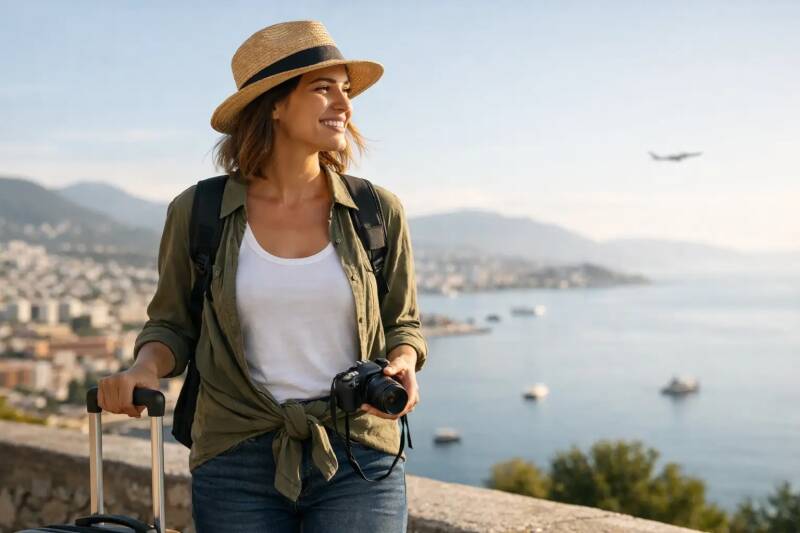
Build courage with solo travel confidence tips that help you plan smarter, stay calm, meet people, and enjoy traveling alone with ease. The first solo trip rarely begins at the airport. It starts at 2 a.m., staring at your phone, wondering whether you are brave enough to book the ticket.
That hesitation is normal. Most people looking for solo travel confidence tips are not trying to become fearless. They just want to stop second-guessing themselves long enough to go. Confidence on the road is usually not a personality trait you either have or do not have. It is something you build in small, practical layers - before you leave, on your first day, and every time you handle a moment that would have scared the earlier version of you.
I have found that solo travel confidence grows fastest when you stop treating it like a mood and start treating it like a skill. The good news is that skills can be practiced.
Solo travel confidence tips that actually change the trip
A lot of advice about traveling alone sounds inspiring but vague. Trust yourself. Be spontaneous. Say yes more. Sometimes that helps. Sometimes it just makes a nervous first-time solo traveler feel like they are already doing it wrong.
Real confidence comes from reducing friction. When you know how you are getting from the airport, where your first meal is coming from, and what your backup plan is if your phone dies, your brain has more space for curiosity. You are not less adventurous for wanting a plan. In many cases, the plan is what makes the adventure possible.
1. Make your first 24 hours almost boring
If you land in a new country late at night, need three trains to reach your hostel, and have not eaten since breakfast, your confidence will not feel high. That does not mean solo travel is not for you. It means you designed a stressful arrival.
For your first solo trip, or even your first day in a new destination, choose ease over bragging rights. Book accommodation with clear reviews, arrange an easy transfer if the arrival is complicated, and save the high-energy sightseeing for later. There is a big difference between challenging yourself and setting yourself up to feel overwhelmed.
A calm first day creates momentum. Once you have checked in, taken a shower, and walked around the block for coffee or a simple meal, the place starts to feel less like a test and more like a real experience.
2. Practice being alone at home before you go
One of the most overlooked solo travel confidence tips has nothing to do with passports or packing lists. It is learning how you respond to your own company.
If every meal out, every movie, and every free afternoon has always been shared with someone else, solo travel can feel emotionally loud. Try taking yourself out before the trip. Have brunch alone. Spend a day in a nearby town by yourself. Navigate a museum without companionship as a buffer.
This kind of practice does two things. First, it makes the mechanics of being alone feel ordinary. Second, it helps you notice what actually unsettles you. For some people, it is safety anxiety. For others, it is the fear of being seen alone. Those are different problems, and they need different solutions.
3. Build a repeatable safety routine
Confidence is easier when it is backed by habits. I do not mean turning every trip into a military operation. I mean having a few routines you can rely on without thinking too hard.
Keep your first night address written down somewhere other than your phone. Share your rough itinerary with one trusted person. Know how you will access money if one card stops working. Save offline maps. Arrive with enough local currency or a working payment method to get yourself through the first few hours.
These small systems matter because they prevent minor problems from becoming emotional spirals. The goal is not paranoia. The goal is calm. When something goes sideways - and eventually something always does - a routine gives you a place to start.
How to build confidence while traveling solo
Pre-trip planning helps, but the real test comes when you are standing in an unfamiliar station, reading signs too quickly, and wondering whether everyone else somehow understands what is going on. They do not. They are just hiding it better.
4. Learn the first three fixes for a bad moment
Almost every rough patch on a solo trip feels bigger than it is because it happens in public and far from home. Missed bus. Wrong turn. Bad dorm room. Sudden loneliness. When you are alone, there is no companion to absorb the panic.
So give yourself a simple reset formula. Mine is this: sit down, drink water, and solve only the next problem. Not the whole trip. Not the meaning of traveling alone. Just the next practical step.
If you got off at the wrong stop, your next problem is figuring out where you are. If your hostel feels off, your next problem is finding a cafe with Wi-Fi and looking at alternatives. If you feel lonely, your next problem might simply be getting out of the room and joining a walking tour.
Confidence often looks like composure from the outside, but on the inside it is usually a series of tiny recoveries.
5. Choose connection points instead of waiting for magic
Many new solo travelers secretly worry about two opposite things at once: being lonely and being bothered. Both are valid. Traveling alone can be freeing, but it can also feel exposing, especially in the first few days.
The easiest answer is not to force instant friendship. It is to build low-pressure contact into your trip. Stay somewhere with common areas if you want conversation. Join food tours, day trips, language exchanges, or small group activities that give people something to talk about besides the usual where-are-you-from script.
There is a trade-off here. More social accommodation can mean less privacy and sleep. More privacy can mean more quiet than you want. You do not have to pick one style for the whole trip. Some of my best solo travel days have come from mixing both - a sociable hostel for two nights, then a private room to reset.
6. Stop measuring yourself against other solo travelers
This one matters more than people admit. You will meet travelers who seem effortlessly bold. They rent scooters on arrival, make friends in ten minutes, and never appear to need a map. Good for them. That is their travel style, not a standard you have to meet.
Some people are confident socially but disorganized logistically. Some are excellent planners but slow to trust strangers. Some love nights out and hate changing cities often. Solo travel is not a performance, and there is no prize for acting like the most outgoing person in the hostel kitchen.
Your version of confidence may look quieter. It may mean eating dinner alone without feeling awkward, speaking up when a taxi is going the wrong way, or deciding you need an early night instead of forcing yourself into a pub crawl. That still counts.
7. Get comfortable asking simple questions
There is a particular kind of solo traveler pride that can make life harder than it needs to be. You do not need to prove competence by struggling in silence.
Ask the cafe staff if this neighborhood is walkable at night. Ask your host which bus app locals actually use. Ask the person at the train counter to write the platform number down if you are worried you misheard it. Most travel confidence comes not from knowing everything, but from trusting that you can get the information you need.
It also helps to ask early. Problems are easier to solve before you are tired, hungry, and carrying your backpack uphill.
8. Give yourself one small challenge each day
If you want confidence to grow, it needs something to grow against. Not a dramatic leap. Just one manageable stretch.
Maybe that means ordering food in the local language, starting a conversation in the hostel, navigating across town without relying on a ride-share, or booking a day trip on your own instead of waiting for someone to join you. Small wins compound fast. By the end of a week, you are no longer imagining whether you can handle solo travel. You have evidence.
The trick is to keep the challenge proportionate. If you are already exhausted, your challenge might simply be going out for dinner alone instead of ordering in. If you are feeling strong, it might be taking a regional train to a nearby town. Confidence grows best when the stretch feels real but not crushing.
9. Let the trip change shape if it needs to
One of the most mature forms of confidence is flexibility. If a city feels draining, leave earlier. If you love a place, stay longer. If the itinerary you planned at home suddenly feels too packed, loosen it.
First-time solo travelers often think confidence means sticking to the plan no matter what. Usually, it means paying attention to yourself honestly. Sometimes pushing through is the right call. Sometimes rest is the smarter move. Knowing the difference is part of becoming a better traveler.
At PackLight Journeys, we come back to this often: meaningful travel is not about collecting the most experiences as quickly as possible. It is about staying open enough to let a place meet you where you are.
The confidence you bring home
Something quiet happens after a solo trip. You return with photos, stories, and maybe a few transportation mishaps you can laugh about later. But you also come back with proof. You figured things out. You handled uncertainty. You made decisions in unfamiliar places and kept moving.
That is why solo travel confidence tips matter, but only up to a point. Eventually the real confidence comes from doing it imperfectly and realizing you were capable the whole time. Book the trip that feels just slightly beyond your comfort zone, then meet yourself there.
Add comment
Comments