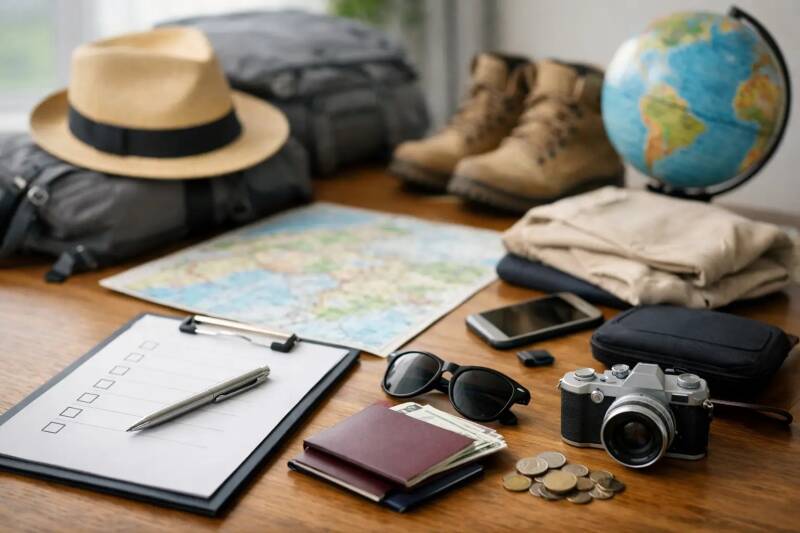
Use this long term travel checklist to plan smarter, pack lighter, manage money, and avoid the mistakes that derail extended trips abroad. Three weeks into a long trip is a terrible time to realize your bank has frozen your card, your medication is running low, and you packed for a fantasy version of yourself. A good long term travel checklist is not about squeezing more into your backpack. It is about protecting your freedom once the trip is already moving, when small mistakes start getting expensive.
I have learned that extended travel asks different questions than a short vacation. You are not just planning flights and outfits. You are building a temporary life on the road, with all the boring but essential pieces that make that life feel stable. When those pieces are in place, you get more room for the parts that matter - the family-run guesthouse, the night market meal you did not plan, the conversation on a bus that changes the shape of a day.
A long term travel checklist starts before you pack
The biggest mistake I see is treating long-term travel like a regular trip with more socks. The longer you are away, the more important your systems become. Before you think about packing cubes or which sandals to bring, sort out the admin that keeps your trip from unraveling.
Start with your passport. Check the expiration date and look at entry requirements for every country on your route, not just the first one. Some places want six months of validity remaining, blank passport pages, proof of onward travel, or visa applications done in advance. This is one of those areas where optimism is useless. Border staff do not care that you meant to book the onward ticket later.
Then look at your finances. Tell your bank you are traveling, set up a backup card, and make sure you can access your accounts without relying on a text message sent to a SIM card you may not have. Two-factor authentication can become surprisingly annoying when you are in a different time zone, on weak Wi-Fi, trying to pay for a train.
Health needs the same attention. If you take prescription medication, speak to your doctor well before departure and ask about supply limits, generic names, and what paperwork you might need. Travel insurance is not glamorous, but on a long trip it matters even more because more time away means more chances for delays, illness, lost gear, or a change of plans.
The documents that deserve a second layer of protection
You do not need to carry your entire life in paper form, but you do need a few safeguards. Keep digital copies of your passport, visas, insurance details, vaccination records, and important bookings. Store them somewhere secure that you can access without your main device if necessary.
I also like having a small physical folder for the things that still move more smoothly on paper. That might include a couple of passport photos, printed insurance details, and emergency contacts. It feels slightly old-school until your phone battery dies at the wrong moment.
Your practical document check
Make sure you have your passport, visas if required, travel insurance information, debit and credit cards, any driver's permit you may need, prescription details, and a shortlist of emergency numbers. Keep one backup payment method separate from your main wallet. If one bag disappears, you do not want your options disappearing with it.
Packing for months, not moods
Long-term travel packing gets easier when you stop trying to be ready for every possible version of yourself. You probably do not need the "just in case" heels, the fourth pair of pants, or the heavy toiletries that looked reassuring in your bathroom. What you need is a setup you can carry comfortably, wash easily, and adapt across climates.
The right bag matters, but not in the way gear marketing suggests. You want something durable, light, and comfortable enough to carry up stairs, across uneven sidewalks, and into budget accommodations with no elevator. If your bag only feels manageable for the first ten minutes, it is too big.
Clothing should work in layers and earn its place. Think rewearable basics, one warmer layer, one rain option, comfortable walking shoes, sandals if appropriate, underwear you can wash in a sink, and clothes that respect local norms. That last part is often missed. Packing for cultural flexibility is just as useful as packing for weather.
Toiletries should be simple. Bring enough for the first stretch, not the whole trip. Most things can be replaced on the road, and carrying six months of shampoo is a good way to make your backpack miserable. The exceptions are specific skincare, menstrual products you strongly prefer, and anything medical.
Long term travel checklist for tech and communication
You do not need a mobile office unless you are actually working, but you do need a reliable tech setup. For most travelers, that means a phone, charger, power bank, universal adapter, and maybe a lightweight laptop or tablet. Noise-canceling headphones can be worth the space if you have long flights, overnight buses, or shared dorms in your future.
Before you leave, clean up your phone. Download maps, save key addresses offline, organize your travel confirmations, and make sure your cloud backups are working. It is not exciting, but neither is trying to find your hostel at midnight with 8 percent battery and no data.
Think about communication too. Research eSIMs or local SIM options for your first destination, and decide how family or friends can reach you if your regular number is inactive. A tiny bit of planning here can save a lot of stress later.
Money, routines, and the realities of being away longer
One reason long trips feel so transformative is that they stop being a vacation and start becoming life. That means your long term travel checklist should include routines, not just reservations.
Set a rough budget by month, not by trip. Long-term travel almost always includes surprise costs: laundry, replacement gear, visa fees, local transport you forgot to estimate, and the occasional night when you just need a private room and a long shower. Build margin into your budget because your future self will thank you.
It also helps to decide how you will manage your rhythm. Are you moving every three days, or staying longer and traveling slower? Fast travel looks exciting on paper, but over time it can get expensive and exhausting. Slower travel often means better food, better conversations, lower costs, and fewer days spent figuring out where the bus station is.
Build a few habits before you go
Set up automatic bill payments at home. Pause subscriptions you do not need. Give a trusted person access to key information if appropriate. If you are subletting, storing belongings, or leaving a job, create a clear final-week checklist rather than relying on memory. Departure week gets messy fast.
The emotional side of the checklist matters too
This part rarely makes the packing lists, but it should. Long-term travel can be exhilarating, lonely, disorienting, and deeply rewarding, sometimes in the same week. The practical prep helps, but so does having realistic expectations.
You will not feel inspired every day. Some days are admin days. Some are laundry days. Some are homesick days where the best thing that happens is finding a coffee shop that plays familiar music. That does not mean the trip is failing. It means you are living, not performing travel for a highlight reel.
If you are traveling solo, think in advance about how you reconnect with yourself when things feel off. Maybe that is journaling, booking a private room now and then, taking a cooking class, or choosing accommodations with shared spaces where conversation happens naturally. Confidence on the road does not come from never feeling uncertain. It comes from knowing how to steady yourself when you do.
What to leave off your checklist
Perfection. That is the item worth crossing out first.
A useful checklist should reduce stress, not create it. You do not need the best gear, the perfect itinerary, or a bag packed with enough equipment to survive every hypothetical emergency. You need a solid foundation: documents that are sorted, money access that is flexible, health needs covered, and a packing setup you can actually live with.
At PackLight Journeys, we come back to this often because it changes how a trip feels. The lighter your systems and your luggage, the more space you have for the trip itself - the street food stall you return to three nights in a row, the village bus ride that takes twice as long as expected, the sense that you are not just passing through a place but learning how to be there.
Before you go, sit with your checklist one last time and ask a simple question: will this make the journey easier, or just heavier? That answer tends to lead you in the right direction.
Add comment
Comments