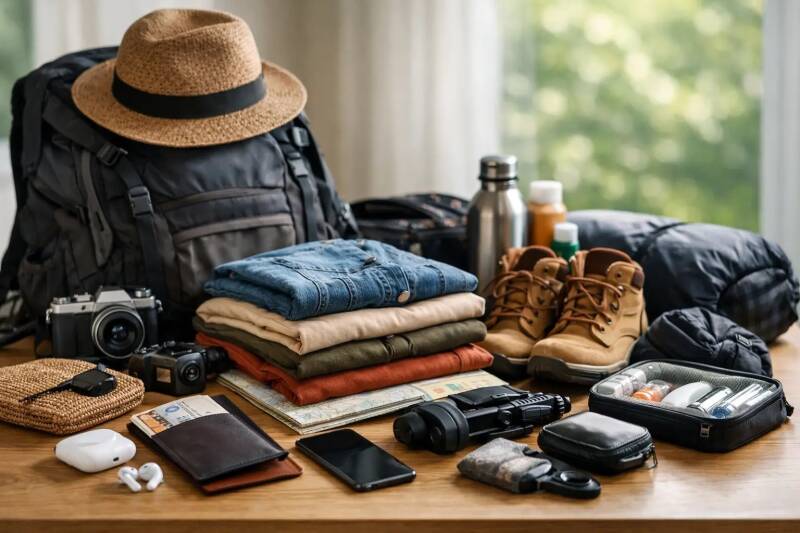
Wondering what to pack for a gap year? This smart, practical guide covers clothes, gear, documents, and the mistakes that weigh you down. The biggest gap year packing mistake usually happens before a single sock goes into the bag. You imagine every version of yourself you might become - beach traveler, mountain hiker, city explorer, dinner guest, volunteer, digital nomad - and try to pack for all of them. If you’re wondering what to pack for a gap year, the real answer is less about bringing more and more about bringing the right things well.
A gap year is not a one-week vacation. It has shape-shifting energy. One month you’re sleeping in a hostel bunk with a flickering fan overhead, and the next you’re on a long bus ride clutching snacks, a power bank, and your last clean T-shirt. That’s why the smartest packing approach is flexible, repeatable, and light enough to carry without resenting your own backpack.
What to pack for a gap year starts with your route
Before you choose gear, choose your version of the trip. A gap year through Southeast Asia needs a very different bag from a year split between European cities, farm stays, and cold-weather volunteering. Climate matters, but so do your pace, budget, and tolerance for discomfort.
If you’ll be moving every few days, carrying your bag up stairs, onto trains, and across uneven sidewalks, every extra item becomes a tax. If you’re basing yourself in one place for months, you have a bit more room to bring comfort items. I always tell first-time long-term travelers to pack for the first two weeks, not the whole year. You can replace basics almost anywhere, often more cheaply than you expect.
Choose the bag before the stuff
Your main bag sets the rules. A 40 to 55 liter backpack works well for most gap year travelers because it forces discipline without feeling punishingly small. A huge backpack can feel reassuring at home and ridiculous on day twelve when you’re dragging it through a train station and sweating through your shirt.
Front-opening backpacks are easier to live with than top-loaders because you can actually find what you need. A small daypack is worth bringing too, whether for daily exploring, bus rides, or keeping valuables close on transit days. If you prefer a suitcase, that can work for slower travel with better infrastructure, but it’s less forgiving on rough streets, ferries, and hostel staircases.
Clothing: pack for repetition, not variety
This is where most people overpack. You do not need a different outfit for every setting. You need clothes that layer well, wash easily, and can survive being worn often.
Start with enough everyday clothing for about one week. Think breathable tops, a couple pairs of shorts or lightweight pants depending on climate, underwear and socks for seven days, sleepwear, and one outfit that feels a little more put together. That nicer outfit is not about fashion pressure. It’s for the moments when you want to feel like a person again - a birthday dinner, a date, a city evening, a family invitation, a visa appointment.
Layers matter more than bulk. Even warm countries have cold buses, rainy spells, and surprisingly chilly evenings. A light fleece or sweater and a compact waterproof jacket earn their place quickly. If your route includes colder regions, add thermal layers instead of heavy sweaters whenever possible.
Shoes deserve ruthless honesty. Most gap year travelers need three categories at most: a comfortable pair for walking, sandals or flip-flops for showers and heat, and one pair suited to your main activity, like trail shoes or simple casual shoes. If a pair hurts a little at home, it will hurt a lot abroad.
Laundry is part of gap year life, so pack fabrics that dry reasonably fast. Cotton is comfortable, but all-cotton wardrobes can stay damp forever in humid places. A blend of breathable natural fibers and quick-drying basics usually works best.
The clothing extras that are actually useful
A swimsuit is worth it even if beach time is not the focus. So is a hat. Sunglasses, a compact laundry bag, and a sarong or scarf punch above their weight. That last one can become a blanket, temple cover-up, pillow, towel substitute, or sun shield depending on the day.
Documents and money: the boring essentials that matter most
The least exciting part of packing is often the most important. Your passport, visa documents if needed, travel insurance details, vaccination records, debit and credit cards, and any required permits should be organized before anything else.
Keep digital backups of essential documents in a secure cloud folder and offline on your phone. Carry a few printed copies too, especially of your passport ID page and key reservations for your first arrival. Not every border crossing, guesthouse, or transport desk is as digital as you might hope.
Money strategy matters as much as packing. Bring at least two cards stored separately in case one gets blocked, swallowed, or stolen. A small amount of emergency cash in a stable currency can also save a stressful day.
Tech: bring what you’ll truly use
There’s a version of gap year packing built for content creation and another built for freedom. Most people are happiest somewhere in the middle.
Your phone will do a lot of heavy lifting: maps, booking confirmations, translation, banking, photos, notes, and keeping in touch. A good power bank is more useful than a second gadget you barely touch. Add a universal adapter and the charging cables you actually need, then stop.
A laptop depends on your plans. If you’re working remotely, studying online, or editing regularly, it makes sense. If not, it can become expensive dead weight. The same goes for cameras. Bring one if photography is central to your trip, not because you feel you should document every meaningful moment with better image quality.
Headphones are worth the space. So is a basic e-reader if you read often and don’t want books piling up in your bag.
Toiletries and health items
Pack enough toiletries for the first stretch of your trip, not a year-long pharmacy. Shampoo, toothpaste, sunscreen, deodorant, and contact lens supplies can usually be restocked as you go, though favorite brands may not always be available.
What is worth planning carefully is medication. Bring prescription meds in original packaging, along with a copy of the prescription if relevant. A simple first-aid kit is enough for most travelers: pain reliever, bandages, blister care, anti-diarrheal medication, antihistamines, and anything specific to your health needs.
If you menstruate, think through what will make life easiest across different countries and transport days. The best option is the one you know you’ll actually be comfortable using, not the one that sounds most efficient online.
What to pack for a gap year if you want to travel lighter
The trick is not owning less for the sake of it. It’s reducing friction. Every item should earn its place by being useful often, useful in multiple ways, or hard to replace.
That means skipping the “just in case” pile unless there is a real reason. Full-size towels, too many books, multiple jackets, backup shoes, formalwear, and bulky souvenirs from home usually don’t justify their space. You can buy what you discover you need. You will also lose, wear out, donate, and swap things along the way. A gap year is messy in the best way. Your bag should leave room for that.
Packing cubes can help if you tend to become chaotic by week two. They’re not magic, but they make hostel repacking less miserable. A reusable water bottle, compact lock, and eye mask are also small upgrades that pay off repeatedly.
The emotional side of packing
Here’s the part people don’t talk about enough: overpacking is often anxiety wearing the costume of preparation. You want to feel ready for every scenario because a gap year can feel huge and undefined. That’s normal.
But confidence on the road rarely comes from having the perfect item buried at the bottom of your bag. It comes from learning that you can adapt. You can hand-wash a shirt in a sink. You can buy cheap flip-flops in a market. You can borrow a sweater, ask for help, change plans, and figure things out. Travel gets richer when you stop trying to control every edge of it.
At PackLight Journeys, we’re big believers in packing for the trip you want, not the fears you have. Bring what supports curiosity, movement, and everyday ease. Leave behind the stuff that exists mostly to make departure feel less scary.
A simple gap year packing checklist mindset
If you want one rule to come back to while packing, make it this: choose items you’d be happy to carry on your worst travel day. That day might involve heat, delays, stairs, noise, exhaustion, and a guesthouse room on the fourth floor with no elevator. Your future self will not care that you packed six “options.” They will care that the bag closes, the straps don’t dig in, and you can find your passport without unpacking half your life.
A good gap year bag doesn’t contain everything. It contains enough. And enough, carried lightly, leaves more room for the things you can’t pack in advance - conversations, detours, new routines, and the version of you that comes home changed.
Add comment
Comments