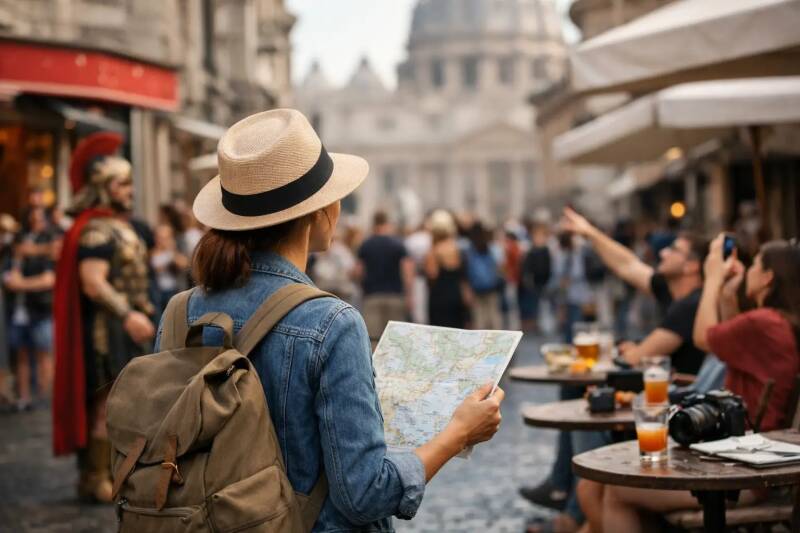
Learn how to avoid tourist traps with smart planning, local insight, and simple habits that help you save money and have richer trips. You can usually feel a tourist trap before you can define it. The menu has photos of every dish. Someone is waving you inside from the sidewalk. The souvenir magnets all look the same, the prices are strangely high, and everyone around you seems to be taking the same photo before moving on five minutes later. If you’ve ever wondered how to avoid tourist traps without turning your trip into a research project, the good news is this: you do not need to travel like a local to travel well. You just need to notice what a place is trying to sell you, and what it is quietly offering instead.
The mistake a lot of travelers make is assuming tourist traps are only obvious scams. Sometimes they are. More often, they are experiences inflated by convenience, hype, or location. They sit in the easiest-to-find part of a destination and promise a quick version of the place. That might mean overpriced food in a famous square, a crowded boat tour that rushes every stop, or a "traditional" performance staged mostly for camera phones. None of these things are always terrible. But if you want your money and time to lead to something memorable, you need a better filter.
How to avoid tourist traps before you even leave
The best way to protect your trip starts before the flight. Not with obsessive planning, but with sharper planning. Instead of building your itinerary around "top 10" lists, start with questions that reveal how people actually use a place. Where do locals go for lunch near the market district? Which neighborhood is lively in the evening but not designed only for visitors? What day is best for a museum if you want to avoid tour group traffic?
This shift matters because tourist traps thrive on lazy research. If your whole trip is built from social media hotspots and the first page of search results, you are more likely to end up in spaces created to capture passing attention, not offer depth. I’ve had far better meals and conversations by looking one street beyond the cathedral or train station than by following the crowd clustered directly in front of it.
It also helps to research patterns, not just places. Learn the average price of a coffee, transit ticket, taxi ride, or simple local meal. Once you know the baseline, the inflated version stands out immediately. A lot of travel confidence comes from this kind of context. You stop guessing, and that means you stop overpaying just because you’re tired, hungry, or in a rush.
Read reviews like a skeptic, not a fan
Reviews are useful, but only if you read them carefully. A restaurant with thousands of reviews right next to a major landmark may still be fine, but pay attention to what people praise. If every comment says the place is "convenient" or "great for the view" and barely mentions the food, that tells you something. The same goes for tours described as "efficient" but not personal, informative, or enjoyable.
I also trust reviews more when they mention specifics. A traveler who remembers a dish, a guide’s name, or the rhythm of a neighborhood usually had a real experience. Vague enthusiasm is easier to manufacture.
Follow daily life, not just landmarks
One of the simplest ways to avoid tourist traps is to spend time where daily life is still happening. That does not mean treating residential neighborhoods like attractions. It means noticing where a city becomes less performative and more lived-in.
Morning markets, commuter cafes, public parks, neighborhood bakeries, laundromats next to lunch counters, bookstores with event flyers in the window - these places tell you more about a destination than any themed souvenir shop ever will. They also tend to be better value.
This is where meaningful travel often begins. Not with a dramatic hidden gem, but with ordinary local rhythm. A bowl of noodles in a place full of office workers. A bench near a schoolyard as the city wakes up. A family-run deli where the person behind the counter helps you choose without rushing. Those moments stay with you because they are grounded in the life of the place, not staged around your arrival.
Use one-block logic
If you are standing in front of a major attraction and everything around you feels expensive, generic, or aggressively marketed, walk one to three blocks away. Not always, but often, the atmosphere changes fast. Menus get shorter. Prices drop. The shopfronts look less polished and more useful. You start seeing people who are there because they need to be, not because a guidebook sent them.
This rule is especially helpful in historic centers, beach promenades, and transport hubs. Prime location adds cost, and that cost is usually passed to you.
Be careful with "authentic" experiences
The word authentic gets thrown around so much in travel that it can become meaningless. Some of the most carefully packaged tourist traps now sell themselves as hidden, local, secret, or offbeat. That language works because travelers want to feel they’ve found something real. But real places rarely announce themselves that way.
A cooking class can be wonderful. So can a food tour, a craft workshop, or a cultural show. The issue is not whether an experience is designed for visitors. Many excellent ones are. The question is whether it respects the culture it presents and gives you something more than a polished transaction.
Look for signs of care. Is the group size reasonable? Does the host explain context, not just deliver entertainment? Are local people centered in the experience, and paid fairly for it? Does the activity feel rooted in a community, or lifted out of it and repackaged for easy sale?
There is no prize for avoiding every popular activity. Sometimes the famous thing is famous for a reason. I’ve taken busy walking tours that were brilliant and skipped "hidden" alternatives that felt hollow. Travel gets better when you stop chasing purity and start looking for substance.
Spend money where it creates connection
If you want to know how to avoid tourist traps in a practical way, follow your budget toward businesses that give something back. Small guesthouses, local guides, neighborhood restaurants, market stalls, independent food tours, community museums - these places often deliver a richer experience because the people behind them have a real stake in your visit.
That does not mean every small business is automatically better, or every major attraction is bad. It depends on the destination, your energy level, your safety needs, and how much time you have. But in general, spending in places where there is human interaction changes the tone of a trip. You become less of a consumer passing through and more of a participant paying attention.
This is also one of the easiest ways to keep travel affordable. Tourist traps often charge premium prices for low-effort convenience. Meanwhile, some of the best meals, conversations, and recommendations come from places with no polished branding at all.
Ask better questions on the ground
Once you arrive, ask people specific questions. Not "Where should I eat?" but "Where do you go when you want something simple and good near here?" Not "What should I see?" but "What’s worth doing if I only have one free afternoon?" Good questions invite useful answers.
Hotel staff, baristas, bookstore workers, market vendors, rideshare drivers, and museum attendants can all help, but context matters. Ask someone whose own habits are likely to overlap with what you enjoy. A hostel receptionist might know the best budget dinner spots. A shop owner may point you to a local festival you’d never find online.
Slow down enough to notice red flags
Tourist traps catch people who are rushed. When you are tired, overstimulated, and trying to fit too much into a day, you are more likely to accept the first option in front of you. That is why slower travel is not just romantic advice. It is practical protection.
Leave space between activities. Eat earlier or later than peak times when possible. Give yourself enough margin to walk away from a bad deal. If someone is pressuring you to book now, buy now, sit now, or pay cash now, pause. Pressure is often the clearest warning sign.
A few other signals are worth noticing: menus in six languages with no local customers, transport offers with no posted prices, animal attractions that feel performative, and shops where staff physically steer you toward a purchase. None of these guarantee a bad experience, but they deserve caution.
The trips that feel richest later are rarely the ones where you checked off the most. They are usually the ones where you had enough room to choose well. At PackLight Journeys, that is the kind of travel we come back to again and again - lighter on impulse, heavier on memory.
There will still be moments when you overpay for a coffee with a beautiful view or join a busy attraction because you genuinely want to see it. That’s fine. Travel is not a purity test. The goal is not to avoid every touristy moment. It is to recognize when you are paying for convenience, when you are paying for quality, and when you are paying for an illusion. The more clearly you can tell the difference, the more your trip starts to feel like your own.
Add comment
Comments