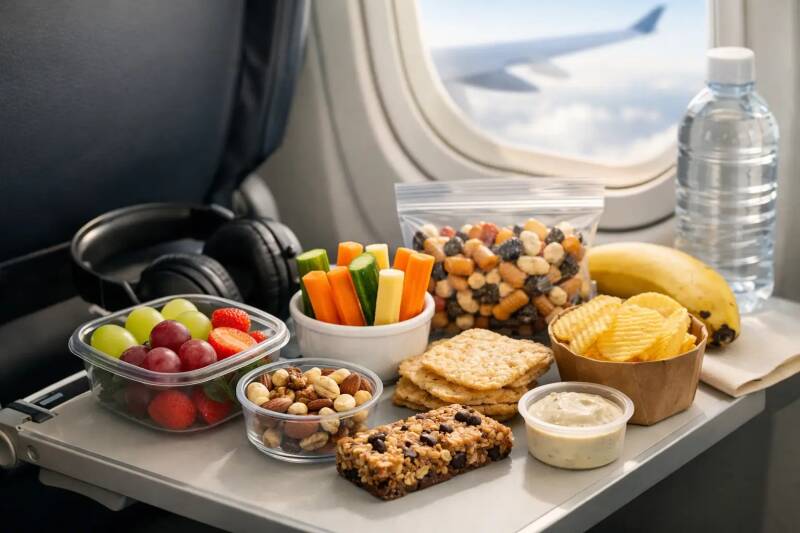
Discover the best snacks for long flights, from protein-packed picks to mess-free treats that keep you full, hydrated, and comfortable. Somewhere around hour six of a long-haul flight, the tiny bag of pretzels stops feeling cute. You are tired, a little dehydrated, and suddenly very aware that airport food cost too much and barely helped. That is exactly why choosing the best snacks for long flights matters more than most travelers expect. The right snacks can steady your energy, save money, and make the difference between arriving wrecked and arriving ready.
I have learned this the hard way on overnight flights, budget airline routes with limited food, and connections where the only option was a sad muffin and a bottle of water. Good plane snacks are not just about convenience. They are about comfort, digestion, mood, and avoiding that strange in-between state where you are too hungry to sleep but too tired to think clearly.
What makes the best snacks for long flights?
A great flight snack has a few jobs to do. It should travel well, survive being stuffed into a backpack, and be easy to eat in a small seat without bothering the people around you. It should also help with satiety. Foods with a mix of protein, fiber, and healthy fats usually do this better than pure sugar or salty processed snacks alone.
It also helps to think about how your body feels in the air. Cabins are dry, movement is limited, and digestion can feel slower than usual. Very greasy foods, extra salty snacks, or anything overly sugary can sound appealing at the gate and feel less appealing halfway across the Atlantic. This is one of those cases where the best choice is not always the most exciting one.
12 best snacks for long flights
1. Trail mix you build yourself
Homemade trail mix is one of the smartest options because you control the balance. A good mix of nuts, seeds, dried fruit, and a small amount of dark chocolate gives you protein, fat, and a little quick energy without relying on a sugar crash.
The key is restraint. Too much dried fruit can get sticky and sugary, and too much salted mix can leave you feeling thirstier than before. I like a blend that leans heavier on almonds, cashews, pumpkin seeds, and a few raisins or dried cherries.
2. Protein bars that are actually filling
Not every protein bar deserves space in your carry-on. Some taste like dessert and leave you hungry again twenty minutes later. The useful ones have enough protein and fiber to hold you over between meals or replace an underwhelming in-flight snack.
Choose bars that are not too crumbly and not coated in something that melts easily. If the ingredient list reads more like a chemistry exam than food, it may not be the most pleasant thing to eat at 35,000 feet.
3. Fresh fruit with structure
Soft fruit can turn into a mess very quickly, but sturdy fruit travels well and feels genuinely refreshing on a long flight. Apples, grapes, and clementines are usually the easiest picks. They give you hydration and fiber, which is helpful when you have been sitting still for hours.
Bananas are fine if you plan to eat them early. Berries are usually more trouble than they are worth unless they are packed carefully and eaten soon after boarding.
4. Roasted chickpeas or broad beans
If you want something crunchy without defaulting to chips, roasted chickpeas and broad beans are excellent. They have more protein and fiber, they are shelf-stable, and they feel more substantial than a standard salty snack.
There is one trade-off here. Some bean-based snacks can be heavily seasoned, and strong flavors in a shared cabin are not always ideal. Go for simple salt, light spice, or a mild savory flavor rather than anything aggressively smoky.
5. Nut butter packets with crackers or apple slices
Single-serve nut butter packets are one of my favorite long-flight backups because they turn a basic snack into something more filling. Pair them with whole grain crackers, rice cakes, or apple slices, and you have a snack that feels balanced rather than random.
This works especially well on flights where meal timing is unpredictable. A little fat and protein can smooth over that awkward gap between boarding and the next actual meal.
6. Cheese crackers or hard cheese portions
This option depends on the length of your journey and how carefully you pack, but individually wrapped hard cheese or cheese crackers can work well for medium to long flights. Hard cheeses hold up better than soft ones, and they pair well with fruit or crackers for a more satisfying bite.
If you are traveling for a very long day with multiple connections, be realistic about food safety. Cheese can be great early on, but shelf-stable options are safer if you will not eat it within a reasonable window.
7. Popcorn
Popcorn is light, easy to pack, and surprisingly useful when you want volume without something heavy. It gives you that snacky feeling, especially on a flight where boredom can disguise itself as hunger.
The downside is that it is not very filling on its own. Popcorn is best as part of your snack plan, not the whole plan. Pair it with something richer, like nuts or a protein bar, if you are facing a long stretch between meals.
8. Whole grain crackers
Crackers are not glamorous, but they are reliable. They pair with almost anything, they do not create much mess, and they are helpful if your stomach feels unsettled and you want something plain.
Look for versions with a bit of fiber rather than the most processed option on the shelf. The best travel foods are often the least dramatic ones.
9. Beef jerky or turkey jerky
Jerky is compact, high in protein, and useful on flights where you know the food will be sparse. For travelers trying to avoid blood sugar swings, it can be a solid choice.
That said, jerky can be very salty, and some versions have a strong smell. Choose a milder flavor and make sure you are drinking enough water. On a long flight, hydration matters just as much as the snack itself.
10. Dried edamame
Dried edamame is one of those underrated plane snacks that deserves more attention. It is crunchy, protein-rich, and easy to portion into a small container or bag. It also feels less heavy than some nut mixes.
If you like savory snacks but want something a little cleaner and less greasy than chips, this is a very strong option.
11. Dark chocolate
A little dark chocolate can go a long way on a long trip. It is not the most filling snack, but it is excellent for morale, especially on delayed flights or red-eyes when everything feels slightly grim.
The trick is to think of it as a booster, not the main event. Pair it with nuts or fruit, and it becomes a satisfying treat rather than a quick sugar spike.
12. Sandwich halves or wraps for the first leg
This is slightly beyond snack territory, but for truly long flights, a simple wrap or sandwich can save you. Something like turkey and spinach, hummus and vegetables, or peanut butter on whole grain bread is far better than hoping airport food will be affordable and decent.
Eat this earlier in the journey, especially if it contains ingredients that should not sit around too long. It is one of the best ways to avoid boarding already hungry.
Snacks to avoid on long flights
Some foods are technically travel-friendly but unpleasant in practice. Anything overly fragrant, very messy, or likely to melt, leak, or crumble everywhere is best left behind. Yogurt can be awkward with security rules and refrigeration. Greasy fast food often feels heavy later. Super salty chips can make dehydration worse.
There is also a personal side to this. If you know dairy, artificial sweeteners, or high-fiber bars can upset your stomach, a flight is not the time to test your limits. Travel is usually easier when your snacks are familiar and boring in the best possible way.
How to pack flight snacks without overpacking
The sweet spot is variety without turning your personal item into a grocery store. I usually aim for one filling snack, one fresh option, and one comfort snack. That might mean a protein bar, an apple, and a small bag of trail mix. For a longer itinerary, I add something more substantial like crackers with nut butter or a wrap for the first leg.
Reusable zip bags or compact containers help keep things organized and prevent crushed snacks. Portioning matters too. If you bring one giant bag of something, you are more likely to eat mindlessly. Smaller portions make it easier to pace yourself through delays, layovers, and long stretches in the air.
A few smart snack habits that help more than the snack itself
Even the best snacks for long flights work better when you treat them as part of a bigger plan. Drink water regularly, not just when the beverage cart appears. Eat before you are ravenous. If your flight includes a meal, do not assume it will be enough or that you will enjoy it.
I also try to think beyond hunger. A long flight can feel disorienting, especially if you are traveling solo or crossing time zones. Having food you chose yourself adds a small sense of control to a day that often runs on delays, gate changes, and very little personal space. That sounds minor until you are tired and far from home.
At PackLight Journeys, we talk a lot about traveling lighter, but that does not mean traveling unprepared. A few well-chosen snacks take up almost no room and quietly improve the whole experience. When your bag holds food that keeps you steady, comfortable, and a little happier, the journey starts to feel less like something to survive and more like part of the trip itself.
Before your next flight, pack for the version of yourself who is tired, hungry, and stuck in seat 28B. That traveler will be very grateful.
Add comment
Comments