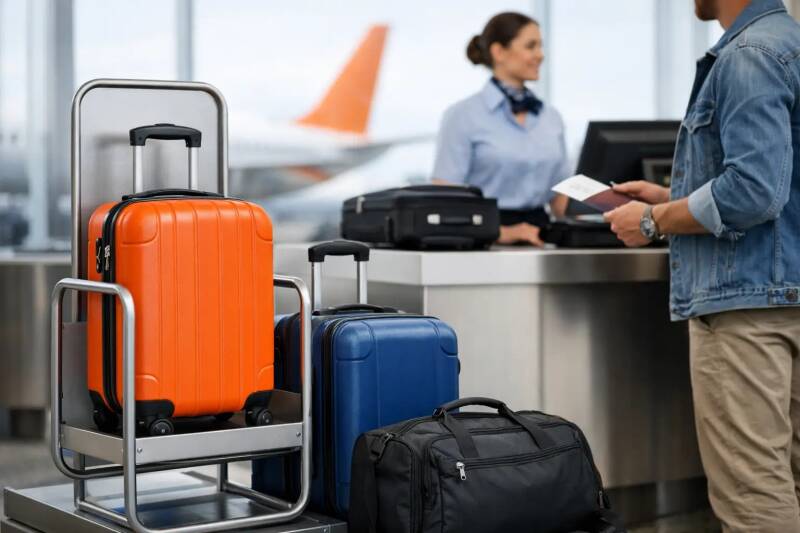
Budget airline baggage rules can save or cost you money. Learn carry-on limits, personal item tricks, and how to avoid surprise airport fees. You only need to watch one traveler repack their suitcase on the airport floor to understand how unforgiving budget airline baggage rules can be. I have seen people wear three sweaters, argue over wheel measurements, and pay more for a checked bag than they did for the flight itself. When you are trying to travel cheaply and well, baggage rules are not a side detail. They are part of the fare.
Low-cost carriers make flying affordable by stripping the ticket back to the basics. That can be great news if you travel light, but it also means every extra inch, pound, and forgotten zipper matters. The trick is not just to pack less. It is to understand how these airlines think about bags, because the rules are designed as much around revenue as convenience.
Why budget airline baggage rules feel so strict
Traditional airlines often build more flexibility into the ticket. Budget carriers usually do the opposite. They advertise a low base fare, then charge for extras such as seat selection, food, priority boarding, and baggage. That pricing model is why a bag policy that seems minor when you book can become expensive later.
This is also why the rules vary so much. One airline may allow a small personal item for free but charge for any overhead carry-on. Another may sell several fare tiers, each with different baggage rights. Some are generous with weight but strict on dimensions. Others care less about exact size and more about whether your bag slides into the sizer at the gate.
If that sounds inconsistent, it is. The point is not fairness in the abstract. The point is operational speed and extra income. Once you understand that, the rules start to make more sense, even if they still feel annoying.
The three bag categories that matter most
Most budget airline baggage rules revolve around three types of bags: a personal item, a carry-on, and a checked bag. Knowing the difference saves money fast.
A personal item is usually the free bag, and it is meant to fit under the seat in front of you. Think small backpack, tote, or compact duffel. This is the category that matters most for budget travelers, because if you can pack into this alone, you often avoid the biggest add-on fees.
A carry-on usually means a larger bag stored in the overhead bin. On many low-cost airlines, this is not included in the cheapest fare. You may need to pay for it in advance, and if you wait until the airport, the price often jumps.
A checked bag goes in the hold and comes with its own set of limits, especially around weight. Budget airlines can be surprisingly strict here. Being even a little overweight may trigger a steep fee, and unlike on some full-service carriers, there is often very little grace.
What catches travelers out
The most common mistake is assuming all airlines use the same size limits. They do not. A backpack that worked perfectly on one trip may be too tall, too deep, or too bulky on another airline. Hard-shell suitcases can be especially awkward because they do not compress if the sizer is tight.
The second mistake is ignoring weight for carry-ons. Some budget airlines weigh cabin bags, while others focus mostly on size. If your airline checks both, a bag packed with electronics, jeans, and toiletries can get heavy quickly.
The third mistake is booking first and reading later. By then, the cheap fare can become less cheap. If you know you will need more than a small underseat bag, it usually costs less to add baggage during booking than at online check-in or the gate.
And then there is the quiet trap: route and fare variation. The same airline may have different baggage allowances depending on destination, fare bundle, or whether you bought a basic or standard ticket. It depends more than many people expect.
How to read baggage rules without getting lost
When I book a budget flight, I ignore the marketing language and go straight to four details: dimensions, weight, quantity, and timing. That is where the real story is.
Dimensions tell you whether the bag will fit. Pay attention to whether wheels and handles are included in the measurement, because they usually are. Weight tells you whether the airline may charge you even if the bag fits physically. Quantity matters because some tickets include one free personal item only, while others include both a personal item and a cabin bag. Timing matters because baggage fees often rise the later you add them.
It also helps to check whether priority boarding is tied to cabin baggage. Some low-cost carriers bundle overhead carry-on access with priority boarding rather than selling the bag alone. If you are already considering one, the combined option can be the better value.
How to pack for budget airlines without feeling deprived
Traveling light does not have to mean traveling joylessly. Some of my best trips have happened with one soft backpack and a little discipline. In fact, having less can make a trip feel easier, more mobile, and oddly more open. You spend less time dragging things around and more time paying attention to where you are.
Start with the bag, not the clothes. If you choose a bag that matches the airline's free personal item allowance, you create a built-in limit. Soft-sided bags usually work better than rigid ones because they can flex slightly if needed.
Then pack around a simple reality: you probably do not need a fresh outfit for every day. Rewearing layers, choosing neutral pieces, and doing one small laundry stop can shrink your load dramatically. Shoes are the real space thief, so wear your bulkiest pair in transit and keep the second pair light.
Toiletries are another point where people accidentally overpack. Decant what you actually need. If you are staying somewhere with shops nearby, remember that toothpaste and sunscreen exist at your destination too.
When paying for baggage is worth it
There is a certain pride in fitting everything into a tiny bag, but it is not always the smartest choice. If you are traveling in winter, carrying work equipment, bringing gifts, or moving between climates, paying for a cabin or checked bag may be the calmer option.
The goal is not to win some minimalist contest. The goal is to travel well for the trip you are actually taking. If forcing everything into one small bag means stress, discomfort, or buying things you already own once you arrive, the cheaper-looking option may not really be cheaper.
I also think there is a quality-of-trip question here. If you are heading off on a month-long journey with trains, ferries, and budget flights stitched together, a compact setup is liberating. But if you are flying to one place for a wedding or a cold-weather city break, paying for the right baggage upfront can save both money and mental energy.
Budget airline baggage rules at the airport
This is where good planning either pays off or falls apart. At the airport, staff may inspect bags visually, ask you to place them in a metal sizer, or put them on a scale. Sometimes nobody checks. Sometimes they check everyone. You cannot count on luck.
If your bag is borderline, do not stuff outer pockets at the last minute. That is often what makes a bag fail the sizer. Wear heavier layers, keep chargers and passports easy to access, and make sure your bag can slide in without force.
And if you do get stopped, being calm helps. Airport staff are enforcing a policy, not judging your packing skills. A quiet, organized response is more useful than a public meltdown beside Gate 14.
A smarter mindset for flying cheap
The best budget travelers I know are not just frugal. They are intentional. They know when to strip a trip down to the essentials and when to pay for ease. They understand that budget airline baggage rules are not there to make travel romantic. They are there to make the airline money. Your job is to work around that with clear eyes.
That might mean traveling with one personal item and feeling wonderfully free as you cross a new city on foot. Or it might mean paying for a checked bag because this particular trip asks more of you. Both can be smart.
At PackLight Journeys, we believe packing light is less about austerity and more about making space - for movement, for spontaneity, and for the parts of travel that stay with you longer than the flight. Before your next booking, give the baggage rules five careful minutes. It is one of the smallest planning tasks, and one of the easiest ways to protect your budget and your peace of mind.
A good trip should begin with anticipation, not a fee at the gate.
Add comment
Comments