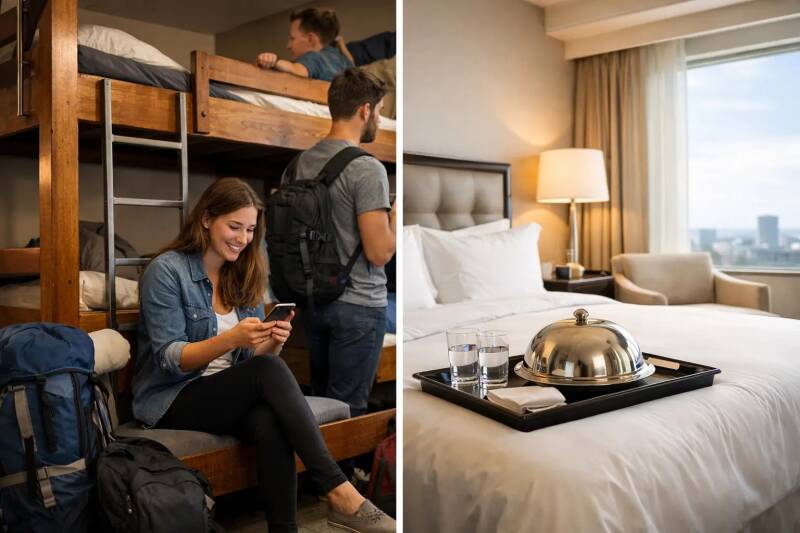
Hostels vs hotels comes down to budget, privacy, and travel style. Learn which stay fits your trip, your comfort level, and your goals. The choice usually gets real at 11:47 p.m., with twelve tabs open and a fare alert about to expire. You have a cheap hostel bed on one side, a modest hotel room on the other, and that familiar traveler question in the middle: hostels vs hotels - which one actually makes this trip better?
The honest answer is that it depends less on price than most people think. I have had hostel stays that felt generous, social, and surprisingly restful, and hotel stays that were worth every extra dollar because I needed quiet, space, and a door that closed on the world. The right pick changes with the destination, your energy level, and what you want the trip to give back to you.
Hostels vs hotels: the real difference
On paper, the gap seems simple. Hostels are cheaper and more social. Hotels are more private and more comfortable. In practice, the line is blurrier now.
Many hostels offer private rooms, coworking corners, stylish cafes, and design that feels closer to a boutique stay than a backpacker crash pad. At the same time, plenty of budget hotels are basic to the point of feeling functional rather than restful. If you judge only by category, you can miss what matters most - how you want to live during the trip.
A hostel often works best when the place itself is part of the experience. You might end up cooking with strangers in Lisbon, joining a walking tour in Mexico City, or getting late-night food tips from someone who arrived a week before you. That social layer can make a solo trip feel lighter and a new city feel less intimidating.
A hotel usually works best when accommodation is there to support the trip rather than define it. You want reliable sleep, your own bathroom, a predictable check-in process, and a calm base between long days. That can matter even more than atmosphere when you are traveling for a wedding, a work trip, a short city break, or the final leg of a long journey.
When a hostel makes more sense
If your budget is tight, the hostel advantage is obvious. A dorm bed can free up money for the parts of travel you will actually remember: a cooking class, a train to the next town, one very good meal, or simply another few days away. For travelers trying to stretch a trip without draining savings, that flexibility matters.
But the strongest reason to book a hostel is not always cost. It is access. For solo travelers especially, hostels can lower the social barrier that often comes with arriving somewhere new. You do not have to manufacture connection from scratch. It is built into the kitchen, the common room, the walking tour sign-up sheet, and the casual question of where everyone is headed tonight.
This is why hostels can be a smart choice for first-time international travelers. You get some built-in community without needing to be wildly outgoing. You can ask simple questions without feeling silly. Which bus goes to the old town? Is this neighborhood safe after dark? Where do locals actually eat around here? Often, someone nearby has just figured it out.
Hostels also suit travelers who spend very little time in their room. If you are leaving at dawn, returning after dinner, and treating your accommodation as a place to shower and sleep, paying much more for privacy may not change your trip in any meaningful way.
That said, not every hostel is social in a good way. Some are genuinely warm and well run. Others are loud, cramped, and chaotic. Reading the room matters. A party hostel and a quiet guesthouse-style hostel can both use the same label while offering completely different experiences.
When a hotel is worth the extra money
There are trips where a hotel does not feel indulgent at all. It feels sensible.
If you are a light sleeper, privacy may not be a luxury. It may be the difference between enjoying a destination and dragging yourself through it exhausted. Shared dorms can mean midnight arrivals, rustling bags, alarm clocks at 5 a.m., and one person who believes every plastic bag on earth must be opened as loudly as possible.
Hotels also make sense when safety and ease are your top priorities. That might be because you are arriving very late, traveling with expensive gear, managing a chronic illness, working remotely, or simply feeling worn down. There is a specific kind of relief in knowing you will have your own bathroom, a secure place for your things, and a quieter environment to reset.
For couples, families, and friends splitting costs, hotels can become more competitive than they first appear. A private hotel room divided between two people may end up close to the price of two upscale hostel beds, especially in expensive cities. Once you add breakfast, towels, locker rental, or transit from a hostel farther out, the price gap can shrink.
Hotels also protect energy. That may sound small, but energy is a travel resource. If every day involves new transit systems, a language barrier, heat, crowds, and constant decision-making, returning to a calm room can help you stay open and present rather than overstimulated.
Hostels vs hotels on price, privacy, and atmosphere
Price is usually the headline, but it should not be the whole calculation.
A hostel is typically cheaper upfront, especially if you book a dorm. Yet the cheapest bed is not always the best value. If poor sleep leads to a wasted day, if you feel too uncomfortable to relax, or if you end up paying extra for small essentials, the savings can feel less impressive.
Privacy is where hotels usually win without much debate. Even a basic hotel room gives you control over noise, lighting, bathroom access, and personal space. In a hostel, that control is limited unless you book a private room.
Atmosphere is more subjective. Hostels tend to offer more spontaneity and interaction. Hotels offer more autonomy. One is not better than the other. It depends on whether you want community to happen around you or whether you prefer to seek it out on your own terms.
I often think of it this way: hostels are good at creating possibility, while hotels are good at protecting comfort. Your trip may need one more than the other.
How to choose between hostels and hotels
Start with the purpose of the trip. If you are traveling to meet people, stay flexible, and keep costs low, a hostel is often the stronger choice. If you are traveling to rest, focus, celebrate something, or maintain a steady routine, a hotel may serve you better.
Then look at the destination itself. In some cities, hostels are central, stylish, and well organized. In others, the budget hotel scene is stronger and hostel options are limited or poorly reviewed. Local context matters more than travel stereotypes.
Be honest about your current season of travel, too. There was a time when I could sleep almost anywhere and treat noise as part of the story. There are other trips where I know I will enjoy the city more if I pay for quiet. That is not becoming less adventurous. It is becoming more accurate about what helps the trip work.
It also helps to think in phases rather than absolutes. You do not have to be a hostel person or a hotel person. On a two-week trip, you might start in a hostel to meet people and gather local tips, then book a hotel for the final nights when you are tired and ready for space. Some of the best travel decisions come from mixing both.
A smarter way to book hostels vs hotels
Instead of asking which is better in general, ask which is better for this exact trip.
If this trip is about stretching your budget, building confidence, and saying yes to new people, a hostel can offer much more than a cheap bed. If this trip is about rest, privacy, and giving yourself a stable base, a hotel can be money well spent.
The best travelers I know do not choose accommodation by identity. They choose by intention. They know when connection matters more than quiet, and when a good night of sleep is the most valuable booking on the page.
So book the stay that supports the version of travel you want right now - not the version you think you are supposed to want. That is usually where the best trips begin.
Add comment
Comments