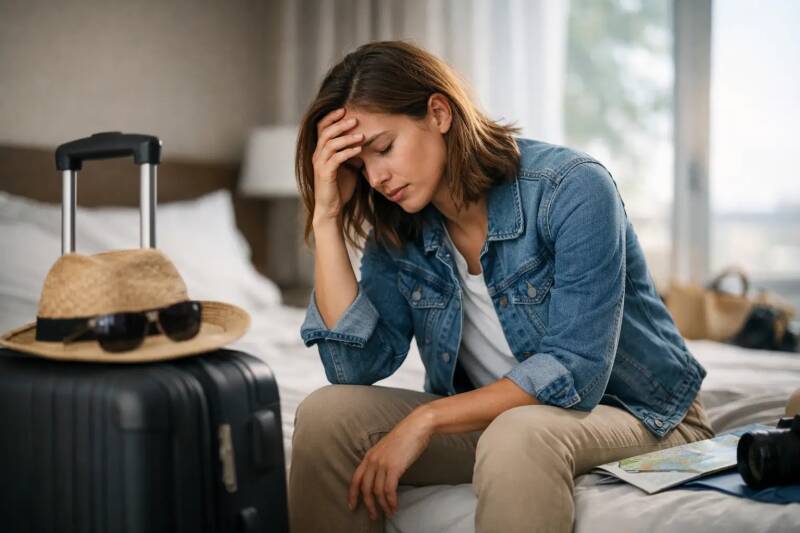
Learn how to handle travel burnout with practical, grounded tips to rest, reset your pace, and enjoy the road again without ending your trip. You book the trip, plan the route, imagine the freedom - and then somewhere between the third overnight bus, the fifth museum, and another morning spent repacking your bag on a hostel floor, the magic starts to thin out. If you are wondering how to handle travel burnout, you are not failing at travel. You are having a very human response to constant motion, decision-making, and overstimulation.
Travel burnout does not always look dramatic. Sometimes it feels like irritability over tiny inconveniences. Sometimes it is numbness in places you thought would move you. Sometimes it is the strange guilt of standing in front of something beautiful and feeling absolutely nothing. I have felt it in cities I had dreamed about for years, which is partly why it catches so many travelers off guard.
What travel burnout actually feels like
Burnout on the road is more than ordinary tiredness. A long day can be fixed with one early night. Travel burnout tends to build quietly. You stop feeling curious. Logistics that once felt exciting start to feel heavy. You become less patient, less present, and less able to enjoy even the parts of the trip that normally suit you.
For budget travelers and long-term travelers, it often comes from too much compression. Too many destinations in too little time. Too many early departures because cheaper transport leaves at awkward hours. Too much pressure to make every day count because you spent real money and emotional energy getting there.
Solo travelers can feel it especially hard because every choice lands on one person. Where to sleep, what to eat, how to get to the station, whether to trust your instincts, whether to socialize tonight or be alone again. Even beautiful independence has a cognitive cost.
How to handle travel burnout before it gets worse
The first useful move is to stop treating burnout like a mindset problem. You do not need to become more grateful, more adventurous, or better at travel. You need recovery. That means giving your body and mind fewer things to process for a while.
Slow down more than feels necessary
When I start feeling worn down on a trip, my first instinct is usually the wrong one. I want to push through and salvage the experience by doing more. In practice, that almost always deepens the exhaustion.
If you can, stay put for two or three extra nights. Pick one neighborhood, one cafe, one reliable place to eat, one easy walking route. Familiarity is deeply restorative when travel has become too relentless. The goal is not to quit exploring. It is to reduce the number of decisions your brain has to make.
This is where meaningful travel often gets better, not worse. The extra day you did not plan for may be the day you actually notice the baker opening at dawn, the old men playing cards in the square, the small rhythms that make a place feel lived-in rather than consumed.
Give yourself a day with no agenda
Not a lighter itinerary. No itinerary.
That can feel wasteful at first, especially if you are on a short trip or traveling on a tight budget. But burnout makes everything expensive in a different way - your energy, your patience, your ability to stay open. A reset day might mean sleeping late, doing laundry, eating familiar food, journaling, going for a short walk, and leaving the landmarks alone.
If your body is asking for ordinary life, listen to it. Some of the smartest travelers I know build in blank days on purpose because they have learned that constant stimulation is not the same thing as a good trip.
Check whether your pace or your style is the problem
Sometimes burnout comes from moving too fast. Other times, it comes from traveling in a way that does not actually suit you.
Maybe you love cities but planned an itinerary full of rural transfers because they looked good online. Maybe you thought dorm life would be social and cheap, but you are sleeping badly and craving privacy. Maybe you are trying to be the kind of traveler who says yes to everything when what you really enjoy is one long market visit, a local lunch, and an unhurried evening.
This is the part many travelers skip. They assume the issue is weakness rather than mismatch. But travel gets easier when you stop performing someone else’s idea of a great trip.
Make one practical upgrade
If your budget allows for it, one small upgrade can change the entire texture of a trip. Book a private room for two nights. Take the train instead of the cheapest overnight bus. Stay closer to the center. Pay for a taxi when you are drained instead of forcing a complicated arrival just to save a little.
Budget travel is not about making yourself miserable in the name of discipline. It is about spending intentionally. If twenty extra dollars buys you sleep, safety, or breathing room, that is often money well used.
If your budget is tight, look for low-cost versions of the same idea. Cook one simple meal instead of eating on the go. Choose a hostel with a quiet common area rather than the cheapest party option. Extend your stay somewhere affordable instead of burning cash on frequent transport.
Protect your nervous system, not just your schedule
A lot of advice about burnout focuses on planning, but your senses matter too. Long-term travel can leave you under-rested and overexposed at the same time. Noise, crowds, heat, unfamiliar food, broken sleep, and constant vigilance all add up.
If you want to know how to handle travel burnout in a way that actually works, start with your physical state. Drink more water than you think you need. Eat meals with some consistency. Get off your phone when possible. Spend time in parks, libraries, quiet cafes, waterfronts, or anywhere your body can unclench a little.
I am a better traveler when I have had enough sleep and one decent breakfast. That sounds almost too basic to mention, yet it is usually the first thing to fall apart on the road.
Be careful with social pressure
One hidden cause of burnout is feeling like you should always be available for the next experience. Another hostel dinner. Another day trip. Another late night because you may never see these people again.
Connection is one of the best parts of travel, but forced sociability can become its own kind of exhaustion. You are allowed to skip the pub crawl, say no to the group plan, or spend an evening alone without turning your trip into a sad story. Sometimes solitude is not isolation. Sometimes it is repair.
Let go of the trip you thought you were having
This can be the hardest part. Burnout often gets tangled up with disappointment. You imagined yourself energized, curious, transformed. Instead you feel flat, annoyed, and a little homesick. That gap can make you cling to the original plan long after it stops serving you.
But some trips improve the moment you stop trying to make them look impressive. Cancel the extra stop. Shorten the route. Stay in the town that feels easy. Repeat the same breakfast place three mornings in a row if that is what brings you back to yourself.
There is no prize for being the most relentless traveler in the room. The goal is not to endure the itinerary. The goal is to experience the trip in a way that still feels alive.
When it is time to go home early
Most travel burnout can be eased by slowing down and resetting expectations. Still, it is worth being honest about the difference between ordinary burnout and something deeper.
If you are persistently anxious, unable to rest, getting sick, not eating well, or feeling emotionally low in a way that does not improve after a real pause, going home early may be the right call. That does not erase the trip. It means you paid attention to yourself.
A good traveler is not someone who pushes past every limit. It is someone who learns how to read their own capacity with honesty.
What burnout can teach you about better travel
Burnout has a way of exposing the gap between fantasy travel and sustainable travel. It teaches you whether you like movement or depth, crowds or quiet, company or space, structure or looseness. That knowledge matters. It helps you build future trips that fit your real self rather than your aspirational one.
The older I get, the less interested I am in collecting destinations at top speed. I want enough time to recognize a street by smell, to return to the same food stall, to feel my shoulders drop in a place instead of racing through it. PackLight Journeys has always believed travel means more when you are present enough to absorb it, and burnout is often a sign that presence has been squeezed out by pace.
If you are tired on the road, do not make it a moral issue. Make it a signal. Eat something grounding. Stay longer. Spend a little more if it buys you peace. Miss a sight if it helps you feel the place again. Travel is still allowed to be meaningful even when the best thing you do all day is rest.
Add comment
Comments