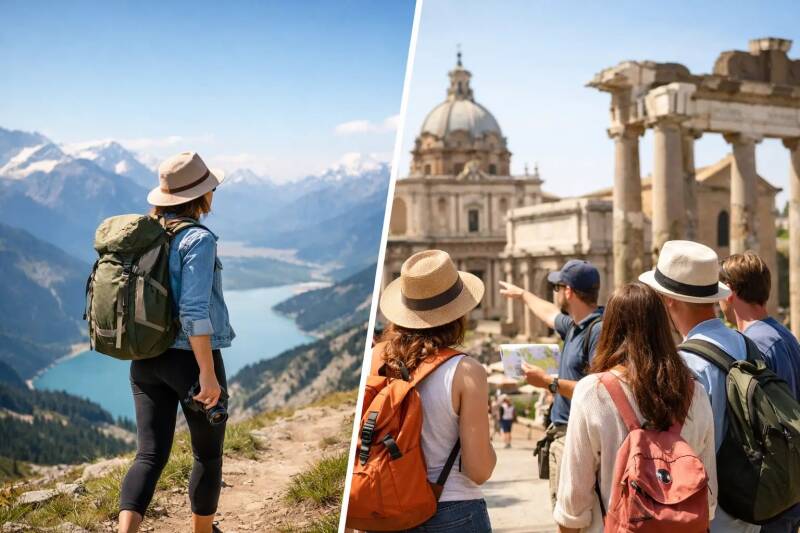
Solo travel vs group tours comes down to budget, freedom, safety, and connection. Here’s how to choose the trip style that truly fits you. You can learn a lot about your travel style at 6:30 a.m. in a strange city. Maybe you love stepping outside with no plan, following the smell of coffee down a side street and letting the day unfold. Or maybe you feel a wave of relief when someone else has already sorted the route, the timing, and the logistics. That is where the real solo travel vs group tours question begins - not with what looks better on Instagram, but with how you actually want to move through a place.
I’ve done both, and the honest answer is that neither is automatically better. They simply do different jobs. One gives you freedom in its purest form. The other gives you structure, speed, and often a softer landing in an unfamiliar destination. If you want a trip that feels meaningful rather than rushed or mismatched, it helps to know what each style is good at, where each can disappoint, and what kind of traveler you are right now.
Solo travel vs group tours: the real difference
On paper, the difference seems obvious. Solo travel means you plan and experience the trip on your own. Group tours mean traveling with a set itinerary and a built-in circle of people, usually led by a guide. But in practice, the contrast runs deeper.
Solo travel gives you control over pace, budget, food choices, and spontaneous detours. It also asks more from you. You make the decisions, solve the problems, and sit with the quiet moments. That can feel thrilling or lonely depending on the day.
Group tours remove a lot of that mental load. You often get transportation, accommodations, activities, and local insight bundled into one package. That can make travel feel more accessible, especially in places where planning independently would be stressful. The trade-off is that your time is no longer entirely your own.
What matters most is not which option sounds more adventurous. It is which one matches your confidence level, the destination, your budget, and the kind of experience you want to remember.
When solo travel makes more sense
Solo travel tends to suit people who want flexibility above all else. If your ideal trip includes wandering neighborhoods, changing plans at the last minute, or lingering in one small cafe for two hours because the afternoon light is perfect, going alone can feel deeply satisfying.
It can also be the better choice for travelers who care about cultural immersion. When you are not moving in a pack, you are often more approachable. You notice more. You might end up chatting with a market vendor, joining locals at a communal table, or discovering a tiny museum because you were free to turn left instead of right. Those moments rarely happen on a tight schedule.
There is also the personal growth side of solo travel, and I do not say that in a vague, self-help way. Traveling alone forces small acts of courage. Ordering food in a language you barely speak, navigating a bus station, deciding where to go when nobody else is weighing in - these moments quietly build confidence. You return home with more than photos.
That said, solo travel is not always cheaper, easier, or more romantic than it sounds. Single supplements can push up accommodation costs. Transportation mistakes come out of your own pocket. And if you are exhausted, sick, or simply overwhelmed, there is no automatic support system nearby.
The best solo trips are not always the longest ones
Many first-time solo travelers assume they need to commit to a month abroad to make it count. Usually, that is unnecessary pressure. A four-day city break, a week in one region, or a short train-based trip can teach you just as much without draining your energy or budget.
If you are curious about solo travel but nervous, start smaller. Choose a destination with good public transit, solid tourism infrastructure, and a pace that feels manageable. Confidence grows faster when the basics are not a daily battle.
When group tours are the smarter choice
Group tours can be a genuinely excellent option, especially when the destination is complex, remote, or logistically awkward. Think multi-stop itineraries, wildlife trips, countries with major language barriers, or places where independent transport is unreliable. In those cases, a good tour does not just save time. It can open doors you might struggle to access alone.
This is also where group tours shine for first-time travelers who want reassurance. If the thought of arriving in a new country and figuring everything out from scratch makes your stomach tighten, there is no shame in wanting structure. Sometimes structure is what makes the trip possible.
A strong tour guide can also add layers you would miss on your own. History makes more sense, cultural context becomes richer, and practical friction drops fast. You spend less time troubleshooting and more time absorbing what is in front of you.
Then there is the social side. For solo travelers who want company without planning a trip with friends, group tours can be a sweet spot. Meals are less awkward, shared experiences create easy conversation, and there is comfort in having people around during long travel days. For some readers, especially on a first big trip, that can make all the difference.
Not all group tours create real connection
This is where you need to be picky. Some tours move so fast that they turn a country into a checklist. You get the famous viewpoint, the photo stop, the rushed lunch, and then you are back on the bus. It looks efficient, but it can feel oddly distant.
Others are built with more breathing room. They prioritize local guides, small groups, neighborhood food stops, and enough free time to follow your own curiosity. Those are usually the tours worth paying for if meaningful travel matters to you.
Budget, freedom, and energy: the three big decision points
If you are stuck between solo travel vs group tours, these are the three things I would weigh first.
Budget is more complicated than many travelers expect. Solo travel can be cheaper if you use public transportation, stay in hostels or guesthouses, and build your own itinerary carefully. But group tours can offer value too, especially when they include transport, activities, and local expertise in expensive or hard-to-plan destinations. The cheapest-looking option is not always the most cost-effective once all the hidden expenses appear.
Freedom is the clearest dividing line. If choosing your own pace is essential to how you enjoy travel, solo travel usually wins. You can wake early, sleep late, skip attractions, change towns, or spend half a day in a bookstore if that is what feels right. A group tour asks you to compromise for the sake of the schedule.
Energy is the factor people often forget. Independent travel takes effort. Even joyful decisions wear you down after a while. If you are already burned out from work or life, a group tour may actually let you enjoy the destination more because your brain is not constantly managing logistics.
A hybrid approach often works best
You do not have to choose one identity and stick with it forever. Some of my favorite trips have been hybrids: a few solo days in a city, followed by a short group tour for a trek or regional loop, then independent time again at the end. That approach gives you both autonomy and support.
This is especially useful if you want the confidence-building side of solo travel without carrying every logistical burden yourself. It also works well for destinations where one portion is easy to do alone and another is much harder.
For example, you might explore Lisbon independently but join a small food or day tour for deeper local context. Or travel solo through Thailand’s cities, then book a guided island-hopping section where transport coordination gets messy. You still get ownership of the trip, but not all the stress.
How to choose the right fit for this trip
Try asking yourself a better question than Which is better? Ask What do I need from this trip?
If you need confidence, companionship, and ease, a group tour may serve you well. If you need space, flexibility, and the thrill of figuring things out on your own, solo travel is probably calling for a reason. If you want both, build both in.
It also helps to be honest about your current season of life. The version of you who wants independence at 25 may want comfort and efficiency at 35. The version of you who once loved fast-moving group energy may later crave slower mornings and room to change plans. Travel style is not fixed. It evolves.
At PackLight Journeys, we tend to believe the best trips are the ones that leave room for both practicality and transformation. Sometimes that means boarding a bus with strangers who become friends. Sometimes it means sitting alone at a street-food stall, realizing you trust yourself more than you used to.
Choose the version of travel that helps you be present, not performative. The right trip style is the one that lets you notice more, spend well, and come home feeling like you actually met the place.
Add comment
Comments