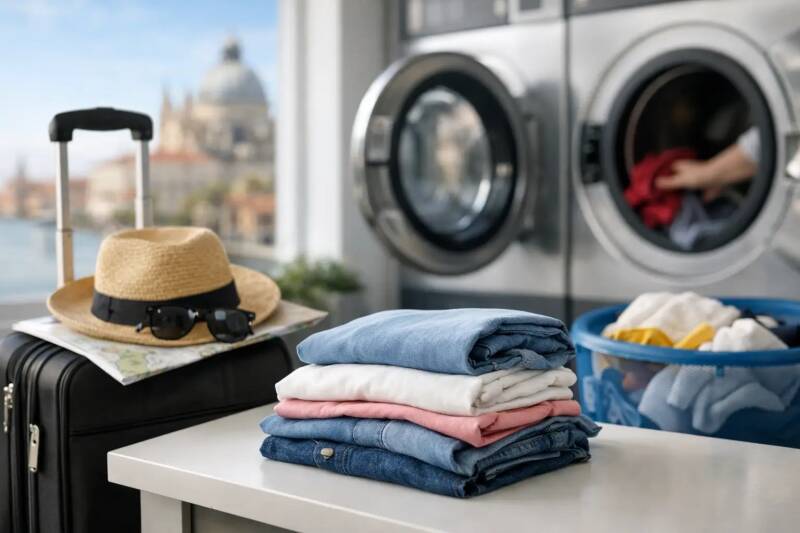
Learn how to wash clothes abroad with confidence: decode local machines, protect delicate fabrics, save money, and keep your travel wardrobe fresh, too. The moment I know a trip has become real is not at the airport. It is usually when I am standing in a tiny apartment bathroom, holding a travel-worn shirt, trying to work out whether the unfamiliar washing machine will clean it or ruin it. Learning how to wash clothes abroad is one of those small travel skills that saves money, frees up space in your backpack, and keeps you feeling like yourself after a few long, sweaty days on the road.
You do not need a suitcase full of outfits or a perfect laundry routine. You need a little flexibility, a few useful supplies, and the confidence to ask for help when the labels, machines, or local customs are unfamiliar.
Decide which laundry option fits your trip
There is no single best way to do laundry while traveling. Your choice depends on where you are staying, how long you will be there, the climate, and how much time you want to spend on the chore.
For short trips, hand-washing a few essentials can be enough. Underwear, socks, lightweight shirts, and workout clothes dry quickly and are easy to manage in a hotel sink or hostel bathroom. This works especially well if you are moving every couple of days and want to avoid carrying a week of dirty clothes.
For longer trips, a laundromat is often the best value. You can wash everything at once, use proper dryers in damp or cold destinations, and start the next leg with a genuinely fresh wardrobe. In many cities, laundromats are also unexpectedly useful pauses in a busy itinerary. I have spent rainy afternoons in Lisbon, Tokyo, and Mexico City reading, planning the next day, and watching locals go about an ordinary part of life.
Laundry services are the easiest option when time matters more than cost. Hotels, hostels, guesthouses, and neighborhood wash-and-fold shops may charge by weight, by bag, or by item. They can be worth it after a trek, during a packed work trip, or when you need reliable drying before an early departure. The trade-off is less control: delicate items may be washed together, dried hot, or returned later than expected.
How to wash clothes abroad without damaging them
Before you put anything in a machine, check the care label. This sounds obvious, but travel makes us impatient. A wool sweater that survived years at home can shrink in one aggressive dryer cycle, and a favorite linen shirt can come out looking permanently crumpled.
If the symbols are unfamiliar, focus on the practical basics. A wash tub icon tells you whether the item can be machine-washed, while dots inside it indicate water temperature. A square with a circle means it can go in a dryer. A crossed-out symbol means do not use that method. When in doubt, choose cold water, a gentle cycle, and air-drying. It may take longer, but it is much safer for clothes you rely on throughout the trip.
Local machines can be different from the ones you use at home. European washers often take longer and may heat water internally. In parts of Asia, machines may have separate wash and spin tubs. Elsewhere, you may find top-loaders with settings you cannot immediately translate. Take a photo of the controls, use your phone's translation camera if needed, and ask the host, receptionist, or laundromat attendant before pressing start. Most people are happy to help with a simple question.
Be cautious with detergent, too. More soap does not mean cleaner clothes. It can leave residue, create excess foam, and make rinsing difficult when you are hand-washing. Use less than you think, particularly with concentrated liquid detergent or powder sold for high-efficiency machines.
Sort for fabric, not just color
At home, you might separate lights and darks without thinking. Abroad, a smaller load means you should also sort by what needs gentler treatment. Wash quick-dry synthetics, underwear, and sturdy cotton together. Keep wool, silk, linen, swimwear, and anything with a strong dye separate when possible.
New colorful clothing can bleed, especially in hot water. If you have bought a brilliant market shirt or a souvenir scarf, wash it alone the first time. That small precaution is far better than turning every pale item in your bag a surprising shade of red.
Hand-wash the right way in a hotel or hostel
Hand-washing is the traveler’s quiet superpower. It is cheap, simple, and gives you full control over delicate clothing. You do not need a special travel sink, either. A clean basin, shower floor, or dry bag can work well.
Fill the sink with cool or lukewarm water, add a small amount of detergent or laundry soap, and gently work it through the fabric. Let sweaty items soak for 10 to 20 minutes, then rinse until the water runs clear. Do not twist or wring clothes hard, particularly knitwear or stretchy fabrics. Instead, press out the water with your hands.
The fastest drying trick is to lay the garment flat on a clean towel, roll it up tightly, and step or press on the roll. The towel absorbs far more moisture than squeezing alone. Then hang the item where air can circulate, ideally near an open window or fan.
Avoid draping wet clothing over hotel lamps, radiators, or balcony rails where it could fall, scorch, or violate a property rule. In humid places, clothes may still be damp by morning. Start washing as soon as you check in rather than at midnight, and carry one backup set of underwear so you are never waiting on laundry to dry.
Pack a small laundry kit that earns its space
A laundry kit does not need to be elaborate, but a few compact items make independent travel much easier. Consider packing these five things:
- A small leakproof bottle of concentrated laundry detergent or a few detergent sheets
- A universal sink stopper, since many hotel sinks do not hold water
- A lightweight braided clothesline or a few sturdy clips
- A stain-removal stick for coffee, sauce, sunscreen, and transit mishaps
- A foldable dry bag, which doubles as a hand-washing basin and a place to separate dirty clothes
If you are traveling carry-on only, check airline rules for liquids. Detergent sheets and solid laundry soap are especially useful because they take up almost no space and do not count toward your liquid allowance.
Learn the local laundry rhythm
Laundry is practical, but it can also be a gentle lesson in how a place works. In some countries, self-service laundromats are open late and feel like a normal part of city life. In others, wash-and-fold services are common, affordable, and designed around busy local routines. In rural areas or on islands, drying may depend entirely on sunshine and the day’s humidity.
Do not assume the fastest option is always available. Ask how long a service takes and whether it will be machine-dried. If you are leaving early the next morning, say so clearly before handing anything over. Count your items, take a quick photo of the pile, and keep valuables, sentimental clothing, and anything truly delicate with you.
A little cultural awareness matters in shared laundry spaces, too. Do not leave your load sitting in a machine after the cycle ends. Bring small bills or a payment card where relevant, wipe up spills, and give people room to use the equipment. These ordinary courtesies make travel feel less like passing through and more like participating respectfully.
Keep your wardrobe smaller and easier to wash
The best answer to laundry abroad begins before you leave home. Pack fabrics that can handle repeat wear and dry overnight: merino wool, lightweight cotton blends, linen blends, and technical materials all have their place. Pure cotton is comfortable but can stay damp for ages in a humid room. Heavy denim takes up space, dries slowly, and may not be worth bringing unless it is something you genuinely wear often.
Choose a simple color palette so everything works together. Then you can pack fewer pieces, wash smaller loads, and get dressed without overthinking it. Rewear outer layers and jeans when they are still clean, but wash underwear, socks, and sweat-heavy clothes more frequently. This is not about traveling perfectly. It is about using what you have thoughtfully.
There is a particular relief in pulling on a clean shirt halfway through a long trip. It does not make the bus ride shorter or the language barrier disappear, but it gives you a reset. Make space for that small ritual, and you will carry less while feeling more at home wherever you wake up next.
Add comment
Comments