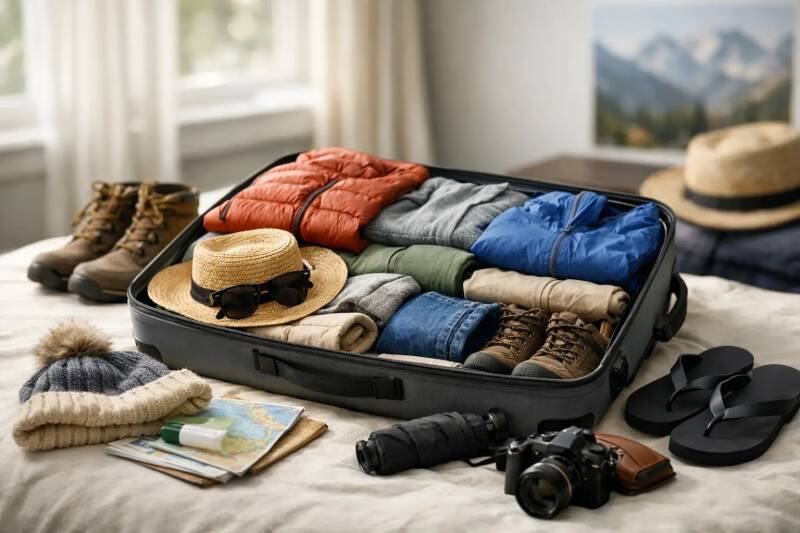
Learn how to pack for mixed climate trips with a lighter bag, flexible layers, and simple planning that keeps you comfortable from rain to heat easily. You step off a chilly early-morning train in Edinburgh wearing every layer you own, then land in a Mediterranean city two days later where the pavement radiates heat through your sneakers. That is the familiar puzzle of trying to pack for mixed climate trips: you need clothes for wind, rain, cold rooms, hot afternoons, and the occasional nice dinner, but you do not want to drag a suitcase that becomes a burden before the trip has properly begun.
The answer is not packing for every possible weather forecast. It is building a small, flexible system that lets a few pieces do more than one job. After enough journeys spent moving between mountain towns, humid capitals, and over-air-conditioned buses, I have learned that comfort comes less from bringing more and more from choosing better.
Start With Your Itinerary, Not the Weather App
A forecast is useful, but it is only one piece of the picture. Check the average temperatures and rainfall for each stop, then think about how you will actually spend your days. A 60-degree day feels entirely different when you are walking uphill to a viewpoint, sitting still at an outdoor cafe, or catching a ferry with salt wind in your face.
Write down the coldest likely moment, the warmest likely moment, and any activity with a specific clothing need. Maybe that means a sunrise hike, a humid food market, a museum day, or a dinner where you want to feel a little more put together. This keeps the packing list honest. You are preparing for your trip, not for an imaginary emergency wardrobe.
The biggest mistake is treating each destination as a separate vacation. If you pack a complete warm-weather wardrobe and a complete cold-weather wardrobe, your bag quickly becomes unmanageable. Instead, look for the overlap: pieces that work in both places with a change of layers, shoes, or accessories.
The Layering Formula That Saves Space
When you pack for mixed climate trips, think in layers that can be added, removed, and worn together. A good system has three parts: a breathable base, a warmer middle layer, and one weatherproof outer layer.
Your base layer is what you will wear most often. Choose lightweight T-shirts, tanks, or long-sleeve tops in fabrics that dry quickly and do not show every crease. Merino wool is especially useful if your budget allows it because it regulates temperature well and can be worn more than once without feeling stale. But a simple cotton-blend or synthetic athletic top can also work well, particularly for hot, active days.
For the middle layer, bring one item with real warmth rather than several thin sweaters. A compact fleece, merino cardigan, or light insulated jacket is usually enough. It should fit comfortably under your outer layer and look normal worn on its own. A bulky knit may feel cozy at home, but it takes up precious room and rarely earns its place in a carry-on.
Your outer layer should handle rain and wind. A lightweight waterproof shell is more versatile than a heavy winter coat for most multi-climate itineraries because you can wear it over a T-shirt in a storm or over your warm layer on a cold evening. Look for a jacket with a hood, breathable fabric, and enough room in the shoulders to layer underneath.
Bring One Warm Item You Can Wear in Transit
Planes, night buses, and trains are often colder than the destination. Wear your bulkiest layer on travel days: usually the fleece, insulated jacket, or comfortable overshirt. It saves space, doubles as a pillow or blanket when needed, and means you are prepared if your luggage is delayed or a connection runs late.
I also like a large scarf or packable wrap for mixed-weather trips. It covers your neck in wind, offers a little warmth in transit, and can make a basic outfit feel more intentional for dinner. It is a small thing, but it earns its space repeatedly.
Choose a Tight Color Palette
A mixed-climate bag gets lighter when nearly everything works together. Pick two neutral colors, such as black and olive, navy and tan, or gray and denim, then add one color or pattern you genuinely enjoy wearing. This makes it easier to rewear pieces without looking like you are in the same outfit every day.
For bottoms, two or three options are normally enough for a one- to two-week trip. A pair of comfortable pants, one lighter option such as linen-blend trousers or a skirt, and perhaps a pair of shorts or leggings will cover most situations. The exact mix depends on your style and destination. If you are hiking, pants that stretch and dry quickly may be more useful than jeans. If you are spending most of your time in cities, one pair of dark jeans can be practical, but avoid packing multiple heavy denim items.
Dresses and jumpsuits can be tempting because they look like instant outfits. They are worthwhile only if you will wear them in several settings and can layer them. A simple dress with sneakers and a light jacket can take you from a warm afternoon to a breezy evening. A fussy outfit that needs special shoes, special undergarments, and perfect weather is usually better left at home.
Keep Shoes to Two Pairs, Maybe Three
Shoes are where even experienced travelers lose control of a packing list. They are heavy, awkward, and easy to justify. For most trips, wear your bulkiest, most supportive pair and pack one lighter alternative.
Your primary shoe should be comfortable enough for long walking days and reliable on wet streets. A clean pair of walking sneakers often does more than people expect, especially in cities. Your second pair might be sandals for heat, ankle boots for colder destinations, or compact flats if you have a specific occasion planned.
A third pair is justified only when an activity truly demands it, such as hiking boots for serious trails or water shoes for a trip built around rivers and reefs. If you bring hiking boots, wear them in transit. And be realistic: if a shoe has given you blisters at home, a beautiful destination will not magically make it comfortable.
Pack for Laundry, Not for Every Day
Laundry is one of the simplest ways to travel lighter and spend less. Instead of packing 10 or 14 complete outfits, bring enough underwear and socks for about a week, plus clothing that can be reworn or washed easily. A small sink-wash kit can help for basics, though a local laundromat or wash-and-fold service may be worth the cost when you need a proper reset.
Quick-drying underwear and socks matter more than another shirt. Wet socks can ruin a full day of exploring, particularly when the weather turns. Pack them in a separate pouch so you can find them without unpacking your entire bag in a hostel dorm or tiny hotel room.
You do not need to be precious about repeating clothes. Most people you meet will not notice, and those who do are unlikely to care. Traveling with less creates space for the parts of a trip that actually stay with you: an unplanned conversation over coffee, a long walk after rain, or the confidence of navigating a new place on your own.
A Practical Mixed-Climate Packing List
Use this as a starting point, then adjust for your destination, trip length, and personal needs:
- Four to six breathable tops, including at least one long-sleeve option
- Two to three bottoms that can be mixed easily
- One warm mid-layer, such as a fleece, cardigan, or light insulated jacket
- One lightweight waterproof shell with a hood
- Two pairs of shoes, plus a third only for a specific activity
- Seven days of underwear and socks, including a few pairs suited to walking
- A scarf or wrap, compact umbrella if appropriate, sunglasses, and a packable hat
This is not a rulebook. For a cold-weather hiking trip, you will need more insulation. For a beach-heavy itinerary, you may need fewer layers and another swimwear option. The point is to begin with a disciplined baseline rather than adding things in a last-minute rush.
Make Room for the Things That Change the Day
The most useful items are often not clothing. A reusable water bottle, small power bank, basic medications, sunscreen, a compact tote, and a few snacks can make a long travel day far easier. Keep these in your personal item, along with one change of underwear, chargers, and the layer you are most likely to need first.
Use packing cubes if they help you stay organized, but do not let them become an excuse to fill every empty corner. Leave a little room in your bag. You may pick up a paperback from a local shop, a handmade gift, or simply want the freedom to repack without sitting on your suitcase.
A lighter bag will not guarantee perfect weather, but it will give you more freedom to meet whatever the journey brings. Pack pieces that support your plans, then leave enough space for the unexpected moments that make a trip feel like your own.
Add comment
Comments