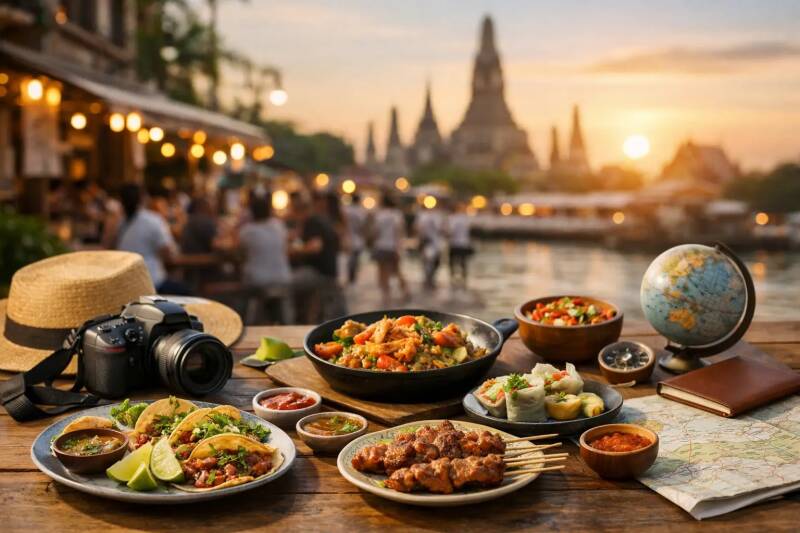
A local food guide for travellers who want better meals, deeper cultural connection, and smart, budget-friendly ways to eat with confidence abroad. You can learn a lot about a place from its skyline, but you usually understand it better from a plastic stool, a chipped plate, and a lunch rush you did not plan for. A good local food guide for travellers is not really about chasing the most famous dish in town. It is about learning how people actually eat, where daily life happens, and how to join that rhythm without feeling lost or awkward.
I have had some of my best travel moments over meals that were never on an itinerary. A bowl of noodles recommended by a bus driver. Fresh bread from a neighborhood bakery where nobody spoke much English but everyone smiled when I pointed at the right tray. A tiny market lunch that cost less than a museum ticket and taught me more about a city than an afternoon of sightseeing. That is the sweet spot - food that is affordable, memorable, and rooted in local life.
Why a local food guide for travellers matters
Food is one of the fastest ways to move from observer to participant. You are not just looking at culture from the outside. You are ordering, asking questions, tasting what is seasonal, noticing what people eat for breakfast, and seeing how neighborhoods gather.
It also changes the shape of your budget. Travelers often assume meaningful food experiences are expensive, but local eating is usually where value lives. Tourist-zone restaurants tend to charge more for safer, flatter versions of regional dishes. A busy lunch counter a few streets away often gives you better food, a more honest atmosphere, and a stronger sense of place for half the price.
That said, eating locally is not always simple. Sometimes the most authentic spot is hard to identify. Sometimes hygiene standards look different from what you are used to. Sometimes you are tired, overstimulated, and not in the mood to decode a handwritten menu. The goal is not to eat like a fearless food critic every day. The goal is to make a few better choices that bring you closer to the place you came to experience.
Start with how locals actually eat
Before you fixate on specific dishes, pay attention to eating patterns. What time do people have lunch? Do they eat their main meal at midday or late in the evening? Are bakeries central to daily life, or is breakfast something small grabbed on the go? These details matter because they help you find food when it is freshest and most culturally relevant.
In some places, the market is where lunch happens. In others, the best food comes from family-run spots with a short menu and odd opening hours. If you show up at 3 p.m. expecting the full experience, you may think a place is overrated when you have really just arrived at the wrong time.
I usually spend my first day watching more than choosing. Which stalls have a line of local workers? Where are older residents eating? Which bakery keeps emptying and refilling its shelves? Those patterns tell you far more than glossy signage.
How to find the right places without overplanning
Research helps, but too much of it can flatten the thrill of discovery. I like to travel with a short food wish list, not a rigid agenda. Pick three or four regional dishes to look out for, learn their names, and understand when they are typically eaten. That gives you direction without turning every meal into a mission.
Once you arrive, ask people questions that are easy to answer. Instead of asking for the best restaurant, ask, “Where would you eat for lunch around here?” or “What should I try that people in this city grow up eating?” Hotel staff can be helpful, but so can bookstore clerks, market vendors, baristas, and taxi drivers. The best answers often come from people who are talking about their own habits, not performing as unofficial tour guides.
Neighborhood markets, transit hubs, and business districts are often useful starting points. Not because every place there will be brilliant, but because those areas reveal what daily, repeat custom looks like. A restaurant surviving mostly on locals has to get a lot right.
What makes a place feel trustworthy
Finding local food is one thing. Feeling confident enough to eat it is another. I do not think travelers need to be paranoid, but a little street-smart observation goes a long way.
Look for turnover. Busy places with ingredients constantly moving through the kitchen are usually a safer bet than quiet spots with trays sitting untouched. Notice whether hot food is actually hot and whether raw items look fresh and well handled. If a stall specializes in one or two things and keeps serving them steadily, that is often a very good sign.
Cleanliness can look different across countries, so I focus less on whether a place matches home-country expectations and more on whether it appears organized, active, and cared for. Are staff handling food with purpose? Is there a system? Are locals returning without hesitation? Those are useful clues.
If you have a sensitive stomach, ease in. Start with cooked dishes, grilled foods, soups, breads, or fruits with peels. You do not have to prove anything on day one. Travel is more enjoyable when you build confidence rather than gamble with it.
Eat beyond the headline dishes
Every destination has its culinary celebrities, and yes, some are worth the hype. But the most famous dish is not always the meal you will remember most. Sometimes the real insight comes from everyday food - workers' lunches, snack counter staples, regional desserts, humble breakfast plates, or the side dishes people barely mention because they seem too ordinary.
That ordinariness is exactly the point. It tells you what comfort tastes like in that place. It shows you what people crave when they are not trying to impress anyone.
This is where a local food guide for travellers becomes more than a checklist. You are not simply trying signature foods. You are learning a food culture from the edges inward. Order the soup your server says their grandmother makes at home. Try the pastry everyone picks up before work. Ask what is seasonal right now, not what visitors usually order.
Use food to connect, not just consume
Some of the richest travel conversations begin with a simple question about what you are eating. What is in this? Is it eaten for holidays? Is there a version from this region? People are often proud of local food in a way that feels generous rather than formal.
You do not need perfect language skills for this. A few food words, a smile, and real curiosity can carry a lot. Even when conversation is limited, there is something grounding about standing at a counter and participating in the same ritual as everyone else.
If you are traveling solo, food can soften loneliness in a very practical way. Sitting in a neighborhood cafe, buying fruit from the same stand twice, or returning to a favorite stall creates tiny moments of familiarity. Those moments matter. They make a city feel less like a backdrop and more like a place that is slowly letting you in.
Balance budget, meaning, and comfort
Not every meal needs to be deeply authentic. Sometimes you need a quick coffee near a train station. Sometimes you want one special dinner and then simple street food the rest of the week. It depends on your budget, your energy, and what kind of trip you are having.
I think the smartest approach is to mix your meals. Keep breakfast simple. Make lunch your main local meal when prices are lower and neighborhoods are more active. Leave room for spontaneous snacks. Save one or two evenings for places you are genuinely excited about, whether that means a family-run restaurant or a modern spot reworking traditional dishes.
This approach works especially well for travelers who want memorable experiences without burning through cash. At PackLight Journeys, that balance is part of the whole philosophy - travel better, spend wisely, and stay open to the moments that do not look polished in advance.
A few mistakes worth avoiding
The biggest mistake is assuming local always means hidden, cheap, or uncomfortable. Sometimes locals line up for a modern food hall. Sometimes the best regional meal is in a polished dining room. Authenticity is not a costume. It is about whether the food reflects the place honestly.
Another mistake is chasing social media approval instead of your own experience. If a place is famous online and still excellent, great. But if you spend your trip standing in lines for trending snacks while ignoring the small places full of regulars, you may miss the meals that would have stayed with you longer.
And finally, do not treat food like a trophy. Learn basic dining etiquette. Be respectful when taking photos. Tip appropriately where it is customary. Understand that for you this may be a memorable travel story, but for someone else it is a long workday.
The best meals on the road rarely arrive with fanfare. They appear when you stay curious, pay attention, and let a place teach you how it wants to be tasted. If you can do that, dinner becomes more than dinner. It becomes one of the clearest ways to belong, even briefly, wherever you are.
Add comment
Comments