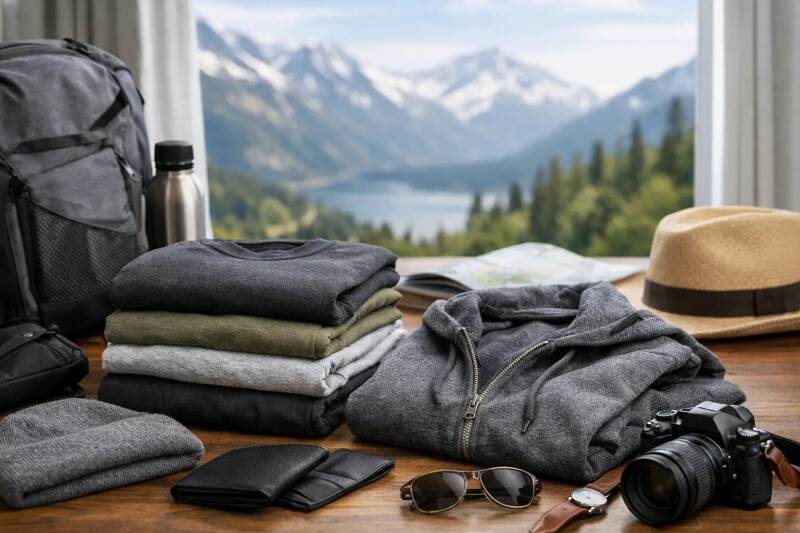
An honest merino wool travel clothing review covering comfort, odor control, layering, cost, and whether it earns a spot in your carry-on. You notice bad travel clothing at the worst possible moment - halfway through an overnight bus, on day three of a heat wave, or when you hand-wash a shirt in a hostel sink and it is still damp by breakfast. That is exactly where a good merino wool travel clothing review becomes useful, because merino tends to earn its place not in a studio test but in the messy rhythm of real trips.
I have packed merino base layers for cold train journeys, T-shirts for long-haul flights, and lightweight sweaters for shoulder-season city breaks when the weather changes every four hours. The short version is this: merino wool can be brilliant for travel, but it is not magic, and it is definitely not the cheapest option in your bag. If you are wondering whether it deserves the hype, the answer depends on how you travel, where you are going, and how much you value packing light.
Merino wool travel clothing review - what it does well
The biggest reason travelers fall for merino is simple: it stays wearable longer than most fabrics. A good merino T-shirt can go several wears without picking up the kind of sour smell that sends a cotton tee straight to the laundry pile. On a trip where you are moving often, washing clothes by hand, or trying to squeeze a week into a carry-on, that matters more than any marketing slogan.
Temperature regulation is the second big win. Merino has a way of feeling comfortable across a wider range of conditions than synthetic performance wear or standard cotton. In cool weather, it traps warmth without feeling bulky. In mild heat, especially in lighter weights, it breathes well and does not cling in the same way many synthetic tops do.
That makes it especially useful for the kind of travel days no one photographs: airport air-conditioning, a humid walk to your guesthouse, then a windy evening by the water. If your style of travel includes unpredictable weather and long transit days, merino starts to feel less like a luxury and more like a clever shortcut.
Where merino disappoints
The first drawback is price. Merino clothing often costs several times more than a basic cotton or synthetic equivalent, which can feel hard to justify when you are also budgeting for flights, trains, and meals you actually want to remember. If you are building a travel wardrobe from scratch, the upfront cost adds up quickly.
Durability can also be mixed. Soft, lightweight merino feels great against the skin, but that softness sometimes comes with a trade-off. Thin shirts can develop holes, pill under backpack straps, or lose shape faster than sturdier fabrics. Not every garment performs the same way, and brand quality varies more than many travelers expect.
Then there is drying time. Merino is often described as quick-drying, and compared with heavy cotton that is true. But some travelers hear that and imagine synthetic-level speed. In my experience, merino dries reasonably fast, not instantly. In humid climates or poorly ventilated rooms, a washed merino shirt may still need more time than you hoped.
Best merino pieces for travel
Not every merino item gives you equal value. If you are curious but not ready to spend heavily, start with the pieces that offer the clearest benefit.
A merino T-shirt is usually the smartest first buy. It works on flights, city walks, casual dinners, and layered travel days. Because it handles odor well, one shirt can often do the work of two or three regular tees. That saves space, and more importantly, it reduces the mental clutter of constant laundry decisions.
Base layers are another strong option, especially for winter trips or mountain travel. Merino long sleeves and leggings add warmth without the stiff, plasticky feel some synthetic thermals have. They also pack down small, which matters when every inch of your backpack is contested.
Socks deserve a special mention. Merino-blend travel socks are one of the easiest upgrades you can make. They help with temperature control, feel comfortable over long walking days, and usually smell better at the end of them. If full merino clothing feels too expensive, start with socks and see how the fabric works for you.
Sweaters and hoodies are more situational. They can be excellent for minimalist packing, but they are also more expensive and sometimes more delicate. I would prioritize tops and socks before investing there.
Merino vs cotton and synthetics on the road
Cotton is familiar, affordable, and comfortable in dry weather, but it struggles on the road. Once it gets sweaty or damp, it tends to stay that way too long. It also starts to smell faster and usually needs washing after a single hard day of travel.
Synthetics solve some of those problems. They are often light, durable, and fast-drying, which makes them practical for active trips. The downside is odor. Even good technical fabrics can start to hold onto smells after repeated wear, and if you are moving through hot climates or carrying everything on your back, that gets old fast.
Merino sits in the middle in a very useful way. It is usually more comfortable than synthetics and more adaptable than cotton. It handles repeat wear better than both, but it asks for a gentler relationship. You cannot always throw it around, wash it hot, or expect it to look brand-new forever.
That is why the best answer for many travelers is not an all-merino wardrobe. It is a mix. A couple of merino tops, solid synthetic layers for workouts or hikes, and one or two non-fussy basics can be a smarter setup than going all in on one fabric.
A practical merino wool travel clothing review for different trips
For carry-on city travel, merino performs extremely well. If your trip includes museums, trains, coffee shops, walking tours, and a dinner that is slightly nicer than your usual backpacker meal, merino gives you range. It looks fairly polished, layers easily, and helps you pack less without feeling underprepared.
For cold-weather trips, merino is one of my favorite fabrics. It keeps you warm without forcing you into thick, heavy layers, and it remains comfortable indoors once the heat is on. That balance is useful when your day moves between icy streets and overheated stations.
For hot, tropical trips, the answer is more mixed. Lightweight merino can still work, especially if you value rewearing items and packing very little. But in intense humidity, some travelers will prefer ultralight synthetics or loose woven fabrics that feel airier. Merino is capable in heat, but it is not always the most breezy choice.
For long-term backpacking, merino can be a budget puzzle. Its performance is excellent for repeated wear and sink washing, which makes it ideal on paper. But if you are traveling for months on a tight budget, replacing damaged merino pieces can sting. In that case, one or two carefully chosen items often make more sense than building your whole wardrobe around it.
What to check before you buy
Weight matters. Lightweight merino is better for warm weather and layering, while midweight pieces make more sense for cool climates. If you buy one shirt expecting it to work equally well in Bangkok and Berlin in November, disappointment is likely.
Fabric blends matter too. Pure merino feels soft and natural, but merino blended with nylon or elastane can improve durability and shape retention. That slight compromise is often worth it for travel clothing that gets worn hard.
Fit also changes performance. A relaxed merino shirt will often feel cooler and look more versatile than a skin-tight athletic cut. If you want pieces that work from transit to dinner, look for simple designs in neutral colors rather than highly technical styling.
And read care instructions. Some merino items are easier to wash than others. If a garment requires delicate treatment that you know you will ignore in a hostel laundry room, it is probably not the right buy.
Is merino worth it?
For many travelers, yes - but selectively. Merino wool earns its reputation because it solves a few very real travel problems at once: overpacking, odor, awkward weather shifts, and the constant search for clothes that can do more than one job. When it works, it makes your bag lighter and your travel days simpler.
Still, it is not the best choice for every budget or every climate. If you mostly take short trips, have easy access to laundry, or prefer durable low-cost basics, you may not get enough value from the price. If you travel often, pack light, and want clothing that keeps up without demanding much from you, merino starts to justify itself quickly.
At PackLight Journeys, that is usually the question worth asking: not whether a product is perfect, but whether it makes the actual experience of travel easier and better. Merino does, as long as you buy it with realistic expectations. Start small, wear it hard, and let the road tell you if it deserves more space in your bag.
The best travel clothes are not the ones with the loudest claims. They are the ones you stop thinking about because they quietly make the trip smoother.
Add comment
Comments