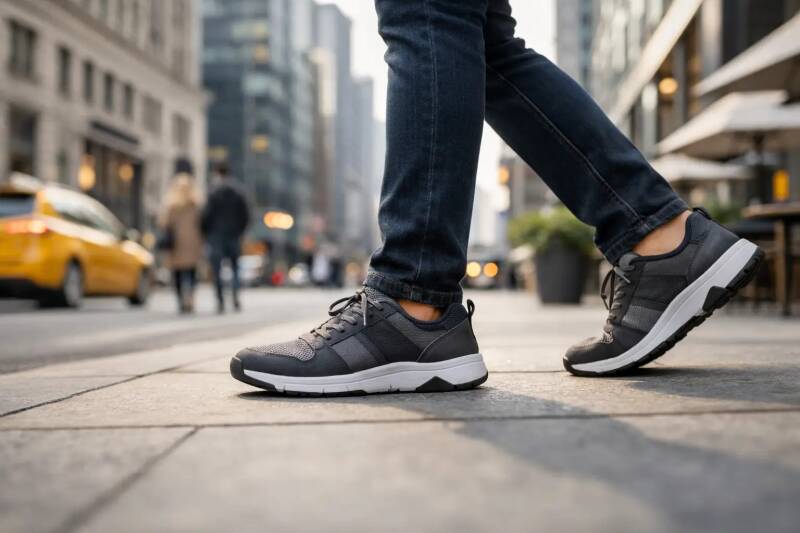
Find the best shoes for city walking, from cobbled lanes to subway stairs, with practical advice on fit, support, weather, and packing light on any trip, anywhere. A city can look compact on a map, then ask for 18,000 steps before dinner. You leave your hotel for coffee, wander into a market, take the long route beside the river, miss a subway stop, and suddenly your feet are deciding whether the evening still feels exciting. The best shoes for city walking are not necessarily the trendiest sneakers or the bulkiest hiking boots. They are the pair that lets you keep saying yes.
I have learned this the hard way: on slippery stone lanes after rain, on museum days with nowhere to sit, and while carrying a backpack up apartment stairs because an elevator was more hopeful than real. Good city-walking shoes protect your energy. They also need to fit into a carry-on, work with more than one outfit, and avoid turning every security line into a gear-management project.
What makes a shoe good for city walking?
City walking is its own category. Pavement is harder than a forest trail, sidewalks can be uneven, and a typical travel day switches constantly between streets, public transit, galleries, stairs, and restaurants. Your feet need cushioning, stability, traction, and enough flexibility to move naturally over long distances.
The right choice depends on your itinerary. A warm-weather trip built around flat coastal cities calls for something different from a wet November weekend in Edinburgh or a hilly week in Lisbon. But a few features matter almost everywhere.
First, look for cushioning that feels protective without being overly soft. Very plush shoes can feel wonderful for an hour but unstable when you are stepping off curbs, carrying a daypack, or moving quickly through a busy station. A moderate, responsive midsole usually suits most travelers better.
Second, prioritize a supportive heel and a secure fit through the middle of the foot. Your toes should have room to spread, especially if your feet swell after a long flight or a full day outside. A shoe that is slightly tight in the store rarely becomes a generous travel companion later.
Finally, check the sole. You do not need aggressive mountain tread for most urban breaks, but you do want visible rubber grip. Smooth fashion soles can become surprisingly treacherous on wet tiles, cobblestones, and polished museum floors.
The best shoes for city walking by travel style
For most city breaks: supportive walking sneakers
A supportive lifestyle sneaker or walking shoe is the most versatile choice for many travelers. It handles full days on pavement, looks at home with jeans or relaxed trousers, and does not occupy half your suitcase. Look for a breathable upper, a grippy rubber outsole, and cushioning that feels comfortable the moment you try it on.
This is the category I would choose for a first trip to New York, Paris, Tokyo, or Chicago, where the plan is simple: walk widely, stop often, and let the day unfold. Classic-looking sneakers can work, but make sure they are built for actual walking rather than brief outings and photos. A flat, thin sole may look clean, yet it can leave your heels aching by late afternoon.
Popular options worth trying in person include walking-focused styles from New Balance, ASICS, Brooks, HOKA, Saucony, and Skechers. The brand matters less than the shape of your foot. Some runners suit narrow heels; others offer more room in the toe box. Treat recommendations as a starting point, not a verdict.
For fast-paced itineraries: road running shoes
If you regularly walk 10 miles or more in a day, a road running shoe can be one of the best purchases you make for travel. These are designed to reduce repetitive impact on hard surfaces, which is exactly what city streets deliver. They are especially useful for travelers who know they will be moving early to late, perhaps combining sightseeing with a long rail connection or an evening food tour.
The trade-off is style and structure. Many running shoes are more athletic-looking, and very high-stack models can feel less steady on uneven old streets. Choose a neutral, lower-profile color if you want them to work with most of your travel wardrobe. You do not have to dress like you are heading to a marathon just because you want your knees to feel good at dinner.
For rainy or colder cities: water-resistant trail-inspired shoes
Wet-weather travel is where many otherwise excellent sneakers fail. If rain is likely and you expect slick paths, muddy parks, or cobblestones, a trail-inspired walking shoe with dependable grip is a smart compromise. It offers more traction and weather protection than a standard sneaker without the stiffness and weight of a traditional hiking boot.
Be cautious with fully waterproof shoes in warm destinations. They can trap heat, dry slowly if water gets in from the top, and feel less breathable during long days. For mild rain, a water-resistant upper plus quick-drying socks is often enough. Save full waterproofing for genuinely cold, wet conditions.
For warm destinations: breathable walking sandals
A good walking sandal can be a gift in places where hot pavement and humid transit stations make closed shoes feel unbearable. The key phrase is good walking sandal. Thin flip-flops and fashion sandals are fine for a pool or a short dinner walk, but they offer little support and ask your feet to work far too hard.
Choose adjustable straps at the heel and forefoot, a contoured footbed, and a sole with real grip. Break them in before departure, paying close attention to rubbing around the toes and ankle. Sandals are excellent for Mediterranean islands, tropical cities, and laid-back beach towns, but they are less ideal if your itinerary includes lots of wet weather, steep descents, or formal evenings.
How to test shoes before your trip
Never let an airport be the first place you wear a new pair of shoes. This one decision can spare you an entire vacation of blisters, improvised bandages, and resentment toward every beautiful street that requires another block of walking.
Wear your prospective shoes at home with the socks you plan to travel in. Take them on several walks, including one long enough to reveal pressure points. Walk downhill if you can. Your toes should not hit the front, your heel should not slide, and the shoe should feel comfortable without needing a complicated break-in ritual.
Try shoes later in the day when feet are naturally a little larger. Leave roughly a thumb's width between your longest toe and the front of the shoe. If one foot is larger, as is common, fit the larger foot. A removable insole is also useful because it gives you the option to add your own orthotic or replace a worn insert later.
Socks and small adjustments that change everything
The shoe gets the attention, but socks often decide whether the day stays comfortable. Cotton holds moisture and can increase friction, especially in warm weather. Merino wool blends or synthetic moisture-wicking socks are usually better for travel because they dry faster and help manage sweat.
For longer walking days, pack blister patches or tape before you need them. Carrying a tiny foot-care kit may seem excessive until a hot spot appears halfway through a day trip. Address it immediately, then keep walking with confidence instead of limping toward the nearest pharmacy.
If your shoes are nearly right but lack a little support, a quality insole can help. It cannot rescue a pair that is too narrow, too short, or fundamentally uncomfortable. Do not try to negotiate with a bad fit just because the shoes were expensive or match every outfit.
Pack fewer pairs, but choose them with intention
For most urban trips, one excellent pair of city-walking shoes and one lighter backup pair is enough. Your main shoes should handle the serious walking. The second pair might be simple sandals, compact flats, or casual sneakers for evenings and rest days. This gives your feet a break and gives your primary shoes time to air out.
Wear the bulkiest pair in transit rather than sacrificing valuable luggage space. If you pack a second pair, place them in a shoe bag and use the space inside for socks, a charging cable, or other soft items. Packing light is not about enduring discomfort. It is about carrying only what helps you move through a place more freely.
The best travel shoes rarely announce themselves in photographs. Their real value shows up at sunset, when your feet still feel capable of one more neighborhood, one more bakery, one more unplanned turn down a street that looks interesting. That is where a good pair earns its space.
Add comment
Comments