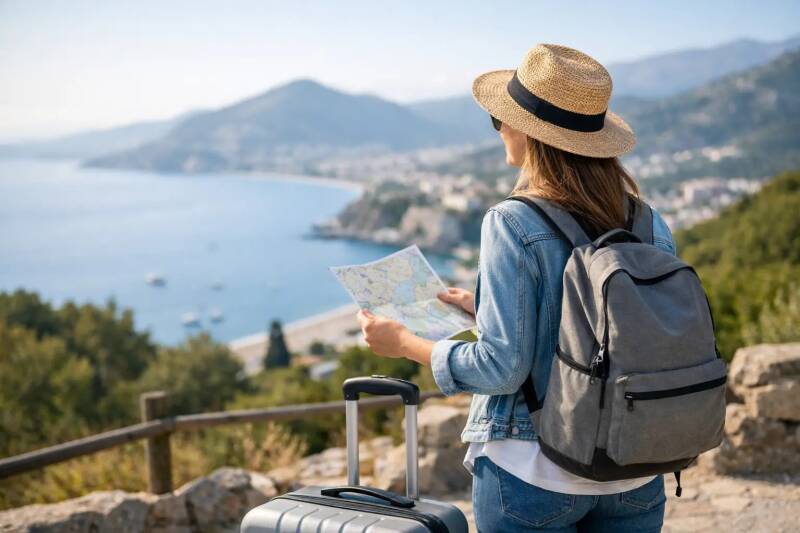
Women travelling alone guide for safer, smarter first trips: plan confidently, pack light, set boundaries, and find real connection on the road with ease. The first solo breakfast abroad can feel bigger than it looks: one table, one map, a coffee you did not know how to order, and the sudden realization that every decision is yours. This women travelling alone guide is not about pretending risk does not exist. It is about building the habits, awareness, and confidence that let you enjoy that freedom without carrying fear in every pocket.
Solo travel has taught me that confidence is rarely something you pack before departure. It grows in small moments: navigating the airport, asking a local for a recommendation, changing plans when a street feels wrong, and discovering that your own company is far better than you expected.
Start With a Trip That Builds Confidence
Your first solo trip does not need to be a dramatic test of nerve. Choose a place where the logistics feel manageable, particularly if you are new to international travel. A city with reliable public transportation, walkable central neighborhoods, plenty of accommodation reviews, and a language you partly understand can make a huge difference.
That does not mean your destination has to be bland or familiar. It means you should give yourself room to learn. A four-day city break can be a smarter first step than a three-week itinerary involving late-night buses, border crossings, and constant hotel changes. You can always travel farther once you know what kind of pace and environment makes you feel most capable.
When comparing destinations, look beyond the headline safety ranking. Read recent reviews from women travelers, check how easy it is to get from the airport after dark, and understand the local expectations around dress, nightlife, and public behavior. These details are not about limiting yourself. They help you make informed choices before you are tired, jet-lagged, or standing outside a closed train station.
Plan the First 24 Hours Carefully
The first day is when tiredness and unfamiliarity can make simple choices feel difficult. Book your first night in advance, save the address offline, and know exactly how you will get there from the airport or station. If a transfer service, licensed taxi stand, or daytime train costs more than the cheapest option, it may be money well spent.
Send your itinerary and accommodation details to someone you trust, but avoid turning check-ins into a stressful performance. A simple message when you arrive and another when you return to your room at night is usually enough. Consider sharing your live location with one trusted person during transit days, then turning it off when it no longer feels useful.
Before leaving home, download offline maps, translation tools, and copies of essential documents. Keep a digital backup of your passport, travel insurance details, and emergency contacts in a secure place. Carry a small paper note with your accommodation address too. Phones lose battery, data fails, and knowing where you are going without relying on a screen is quietly reassuring.
Choose Accommodation for Location, Not Just Price
A low room rate can become expensive if it leaves you dependent on taxis, isolated from restaurants, or walking through an area that feels uncomfortable after sunset. For solo travelers, a well-reviewed place near public transit or within a lively, central neighborhood is often the better budget decision.
Read recent reviews with a practical eye. Look for comments about the entrance, staff availability, lockers, lighting, neighborhood noise, and whether other solo women felt comfortable there. A hostel can be a brilliant choice for meeting people and saving money, but dorm size matters. A smaller female-only dorm may cost a little more while offering better sleep and peace of mind.
If you book an apartment or guesthouse, arrive while it is still light when possible. Check the route from the nearest transit stop before you commit. I have found that the best solo accommodation is not necessarily the prettiest. It is the place that lets you step outside and immediately feel oriented.
Pack Light Enough to Stay Mobile
Packing light is a safety tool as much as a budget strategy. If you can carry your own bag up stairs, through a crowded platform, or into a cafe while you check a map, you are more independent and less stressed. One carry-on backpack or small suitcase plus a day bag is enough for many trips.
Prioritize clothes that work together, comfortable shoes you have already broken in, and layers suited to local weather and customs. Bring a portable charger, a reusable water bottle, a small lock where appropriate, and any medication in its original labeled packaging. You do not need a suitcase full of “just in case” items.
Be thoughtful about visible valuables. A practical crossbody bag that closes securely is often easier to manage than a large open tote. Keep your passport, primary payment card, and spare cash in separate places. If one item goes missing, your entire trip should not go with it.
Move Through New Places With Awareness, Not Anxiety
The most useful safety skill is situational awareness. Keep your headphones low or off when walking alone, notice who is around you, and avoid getting so absorbed in your phone that you lose track of your surroundings. Walk with purpose, even when you are checking directions. Step into a cafe, hotel lobby, or shop if you need a moment to regroup.
Trust discomfort without demanding courtroom-level proof from yourself. If a person is overly persistent, a taxi feels unlicensed, or a street becomes suddenly empty and unsettling, leave. You do not owe strangers politeness, explanations, or a chance to persuade you that your instinct is wrong.
At the same time, avoid treating everyone as a potential threat. That mindset can close off the very warmth that makes travel memorable. The goal is to be open and observant. Accept help when it feels appropriate, ask questions in public places, and keep personal details private until trust has been earned.
Set Boundaries Without Apologizing
A firm “no, thank you” is a complete sentence. You do not need to reveal where you are staying, whether you are alone, or what your plans are later. If someone asks a question that feels intrusive, change the subject, say you are meeting friends, or simply walk away.
Practice a few direct phrases before you leave, especially if you are traveling somewhere with a different language. Learn how to say no, stop, help, taxi, hotel, and police. You may never use them, but knowing them can make you feel steadier.
Meet People, But Keep Your Independence
One of the joys of solo travel is that you are more approachable. You may end up sharing a table with another traveler, learning about a neighborhood from a bartender, or joining a walking tour that turns into dinner. These moments can be the heart of a trip.
Choose social settings that give you an easy exit. Group tours, cooking classes, hostel events, museum talks, and daytime activities are generally better first meetings than accepting an invitation to a stranger's apartment or getting into an unfamiliar car. Tell someone where you are going if you have made plans with people you just met.
Be especially careful with alcohol. You do not have to avoid nightlife, but know your route home, keep your drink in sight, and decide your limit before the evening picks up speed. If you feel pressured to stay, drink more, or go somewhere else, that is your cue to leave.
Make Room for the Emotional Side of Going Solo
There may be an afternoon when you feel lonely, overwhelmed, or strangely homesick in a beautiful place. That does not mean you have failed at solo travel. It means you are human and far from your normal routines.
Build gentle resets into your itinerary. Return to a favorite cafe, call home, spend an hour in a park, or choose one easy meal instead of chasing another must-see sight. Purposeful travel is not measured by how exhausted you are at the end of the day. Sometimes the most meaningful memory is an unhurried conversation, a local meal, or the confidence of finding your way back after getting lost.
Keep a small journal, even if it is only a few lines each night. Write down what surprised you, what made you laugh, and what you handled better than you expected. These notes are useful when a difficult moment makes you forget how much you have already learned.
A Women Travelling Alone Guide to Spending Wisely
Solo travel can cost more because there is no one to split hotel rooms, taxis, or shared meals with. The answer is not always choosing the absolute cheapest option. Spend selectively on the parts of a trip that protect your time, comfort, and safety, then save on the rest.
Use public transportation during the day when it is straightforward, eat where locals eat, carry snacks for transit days, and book major transport early if prices rise closer to departure. Save your budget for experiences that bring you closer to a place: a neighborhood food market, a guided walk led by a local, or an extra night in a town that feels good to explore slowly.
Leave a small financial buffer untouched. A missed train, a safer late-night ride, or a room change should not become a crisis because every dollar has been allocated. Freedom feels much more real when you can adapt.
Your first solo trip does not need to make you fearless. Let it make you more trusting of your own judgment. Take the well-lit route, ask for help when you need it, order the dish you cannot pronounce, and keep going. The world becomes less intimidating when you meet it one thoughtful decision at a time.
Add comment
Comments