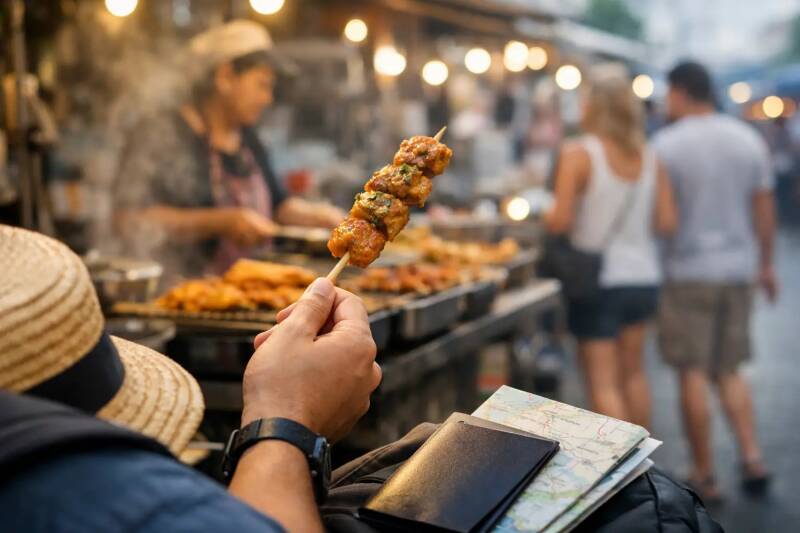
Eating street food safely abroad means choosing busy stalls, hot meals, clean habits, and local flavor while trusting your instincts at every food stop. The best meal of a trip can arrive on a paper plate, eaten standing beside a busy market with chili on your fingers and a language barrier between you and the menu. Eating street food safely abroad does not mean avoiding those moments. It means learning how to read a food stall the way experienced travelers do: with curiosity, common sense, and enough caution to keep a brilliant lunch from becoming a lost day in your hotel room.
Street food is often fresh, affordable, and deeply connected to a place. It is also prepared in conditions you may not be used to. The goal is not to chase perfection. It is to make smart choices, accept that every destination has different risks, and leave room for the joyful spontaneity that makes travel feel alive.
Eating Street Food Safely Abroad Starts Before You Order
A great stall usually tells you a lot before the first bite. Watch it for a minute. Notice who is eating there, how quickly food moves, whether the vendor handles money and food separately, and whether cooked dishes are kept properly hot.
This is not about judging a stall because it is simple, crowded, or unfamiliar. Some of the most memorable meals I have had were cooked from a cart with two burners and a plastic stool. What matters is turnover, temperature, and basic food handling. A tiny operation can be exceptionally clean. A polished restaurant can still serve food that has sat too long.
1. Follow the local lunch crowd
A line of local customers is one of the most useful signals you have. Busy stalls tend to move ingredients quickly, which means less time for cooked food to sit at unsafe temperatures. Locals also know which vendors are consistently good, reasonably priced, and worth returning to.
Aim for peak meal times when you can. That bubbling pot of noodles or tray of grilled skewers is more reassuring when it is being replenished every few minutes than when it has been waiting through a quiet afternoon. A long line is not a guarantee, but it is usually a much better bet than an empty stall next to it.
2. Choose food cooked hot in front of you
Heat is your friend. Order dishes that are grilled, stir-fried, boiled, steamed, or fried to order, then served piping hot. Seeing your food go from raw ingredients to a hot pan gives you useful reassurance and often makes for a better meal, too.
This is especially helpful with meat, seafood, eggs, and rice dishes. Ask for meat to be cooked through if you are unsure, and do not feel awkward about it. A polite gesture, a few translated words on your phone, or pointing at the grill is usually enough.
Be more selective with prepared dishes displayed at room temperature. They may be perfectly fine if the stall is busy and the tray is being refilled constantly. But on a slow, hot day, that curry, potato salad, or cooked rice may have been sitting longer than you would like.
3. Be thoughtful about water, ice, and raw garnishes
In destinations where tap water is not safe to drink, water deserves more attention than the food itself. Use sealed bottled water or reliable filtered water, and check that the bottle cap is intact before opening it. Refillable filtered-water stations can be a great low-waste option when they are trusted locally.
Ice is more complicated than many travelers realize. In some places, commercial ice is made with treated water and is safe. In others, it may not be. Look for ice that is uniform and factory-made rather than rough chunks chipped from a larger block, but local advice is still your best guide.
Raw herbs, salad leaves, sliced fruit, and fresh sauces can be the variable in an otherwise hot meal. Do not skip them automatically. A busy vendor who washes produce carefully may be fine. Still, if you have just arrived, have a sensitive stomach, or are traveling somewhere with questionable water quality, start with cooked dishes and add raw extras once you have a better feel for local conditions.
4. Check the small details without becoming obsessive
You do not need a laboratory inspection. A quick glance can tell you plenty. Look for clean cooking surfaces, utensils that are not sitting in murky water, covered ingredients, and a vendor who uses tongs, gloves, or separate hands for raw and cooked food.
Money handling is worth noticing, too. Many vendors work alone and must take cash while cooking, so this is not always avoidable. The better sign is whether they rinse their hands, use a utensil for ready-to-eat food, or have someone else handle payments.
Trust your senses. If food smells sour when it should smell fragrant, looks dried out, or has been exposed to flies for hours, walk on. There is no prize for being the most adventurous person at the market.
5. Start gently when you arrive
Your first day in a new country is not always the ideal time to test your limits. Jet lag, dehydration, a long flight, and an unfamiliar climate can make your body feel off before you have eaten anything questionable. Give yourself a day or two to settle in, drink enough safe water, and ease into new foods.
That does not mean ordering bland meals. It means pacing yourself. Try the grilled chicken, fresh flatbread, dumplings, or hot soup before jumping straight to raw oysters, extra-spicy sauces, and a mystery smoothie loaded with ice. You can build confidence and still eat brilliantly.
Spice itself does not cause food poisoning, although a level of heat your body is not used to can make a long bus ride less pleasant. If you love spicy food, ask for it. Just remember that “medium” can mean very different things from one country to another.
6. Carry the boring essentials that save the day
A small travel health kit earns its space in your bag. Hand sanitizer is useful before eating when a sink is nowhere nearby, though soap and water are still best whenever they are available. Keep tissues or a small pack of wipes for sticky tables and messy fingers.
It is also wise to carry oral rehydration salts, particularly if you are traveling somewhere hot or moving around often. They are lightweight, inexpensive, and far more useful than you hope they will be. If you take prescription medication, have allergies, or live with a medical condition, plan more carefully before your trip and know the local names of any ingredients you must avoid.
7. Learn a few food words before the market gets busy
A handful of phrases can make street food feel less intimidating and far more personal. Learn how to ask whether something contains peanuts, shellfish, dairy, pork, or gluten if needed. Know how to say “no ice,” “well done,” “not spicy,” and “thank you.” Save these phrases offline on your phone in case your signal disappears at exactly the wrong moment.
This is about more than safety. Asking a vendor what they recommend can lead you to the dish they are proudest of, not the item printed in English for visitors. A quick exchange, a smile, and genuine interest can turn a transaction into one of those small travel connections you remember long after the itinerary fades.
8. Eat what is popular, not just what feels familiar
The safest choice is not always the most recognizable one. A tourist-facing burger with lukewarm toppings may be less appealing from a food-safety perspective than a local rice dish prepared fresh all day. Look for the specialties a stall is known for and order what customers around you are ordering.
That said, let your own needs lead. If you are vegetarian, pregnant, immunocompromised, or managing a severe allergy, your margin for risk may be narrower. In those cases, choosing a trusted restaurant over a packed night market is not a failure of adventurous travel. It is good judgment.
9. Know when to stop and what to do if you feel unwell
If a dish seems off, stop eating it. You do not need to finish something because you paid for it or because the vendor was kind. Most travelers will have at least one day when their stomach protests an unfamiliar meal, rich food, too much heat, or simple travel fatigue. Rest, hydrate, and keep food gentle until you feel better.
Seek medical advice promptly for severe or persistent symptoms, high fever, blood in stool, signs of dehydration, or vomiting that prevents you from keeping fluids down. Travel insurance details and emergency numbers are worth saving before you need them. Being prepared lets you act calmly instead of panicking in an unfamiliar place.
Let Curiosity and Care Travel Together
The most meaningful street-food experiences are rarely the ones you plan weeks ahead. They are the grilled corn handed over through a train window, the breakfast soup recommended by a hostel owner, the night-market dessert you share with a new friend because neither of you can pronounce its name.
Eat with open eyes, clean hands, and a willingness to walk away when something does not feel right. Then pull up the plastic stool, order the dish with the longest local line, and let the place introduce itself one bite at a time.
Add comment
Comments