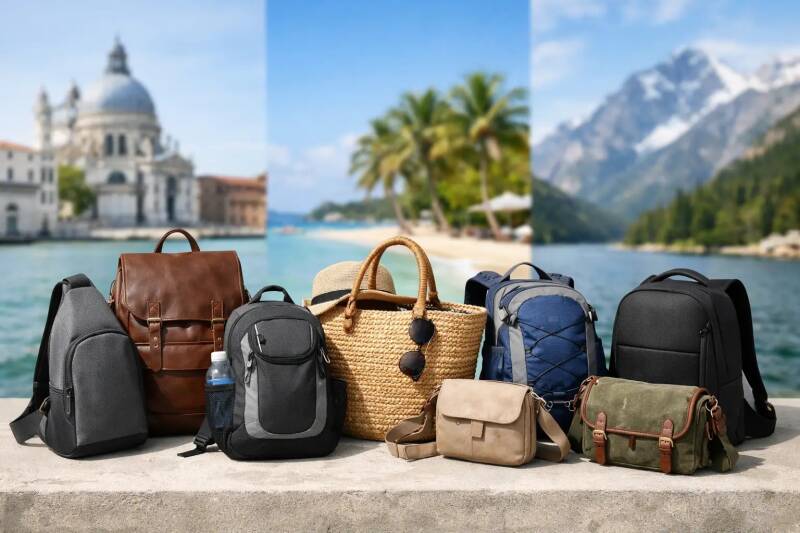
Find the best day bags for sightseeing, from compact crossbodies to trail-ready packs, with practical advice on comfort, security, and fit for every trip. A day bag can quietly shape an entire trip. Get it right, and you can wander from a morning market to a museum, linger over lunch, and climb the final viewpoint without thinking about your shoulders. Get it wrong, and you are wrestling zippers on a crowded train or carrying a backpack that feels twice as heavy by 3 p.m. The best day bags for sightseeing are not necessarily the biggest, trendiest, or most expensive. They are the ones that suit the way you actually move through a place.
I have learned to treat a day bag as a small travel headquarters. It needs to hold the practical essentials - water, layers, sunscreen, wallet, phone, charger, and perhaps a snack - while leaving your hands free for a camera, a map, or a paper cone of something delicious from a street stall. More than that, it should help you feel relaxed enough to pay attention to where you are.
What Makes a Great Sightseeing Day Bag?
For most city days, a capacity between 10 and 20 liters is the sweet spot. It is enough room for essentials and an extra layer, without inviting you to pack every item you own. If you are traveling in changeable weather, visiting a beach, or carrying a camera, 20 to 25 liters can make sense. Beyond that, a bag often becomes cumbersome in galleries, cafés, and packed public transit.
Comfort matters more than people expect. Look for adjustable straps, a shape that sits close to your body, and breathable padding if you will be walking in heat. A bag may feel fine in a store, then reveal its flaws after six miles on cobblestones. Before leaving, load it with roughly what you plan to carry and walk around your neighborhood for 20 minutes.
Security is also about design, not paranoia. Zippers that close fully, pockets that sit against your body, and sturdy materials are useful in busy areas. You do not need a bag that makes you feel armored. You need one that lets you enjoy a crowded market or metro ride without constantly checking over your shoulder.
The Best Day Bags for Sightseeing by Travel Style
1. A Small Crossbody for City Wandering
A compact crossbody is one of the best choices for travelers who pack light and spend most of the day in urban neighborhoods. It works beautifully for museum-heavy itineraries, food tours, evening walks, and destinations where you want to look less like you are carrying hiking gear through town.
Choose one large enough for a phone, slim wallet, sunglasses, portable charger, hand sanitizer, and a small water bottle if possible. A wider adjustable strap helps prevent it from digging into your shoulder. The trade-off is capacity: a crossbody is not the answer if you need to carry a rain jacket, camera, guidebook, and lunch.
2. A 12- to 18-Liter Daypack for All-Day Exploring
For many travelers, this is the most practical all-around sightseeing bag. A streamlined daypack has room for the real-world extras that make long days easier: a reusable water bottle, light sweater, packable rain jacket, snacks, and a small souvenir or two.
Avoid overly technical hiking packs unless your plans include trails. In a city, a simple, low-profile pack with a front pocket, water bottle sleeve, and interior zip compartment is often more useful. I prefer a bag that opens wide enough to find what I need quickly, rather than a deep black hole where sunscreen disappears at the bottom.
3. An Anti-Theft Backpack for Busy Transit Days
If your sightseeing day involves trains, buses, crowded squares, or overnight travel, an anti-theft-style backpack can offer welcome peace of mind. Useful features include lockable zipper pulls, hidden rear pockets, slash-resistant fabric, and compartments that open against your back.
There is a balance to strike here. Some anti-theft bags are heavy, stiff, and so full of complicated compartments that they slow you down. Prioritize a secure main opening and one accessible pocket for low-value items. Your passport, extra cash, and backup bank card are usually safer in a separate concealed pouch than in a bag you take off repeatedly.
4. A Sling Bag for Fast, Hands-Free Days
A sling bag sits somewhere between a crossbody and a small backpack. It is excellent when you want quick access to your essentials without removing your bag every time you need a train ticket or camera battery. It can be especially useful for solo travelers who like keeping belongings in sight while navigating unfamiliar stations.
A sling is best for minimal packers. It will hold your immediate essentials, but not much else. If you are traveling in cool weather or with children, the lack of space becomes frustrating quickly. Think of it as a confident choice for a short city day, not a solution for every itinerary.
5. A Packable Daypack for One-Bag Travelers
A packable daypack earns its place when you are traveling with only a carry-on backpack or suitcase and need a lighter bag for daily exploring. It folds down small, weighs very little, and gives you an extra layer of flexibility once you arrive.
The downside is structure. Many packable bags have thin straps and little padding, so they are not ideal for carrying heavier loads over long distances. Use one for beach days, casual walks, grocery runs, or sightseeing with only the basics. For a full day of museums and hills, a more supportive bag will feel far better.
6. A Camera Backpack for Photo-Focused Trips
If photography is part of how you experience a destination, a dedicated camera daypack can protect your gear without forcing you to carry a separate bag. Look for flexible padded dividers, easy side access, and enough room for a layer and water beyond the camera compartment.
Be honest about how much gear you will truly use. Carrying two lenses, a drone, a tripod, and a large camera body through a city can turn a joyful day into a logistical exercise. I have found that one camera and one versatile lens often lead to better travel photos because I am more present, patient, and willing to wait for a genuine moment.
7. A Lightweight Hiking Pack for Nature and Cities
Some destinations ask you to do both: explore a historic center in the morning, then hike to a waterfall or overlook in the afternoon. A lightweight hiking daypack is the right call when trails are a genuine part of your plan. It offers better weight distribution, room for water, and often a waist or sternum strap for stability.
Choose a cleaner design if you will also be visiting restaurants, temples, or city attractions. Brightly colored, highly technical packs can be useful on the trail but awkward in more formal settings. A neutral 18- to 22-liter hiking pack can bridge both worlds well.
8. A Tote Backpack for Style-Conscious City Breaks
A tote backpack converts between shoulder bag and backpack, making it a smart option for shorter city breaks where you want something functional but less outdoorsy. It can work nicely for bookstores, cafés, galleries, and slow neighborhood walks.
The best versions have a zip-top closure, reinforced straps, and an internal pocket for valuables. Be cautious with open-top totes, especially in crowded destinations. They are easy to access, but unfortunately that convenience is not limited to you.
How to Pack Your Sightseeing Bag Without Overpacking
The goal is not to prepare for every possible inconvenience. It is to carry enough to stay comfortable and flexible. Start with the nonnegotiables: phone, payment card, identification, water, sunscreen, and a small portable charger. Then add only what your day and destination require, such as a rain layer, medication, snack, or camera.
Keep the things you reach for most in the same place every day. Mine are usually sunglasses, lip balm, transit card, and charger. That small routine saves time and reduces the frantic pocket-patting that happens when a train is about to leave.
Weight should be your final check. If your bag feels heavy before breakfast, remove something. A guidebook can become a downloaded map, a bulky umbrella can become a packable rain jacket, and a second water bottle is rarely necessary when you can refill one. Traveling light is not about proving toughness. It is about preserving energy for the experiences that matter.
A Few Details Worth Checking Before You Buy
Pay attention to zipper quality, strap adjustment range, water resistance, and whether the bag can stand upright when set down. An external water bottle pocket is convenient, but only if it actually holds your bottle securely. If you carry a laptop for work or transit days, make sure its sleeve is padded and sized correctly rather than assuming any compartment will do.
Color is personal, but darker neutrals tend to hide scuffs and work across more settings. That said, a bright interior lining can make a surprising difference when you are searching for a black charging cable in low light. The right bag should feel like a helpful companion, not another piece of travel gear demanding your attention.
Choose the bag that gives you freedom to stay out a little longer: one more local meal, one more side street, one more sunset from the hill above town. That is usually where the best parts of a trip begin.
Add comment
Comments