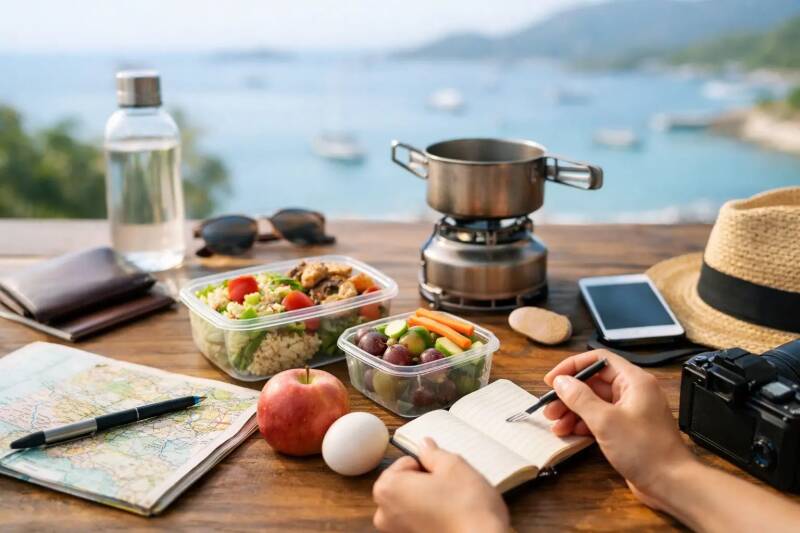
Learn to plan meals while travelling cheaply with flexible grocery stops, local food finds, simple breakfasts, and a budget that leaves room for flavor. The airport sandwich was nearly the price of a full dinner in town. That is the moment many travelers realize that food can quietly drain a trip budget faster than museum tickets or train fares. To plan meals while travelling cheaply is not about surviving on instant noodles or denying yourself the dishes that make a place memorable. It is about deciding where your money will taste best before hunger makes the decision for you.
I have found that the most satisfying budget trips leave room for both: a market breakfast eaten on a sunny bench, a packed lunch on a long travel day, and one local meal worth sitting down for. A little planning protects your budget, but it also makes you more curious about how people actually eat where you are.
Start With a Food Budget That Has Breathing Room
Before choosing restaurants or filling a grocery basket, give food its own daily budget. This figure will vary wildly between destinations, but the principle is the same: set a realistic average, then avoid treating every day as identical.
A travel day might call for a cheap supermarket dinner because you have just paid for transport. On another day, you may want to spend more on a neighborhood specialty, a cooking class, or the small restaurant everyone in your hostel recommends. Planning for those differences is far more useful than promising yourself you will spend exactly the same amount every day.
I like to split a daily food budget into three loose categories: basic meals, snacks and drinks, and one flexible amount for a local food experience. The flexible amount matters. Without it, you can end up resenting the very meal that should have become a travel memory.
Check Your Kitchen Before You Buy Groceries
A kitchen can turn a pricey destination into a manageable one, but not every kitchen is equally useful. Before booking a hostel, apartment, or guesthouse, look closely at what is actually available. A refrigerator, stove, pan, knife, and basic dishes make a real difference. A listing that says “kitchenette” may mean little more than a mini-fridge and kettle.
If you are staying in a hostel, consider the rhythm of the shared kitchen too. A crowded kitchen at 7 p.m. can make an ambitious recipe feel less like freedom and more like a queue. In that setting, meals with few ingredients are your friend: eggs and vegetables, pasta with jarred sauce, wraps, soup, or rice with beans.
For one or two nights, especially in a place with excellent inexpensive street food, booking a room without a kitchen can still make sense. Do not pay extra for cooking facilities you will barely use. The goal is not to cook every night. It is to have options.
Build Your First Grocery Run Around Flexible Ingredients
The biggest grocery-store mistake is buying as though you live there. A large bag of rice, a dozen unusual ingredients, and a full bottle of cooking oil may look economical on the shelf, but they are not cheap if half of them are left behind when you move on.
Instead, buy food that works across several meals and can travel in a small day bag. Your first shop should cover two or three days, not your whole trip. Good foundations include oats or yogurt for breakfast, fruit, bread or tortillas, eggs, cheese, a bagged salad or vegetables, and one easy protein such as beans, tuna, hummus, or rotisserie chicken where available.
A simple formula keeps decisions easy: choose one breakfast base, one portable lunch base, one protein, one vegetable, and one treat you genuinely want. That treat might be a local pastry, dark chocolate, or a bag of cherries from the market. Budget travel should still feel like travel.
Plan Around What You Can Finish
Fresh food is usually the best value only if you use it. If you are leaving tomorrow, choose bananas, apples, carrots, bread, cheese, and other items that do not require a full kitchen or produce leftovers that spoil quickly. If you are traveling by train or bus, pack a reusable container or zippered bag so the next meal comes with you.
Be especially cautious with raw meat, large dairy containers, and anything that needs reliable refrigeration. Saving a few dollars is never worth a miserable night before a flight or a long hike.
Make Breakfast Boring Enough to Be Easy
Breakfast is the meal where routine pays off. You do not need a thrilling decision at 8 a.m. when you are trying to catch a train, navigate a new city, or beat the crowds at a popular sight.
A few familiar options can save surprising amounts over a week. Oats with fruit, yogurt and granola, toast with peanut butter, or eggs and bread are inexpensive in many destinations and require little thought. If your accommodation includes breakfast, use it thoughtfully. Eat enough to stay comfortable until lunch, and carry a piece of fruit if that is permitted rather than buying a pastry an hour later out of habit.
This is also where a refillable water bottle earns its place in your bag. Coffee and bottled drinks can become a daily leak in your budget. Enjoy a café coffee when it feels like part of the place, not because thirst caught you unprepared.
Use Lunch to Save Money Without Missing Local Food
Lunch is often the sweet spot for eating out. In many cities, restaurants offer lower-priced lunch menus, generous set meals, or casual counter service that lets you try local cooking without the dinner markup. Markets, bakeries, food halls, and busy neighborhood stalls can also offer a clearer glimpse of everyday food than tourist-focused restaurants near major landmarks.
Look for places with a steady flow of local customers, a short focused menu, and food being cooked or replenished regularly. That does not guarantee perfection, but it is a better sign than a menu illustrated with dozens of international dishes.
If you want to splurge on a memorable dinner, make lunch your practical meal. Pick up ingredients for sandwiches, eat leftovers, or find a filling local specialty earlier in the day. You are not missing out by doing this. You are choosing your moments.
Plan Meals While Traveling Cheaply on Transit Days
Transit days create expensive food decisions because stations, airports, and highway stops know you have limited choices. Make a habit of packing food before you leave your accommodation. Even a basic lunch of bread, cheese, fruit, and nuts can protect you from buying the first overpriced option you see.
Keep a small transit-day kit in your carry-on: a reusable bottle, a utensil, napkins, a snack bar, and something savory with actual staying power. Nuts, crackers, roasted chickpeas, dried fruit, or a sandwich from the previous evening's grocery run work well. Just check local rules before crossing borders with fresh produce, meat, or dairy.
When you do buy food in a station or airport, choose the item that functions as a meal, not a collection of expensive snacks. A substantial sandwich, rice bowl, or soup can be better value than a drink, chips, candy, and a pastry bought separately.
Eat One Meal Where the Neighborhood Eats
Cheap travel food is not automatically meaningful travel food. There is a difference between cutting costs and insulating yourself from a destination. Set aside time to visit a local market, a family-run lunch counter, a community food hall, or a modest restaurant outside the busiest tourist streets.
Ask respectfully for a recommendation from your host, hostel staff, or a shop owner. Learn the local word for the daily special. Notice what people order, then be open to trying it. Some of my favorite travel meals have been simple ones: a bowl of soup on a rainy afternoon, grilled fish served with nothing fancy, or a warm flatbread handed across a market counter.
The cheapest option is not always the right one, particularly when food traditions, labor, and small businesses are involved. Pay fairly, tip according to local custom, and remember that spending intentionally can still be a budget strategy.
Keep a Tiny Record of What You Spend
You do not need to turn every meal into a spreadsheet. But for the first few days in a new destination, write down what you spend on food. Include small purchases: water, coffee, snacks, and the extra pastry that seemed harmless at the time.
Patterns appear quickly. Maybe restaurant dinners are pushing you over budget, while your grocery spending is lower than expected. Maybe you are buying lunch because you skipped breakfast. Once you see the pattern, adjust the next day rather than waiting until the end of the trip to feel frustrated.
A flexible approach works best. If you have a wonderful, unplanned meal that costs more than expected, enjoy it fully. Balance it with a simple breakfast and packed lunch tomorrow. Travel is not a test of perfect restraint.
The best meal plan leaves you fed, energized, and still open to surprise. Pack something for the road, cook when it serves you, and leave a little money and curiosity for the dish you never knew to look for.
Add comment
Comments